
Common ERP Mistakes for Discrete Manufacturing Firms

by Uzlifat Mir
- Feb 10, 2026
- 0
- Category: Uncategorized
Choosing the right ERP system can make or break efficiency for operational managers in Texas-based discrete manufacturing companies. With production lines dependent on precise coordination and separate units tracked through complex processes, the stakes are high. This guide breaks down the essential features and critical pitfalls of discrete manufacturing ERP systems, offering clear strategies to help you avoid costly errors while strengthening your operations.
Table of Contents
- Defining Discrete Manufacturing ERP Systems
- Types of ERP Solutions for Manufacturing
- Essential ERP Features for Discrete Manufacturing
- Critical Scalability and Integration Concerns
- Frequent Pitfalls in ERP Selection and Implementation
- Strategies to Avoid Costly ERP Mistakes
Key Takeaways
| Point | Details |
|---|---|
| Discrete Manufacturing ERP Systems | These systems are designed for producing individual, countable products, enabling precise component tracking and quality assurance. |
| Types of ERP Solutions | Manufacturers can choose from various ERP solutions, including discrete, process, and cloud-based systems, depending on their operational needs. |
| Essential ERP Features | Important features for discrete manufacturing ERP include materials management, production planning, and supply chain integration to enhance efficiency. |
| Strategies for Implementation | A strategic approach involving thorough needs assessment, stakeholder engagement, and phased implementations can help avoid costly mistakes in ERP deployment. |
Defining Discrete Manufacturing ERP Systems
Discrete manufacturing represents a specialized production approach focused on creating individual, countable products like automobiles, furniture, and electronic devices. Unlike continuous manufacturing processes that produce bulk materials, discrete manufacturing involves producing distinct units that can be individually tracked, assembled, and quality tested. Odoo Manufacturing ERP Solution provides robust systems designed specifically for managing these complex production environments.
At its core, discrete manufacturing ERP systems are sophisticated software platforms engineered to handle the intricate workflows of unit-based production. These systems excel at managing critical operational components such as:
- Precise component tracking through unique part numbers
- Dynamic bill of materials (BOM) management
- Detailed inventory control for individual product units
- Complex assembly process coordination
- Flexible production scheduling capabilities
- Quality assurance testing at the unit levels
The fundamental difference between discrete and process manufacturing ERP systems lies in their approach to production tracking. Discrete manufacturing ERPs manage each product unit individually, enabling manufacturers to stop and restart production processes as needed. This granular control allows for greater flexibility in production lines, especially when dealing with customizable or configurable products that require specific assembly sequences.
Modern discrete manufacturing ERP solutions go beyond basic tracking, integrating advanced functionalities like real-time inventory management, predictive maintenance scheduling, and comprehensive supply chain visibility. These systems transform raw production data into actionable insights, helping manufacturers optimize their operational efficiency and reduce waste.
Pro tip: When selecting a discrete manufacturing ERP system, prioritize solutions that offer seamless integration between production modules and can adapt to your specific industry’s unique manufacturing requirements.
Types of ERP Solutions for Manufacturing
Manufacturing enterprises today have multiple ERP solution approaches to choose from, each designed to address specific operational needs and production complexities. These solutions range from industry-specific platforms to highly customizable systems that can adapt to unique manufacturing environments. Manufacturing Execution Systems with Odoo ERP represent one sophisticated approach to integrating comprehensive manufacturing management technologies.
The primary types of manufacturing ERP solutions can be categorized into several distinct models:
- Discrete Manufacturing ERP: Focused on individual unit production
- Process Manufacturing ERP: Designed for continuous material production
- Mixed-Mode Manufacturing ERP: Supports multiple production methodologies
- Cloud-Based Manufacturing ERP: Provides flexible, scalable deployment options
- On-Premises Manufacturing ERP: Offers maximum local control and security
Cloud-based ERP solutions have gained significant traction in recent years, offering manufacturers unprecedented flexibility and accessibility. These systems enable real-time data tracking, remote management, and seamless integration across different operational departments. Modern manufacturing ERP platforms go beyond traditional tracking, incorporating advanced features like predictive maintenance, supply chain optimization, and intelligent automation technologies.
Selecting the right ERP solution requires a comprehensive assessment of an organization’s specific manufacturing requirements. Factors such as production complexity, scalability needs, budget constraints, and industry-specific regulations play crucial roles in determining the most appropriate system. Manufacturers must evaluate their current operational challenges and future growth potential to identify an ERP solution that can effectively support their strategic objectives.
Here’s a comparison of manufacturing ERP types to clarify their ideal use cases and benefits:
| ERP Type | Best For | Key Advantage | Typical Industry Examples |
|---|---|---|---|
| Discrete Manufacturing ERP | Unit-based product assembly | High customization control | Electronics, Automotive |
| Process Manufacturing ERP | Continuous material production | Bulk process optimization | Food, Chemicals |
| Mixed-Mode Manufacturing ERP | Both discrete and process methods | Versatility across products | Industrial Equipment, Aerospace |
| Cloud-Based Manufacturing ERP | Mobile/remote team collaboration | Scalable and accessible | SMEs, Fast-growing businesses |
| On-Premises Manufacturing ERP | Strict data security environments | Localized data control | Defense, Regulated manufacturing |
Pro tip: Conduct a thorough internal audit of your manufacturing processes before selecting an ERP solution to ensure maximum alignment with your specific operational needs and long-term business strategy.
Essential ERP Features for Discrete Manufacturing
Discrete manufacturing requires sophisticated Enterprise Resource Planning (ERP) systems that can handle the complex, multifaceted nature of unit-based production. Odoo Production Planning & Scheduling ERP exemplifies the comprehensive approach needed to manage these intricate manufacturing environments effectively.
The core essential features for discrete manufacturing ERP systems include:
- Materials Management: Tracking raw materials, components, and inventory levels
- Production Planning: Detailed scheduling and workflow optimization
- Sales Order Management: Tracking customer orders through complete fulfillment
- Financial Management: Real-time financial tracking and reporting
- Supply Chain Integration: Seamless coordination with suppliers and logistics
- Quality Control: Comprehensive testing and verification processes
- Inventory Control: Precise tracking of component and finished product inventory
Modern discrete manufacturing ERP solutions go beyond basic tracking, incorporating advanced technologies like predictive maintenance, real-time data analytics, and intelligent automation. These systems create a digital thread that connects manufacturing processes from initial design through production, delivery, and post-sale support. The ability to provide system-wide visibility enables manufacturers to make data-driven decisions, optimize production workflows, and respond quickly to changing market demands.
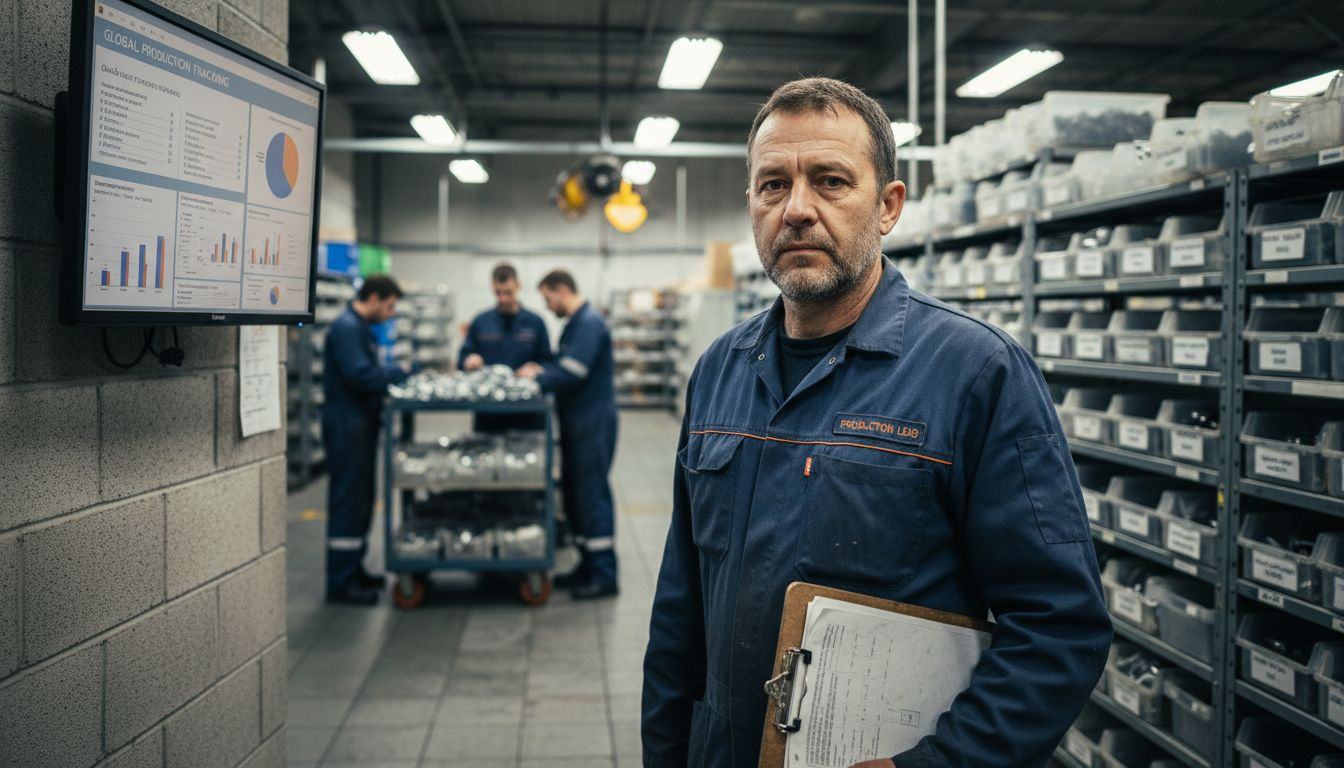
Implementing a robust ERP system requires a holistic approach that considers not just current operational needs but also future scalability and technological adaptability. Manufacturers must evaluate systems that offer flexible modules, seamless integration capabilities, and the ability to support mass customization and complex assembly processes. The right ERP solution can transform discrete manufacturing operations, driving efficiency, reducing waste, and providing a competitive edge in increasingly dynamic market environments.
The following table summarizes the business impact of essential ERP functions in discrete manufacturing:
| Essential ERP Function | Purpose | Business Impact |
|---|---|---|
| Materials Management | Monitor raw and component inventory | Reduces shortages and downtime |
| Production Planning | Schedule and optimize workflows | Boosts throughput and efficiency |
| Sales Order Management | Track orders from sale to fulfillment | Improves customer satisfaction |
| Financial Management | Real-time cost and revenue tracking | Informs strategic decisions |
| Supply Chain Integration | Link suppliers and logistics | Enhances supply reliability |
Pro tip: Conduct a comprehensive workflow analysis before selecting an ERP system to ensure the solution can be precisely tailored to your specific manufacturing processes and unique operational requirements.
Critical Scalability and Integration Concerns
Scalability and integration represent fundamental challenges for discrete manufacturers seeking to implement robust Enterprise Resource Planning (ERP) systems. Odoo Equipment Manufacturing ERP demonstrates how modern solutions can address these complex technological requirements effectively.
The key scalability considerations for discrete manufacturing ERP systems encompass several critical dimensions:
- Infrastructure Flexibility: Ability to expand computational resources
- Modular Architecture: Support for incremental system upgrades
- Performance Consistency: Maintaining system efficiency during growth
- Cost-Effective Expansion: Minimizing resource investment during scaling
- Technological Adaptability: Compatibility with emerging manufacturing technologies
Integration challenges extend beyond simple system connections, requiring comprehensive strategies that bridge multiple operational domains. Successful ERP implementations must create seamless data flows between shop floor operations, enterprise management systems, supply chain networks, and customer interaction platforms. This holistic approach demands sophisticated middleware capabilities, robust API frameworks, and intelligent data transformation mechanisms that can translate information across diverse technological ecosystems.
Manufacturers must adopt a forward-looking perspective when evaluating ERP scalability, understanding that today’s solution must accommodate tomorrow’s technological innovations. This requires selecting systems with open architectures, cloud-compatible designs, and built-in flexibility that can adapt to changing production methodologies, emerging automation technologies, and evolving business models. The most effective ERP solutions will provide not just current functionality, but a strategic platform for continuous technological evolution.
Pro tip: Develop a comprehensive technology roadmap that aligns your ERP scalability strategy with your long-term business growth objectives and anticipated technological developments.
Frequent Pitfalls in ERP Selection and Implementation
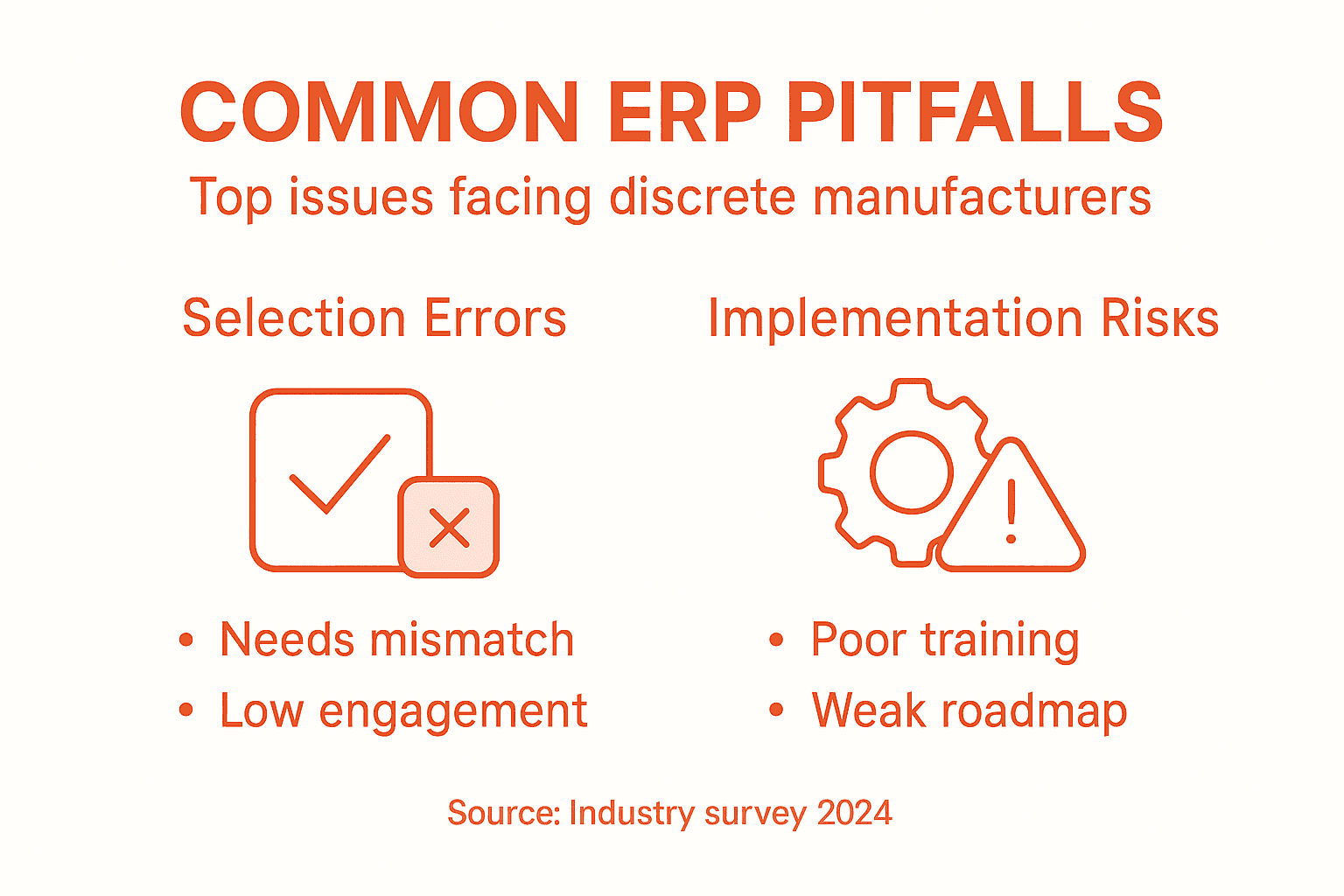
Discrete manufacturers frequently encounter complex challenges when selecting and implementing Enterprise Resource Planning (ERP) systems. What is ERP implementation? Provides crucial insights into navigating these intricate technological transformations, highlighting the critical importance of strategic planning and comprehensive organizational assessment.
The most common ERP implementation pitfalls can be categorized into several critical areas:
- Inadequate Needs Assessment: Failing to thoroughly understand organizational requirements
- Poor Stakeholder Engagement: Not involving key personnel during the selection process
- Insufficient Change Management: Underestimating cultural and operational disruption
- Limited User Training: Neglecting comprehensive system education programs
- Budget Miscalculation: Underestimating total implementation and customization costs
- Technical Compatibility: Overlooking integration challenges with existing systems
Successful ERP implementation demands a holistic approach that transcends technological considerations. Manufacturers must develop a comprehensive strategy that aligns system capabilities with specific operational workflows, considers long-term scalability, and creates robust change management protocols. This requires deep organizational introspection, detailed process mapping, and a willingness to potentially redesign existing operational structures to maximize ERP system potential.
The selection process should involve extensive vendor evaluation, pilot testing, and phased implementation strategies that allow for incremental adaptation. Discrete manufacturers must prioritize solutions offering flexibility, comprehensive support, and proven track records in similar industrial contexts. Critically, organizations must view ERP implementation not as a one-time technology upgrade, but as an ongoing strategic transformation requiring continuous learning, refinement, and organizational alignment.
Pro tip: Conduct a comprehensive organizational readiness assessment and develop a detailed implementation roadmap before initiating any ERP selection or deployment process.
Strategies to Avoid Costly ERP Mistakes
Navigating the complex landscape of ERP implementation requires a strategic approach that anticipates potential challenges and proactively mitigates risks. Tips to reduce ERP implementation Costs provides essential insights into managing the financial and operational complexities of enterprise technology transitions.
Key strategic approaches to avoiding costly ERP mistakes include:
- Comprehensive Needs Assessment: Conducting a thorough organizational analysis
- Stakeholder Engagement: Involving cross-functional teams from initial planning
- Realistic Budgeting: Developing detailed financial projections with contingency planning
- Phased Implementation: Breaking down deployment into manageable stages
- Robust Change Management: Creating structured adaptation and training programs
- Continuous Monitoring: Establishing ongoing performance evaluation mechanisms
Successful ERP implementation transcends technological selection, requiring a holistic organizational transformation strategy. Manufacturers must develop a nuanced approach that balances technical requirements with cultural adaptation, recognizing that technology adoption is fundamentally a human-centered process. This demands creating clear communication channels, developing comprehensive training programs, and fostering a culture of continuous learning and technological integration.
Effective risk mitigation involves establishing clear governance structures, maintaining flexibility in implementation approaches, and creating robust feedback mechanisms. Organizations should prioritize solutions that offer scalability, comprehensive vendor support, and alignment with specific industry requirements. The most successful ERP deployments view the implementation as an ongoing strategic initiative rather than a one-time technological upgrade, emphasizing continuous improvement and organizational learning.
Pro tip: Create a dedicated cross-functional ERP implementation team with representatives from key organizational departments to ensure a comprehensive perspective and collective ownership of the transformation process.
Avoid Costly ERP Mistakes and Unlock Your Discrete Manufacturing Potential
ERP implementation challenges, such as inadequate needs assessment, limited user training, and poor stakeholder engagement, can derail your discrete manufacturing operations. The article highlights these critical pitfalls that often lead to costly setbacks and missed efficiency gains. If your goal is to overcome these hurdles and ensure a smooth, scalable ERP deployment tailored for your unique production needs, expert guidance is essential.
At Bista Solutions, we specialize in delivering customized Odoo ERP implementations designed specifically for discrete manufacturing firms. With over 350 successful projects globally and a team of 300+ ERP experts, we understand the complexities of your industry and can help you avoid common mistakes through a systematic, strategic approach. Our proven record as the largest Odoo ERP implementer in North America and multiple-time Odoo Best Partner assures you receive unmatched expertise and support.
Take control of your ERP journey today and ensure your implementation drives real business transformation. Start by connecting with our team for a personalized consultation to evaluate your operational requirements and prepare a tailored roadmap. Don’t let costly ERP errors hold you back from achieving operational excellence. Visit Contact Bista Solutions Today now and take the first step toward a confident, risk-mitigated ERP integration.
Schedule A Free Demo
Ready to avoid common ERP pitfalls and empower your discrete manufacturing success? Reach out to our experts for tailored, end-to-end solutions crafted to your business challenges. Learn more about how Odoo ERP implementation can transform your operations and secure your competitive advantage. Begin your journey today by contacting Bista Solutions and experience dependable support from trusted industry leaders.
Frequently Asked Questions
What are common pitfalls in ERP implementation for discrete manufacturing?
Common pitfalls include inadequate needs assessment, poor stakeholder engagement, insufficient change management, limited user training, budget miscalculation, and technical compatibility issues with existing systems.
How can companies effectively assess their ERP needs before implementation?
Companies should conduct a comprehensive organizational analysis, map their specific workflows, and engage key stakeholders to ensure all necessary requirements are identified and addressed.
What role does change management play in ERP implementation?
Change management is crucial as it helps manage cultural and operational disruptions that come with new system adoption, ensuring that employees are prepared and supported throughout the transition.
Why is stakeholder engagement important in the ERP selection process?
Stakeholder engagement is vital because involving key personnel provides valuable insights that shape the ERP system selection, ensuring it meets actual operational needs and gaining buy-in for smoother implementation.