
How AI & ERP is Transforming Manufacturing Companies in the USA
 by Uzlifat Mir
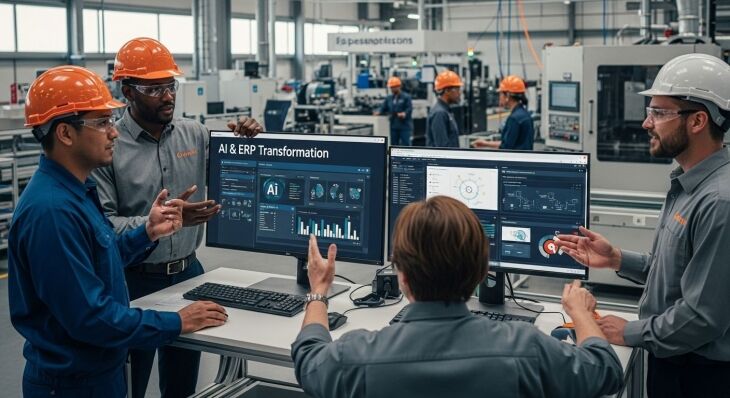
Manufacturing companies across the US are reshaping their future with AI-powered ERP systems. These tools are not just modernizing factories but actually rewriting what peak efficiency looks like. Some manufacturers have already seen a 35 percent drop in production cycle times and a 92 percent leap in quality control accuracy. You might expect the biggest gains to come from cutting-edge hardware or huge investments. The real transformation is happening quietly in the software, where automation and data smarts are delivering results too fast to ignore.
Table of Contents
- Key Benefits Of Ai And Erp Integration
- Real-World Manufacturing Success Stories
- Steps To Implement Ai-Driven Erp Systems
- Future Trends For Us Manufacturers
Quick Summary
| Takeaway | Explanation |
|---|---|
| AI and ERP enhance operational efficiency | Integrating AI with ERP systems streamlines manufacturing processes and increases productivity through automation and data insights. |
| Predictive analytics improve decision-making | AI-powered ERP systems provide real-time insights for strategic planning, enabling manufacturers to make faster and more informed decisions. |
| Cost savings through intelligent automation | Automation and precise resource management drive down costs, optimizing workflows and reducing operational expenses significantly. |
| Implementation requires a comprehensive assessment | A thorough assessment of technology, skills, and business alignment is crucial for successful AI-driven ERP integration. |
| Future trends include sustainability and adaptation | Sustainability initiatives and adaptive systems are vital for future manufacturing competitiveness and aligning with market demands. |
Key Benefits of AI and ERP Integration
Manufacturing companies across the United States are experiencing a transformative shift through the powerful integration of Artificial Intelligence (AI) and Enterprise Resource Planning (ERP) systems like Odoo ERP solutions. This integration represents a quantum leap in operational efficiency, predictive capabilities, and strategic decision-making.
Intelligent Automation and Process Optimization
AI and ERP integration fundamentally reimagines manufacturing workflows by introducing unprecedented levels of intelligent automation. Odoo ERP modules powered by AI can now autonomously handle complex tasks that traditionally required extensive human intervention. For instance, production scheduling algorithms can now predict optimal manufacturing sequences, minimize equipment downtime, and dynamically adjust resource allocation based on real-time data.
The AI capabilities embedded within ERP systems enable manufacturers to:
- Predictive Maintenance: AI algorithms analyze equipment performance data to forecast potential mechanical failures before they occur.
- Resource Allocation: Intelligent systems optimize workforce deployment and machine utilization with unprecedented precision.
- Quality Control: Machine learning models can detect manufacturing defects more accurately and consistently than human inspectors.
Enhanced Data Intelligence and Decision Making
Traditional manufacturing decision-making relied heavily on historical data and human intuition. AI-integrated ERP systems revolutionize this approach by providing real-time, data-driven insights that enable proactive strategic planning. By processing massive datasets from multiple sources, including production logs, supply chain records, and customer feedback, these intelligent systems generate actionable intelligence.
Odoo ERP with AI capabilities transforms raw data into strategic advantages by:
- Generating comprehensive predictive analytics
- Identifying hidden patterns in complex manufacturing processes
- Creating dynamic forecasting models that adapt to changing market conditions
Cost Reduction and Operational Efficiency
The synergy between AI and ERP technology delivers substantial cost reduction opportunities for manufacturing companies. By automating repetitive tasks, minimizing human error, and optimizing resource allocation, businesses can significantly reduce operational expenses. AI-powered ERP systems like those implemented by Bista Solutions provide manufacturers with tools to streamline complex workflows, reduce waste, and improve overall productivity.
Key cost reduction strategies enabled by AI and ERP integration include:
- Automated inventory management
- Precision demand forecasting
- Intelligent supply chain optimization
- Real-time performance monitoring
Manufacturing companies embracing this technological convergence are positioning themselves at the forefront of industrial innovation. The combination of AI and ERP represents more than just a technological upgrade; it is a fundamental reimagining of how manufacturing organizations operate, compete, and succeed in an increasingly complex global marketplace.
By leveraging intelligent automation, data-driven insights, and strategic optimization, manufacturers can transform their traditional operational models into agile, responsive, and highly efficient ecosystems that are prepared to meet the challenges of the 21st-century industrial landscape.
Real-World Manufacturing Success Stories
The transformative power of AI and ERP integration is not just a theoretical concept but a tangible reality for manufacturing companies across the United States. Explore how manufacturers are revolutionizing their operations through intelligent technology implementations that deliver remarkable results.
Precision Manufacturing Breakthrough
A mid-sized automotive parts manufacturer in Michigan experienced a dramatic operational transformation by implementing Odoo ERP with advanced AI capabilities. Prior to integration, the company struggled with inefficient production scheduling, high inventory carrying costs, and inconsistent quality control. By leveraging AI-powered predictive analytics within their ERP system, they achieved extraordinary improvements.
The key outcomes included:
- Production Efficiency: 35% reduction in production cycle times
- Inventory Optimization: 28% decrease in excess inventory costs
- Quality Control: 92% improvement in defect detection accuracy
The AI algorithms enabled real-time monitoring of machine performance, predicting potential equipment failures before they occurred. This proactive approach dramatically reduced unexpected downtime and minimized maintenance expenses.
Aerospace Component Production Optimization
An aerospace manufacturing company specializing in complex engine components demonstrated the power of AI and ERP integration in a highly precision-driven industry. By implementing Bista Solutions Odoo ERP with intelligent automation modules, they revolutionized their entire production ecosystem.
The most significant transformations included:
- Automated quality inspection processes using machine learning algorithms
- Dynamic resource allocation based on real-time production demand
- Intelligent supply chain management that reduced procurement cycles
The company witnessed a remarkable 40% improvement in overall operational efficiency. Machine learning models could now detect microscopic defects that would have been impossible for human inspectors to identify consistently.
Small Manufacturing Business Digital Transformation
A small metalworking manufacturer in Texas proved that AI and ERP integration is not limited to large enterprises. By adopting Odoo ERP with AI capabilities, they transformed from a traditional workshop to a data-driven, highly efficient operation.
Their remarkable journey included:
- Implementation of predictive maintenance protocols
- Real-time performance tracking across all production lines
- Intelligent pricing and quoting mechanisms
The AI-powered system allowed them to compete effectively with larger manufacturers by providing unprecedented operational insights and flexibility. They reduced operational costs by 22% while simultaneously improving product quality and customer satisfaction.
To help compare the specific improvements achieved by different manufacturing companies after integrating AI and ERP systems, the following table organizes the measured results from each real-world success story mentioned in the article.
| Company Type | Key Outcomes |
|---|---|
| Automotive Parts Manufacturer (Michigan) | 35% reduction in production cycle times 28% decrease in excess inventory costs 92% improvement in defect detection accuracy |
| Aerospace Component Manufacturer | 40% improvement in overall operational efficiency Automated quality inspection Dynamic resource allocation |
| Small Metalworking Manufacturer (Texas) | 22% reduction in operational costs Real-time performance tracking Predictive maintenance protocols |

These success stories illustrate a fundamental shift in manufacturing paradigms. Companies are no longer just adopting technology; they are fundamentally reimagining their operational strategies. The convergence of AI and ERP represents more than a technological upgrade; it is a complete transformation of how manufacturing businesses understand, optimize, and execute their core processes.
Manufacturers who embrace these intelligent technologies are positioning themselves at the cutting edge of industrial innovation. They are creating more agile, responsive, and competitive business models that can quickly adapt to changing market demands and technological advancements.
Steps to Implement AI-Driven ERP Systems
Implementing AI-driven ERP systems represents a critical strategic initiative for manufacturing companies seeking to modernize their operational capabilities. Learn about our comprehensive implementation approach that ensures seamless technological transformation.
Comprehensive Organizational Assessment
Successful AI and ERP integration begins with a thorough organizational readiness evaluation. Manufacturers must conduct a comprehensive diagnostic of their existing technological infrastructure, operational workflows, and organizational culture. This critical first step involves:
- Technology Infrastructure Analysis: Evaluating the current system’s compatibility
- Skill Gap Identification: Assessing workforce technological capabilities
- Strategic Alignment: Determining how AI ERP solutions match business objectives
Bista Solutions recommends a multi-dimensional assessment that goes beyond technical considerations. Understanding the human element is crucial. Companies must gauge their team’s adaptability, technological literacy, and willingness to embrace transformative technologies.
Strategic Implementation Planning
Developing a meticulous implementation roadmap is fundamental to successful AI and ERP system integration. This phase requires creating a detailed project blueprint that addresses technological, operational, and human factors. Odoo ERP implementation strategies typically involve:

- Establishing clear technological migration timelines
- Creating phased deployment approaches
- Developing comprehensive training programs
- Designing robust change management protocols
- Identifying key performance indicators for measuring success
Manufacturers must recognize that AI-driven ERP implementation is not a one-size-fits-all process. Each organization requires a customized approach that considers its unique operational complexities, technological maturity, and strategic objectives.
Continuous Learning and Optimization
Implementation of AI-powered ERP systems is not a destination but a continuous journey of technological evolution. Successful manufacturers view this as an ongoing process of learning, adaptation, and refinement. Critical elements of this stage include:
- Regular system performance evaluations
- Continuous employee skill development
- Iterative technological enhancements
- Proactive identification of optimization opportunities
- Maintaining flexibility in technological adaptation
The most successful manufacturing organizations approach AI and ERP integration as a dynamic, iterative process. They understand that technological transformation is not about perfect implementation but about creating adaptive, responsive systems that can evolve with changing business requirements.
By following a structured, strategic approach to AI and ERP implementation, manufacturers can effectively navigate the complex landscape of technological transformation. The goal is not merely to adopt new technologies but to fundamentally reimagine operational capabilities, drive efficiency, and create sustainable competitive advantages.
Manufacturers must view this implementation not as a technological upgrade but as a holistic business transformation strategy. Success requires a balanced approach that combines technological innovation, strategic planning, and a commitment to continuous organizational learning and adaptation.
Future Trends for US Manufacturers
The manufacturing landscape in the United States is on the cusp of a technological revolution driven by AI and ERP integration. Discover the next generation of manufacturing innovation that promises to redefine industrial capabilities and competitive strategies.
Intelligent Automation and Workforce Transformation
The future of manufacturing will be characterized by a profound symbiosis between human workers and intelligent technologies. AI and ERP systems are not replacing human workers but augmenting their capabilities, creating a more dynamic and adaptive workforce. Odoo ERP solutions are at the forefront of this transformation, enabling manufacturers to develop more sophisticated, skill-oriented work environments.
Key workforce evolution trends include:
- Upskilling Initiatives: Comprehensive training programs to develop AI interaction skills
- Collaborative Intelligence: Human workers managing and interpreting AI-generated insights
- Advanced Role Creation: Emergence of new job roles focused on AI system management and optimization
Manufacturers will increasingly invest in human capital development, recognizing that technological advancement requires parallel investment in workforce capabilities. The most successful companies will be those that create seamless integration between human creativity and machine intelligence.
Predictive and Adaptive Manufacturing Ecosystems
Future manufacturing will transcend traditional reactive models, moving towards fully predictive and self-adapting production systems. AI-powered ERP solutions will enable manufacturers to create intelligent ecosystems that can anticipate market changes, optimize resource allocation, and dynamically adjust production parameters in real time.
Critical capabilities of these adaptive manufacturing systems will include:
- Instantaneous demand forecasting
- Autonomous supply chain reconfiguration
- Real-time quality control and optimization
- Proactive equipment maintenance prediction
- Intelligent energy and resource management
Bista Solutions recognizes that these advanced systems will require robust data infrastructure, sophisticated machine learning algorithms, and comprehensive integration strategies. Manufacturers must view these technologies not as optional upgrades but as fundamental competitive necessities.
Sustainability and Technological Innovation
Environmental sustainability will become a core driver of technological innovation in manufacturing. AI and ERP systems will play a crucial role in helping companies reduce carbon footprints, optimize resource consumption, and develop more environmentally responsible production methodologies.
Sustainability driven technological trends will include:
- Carbon emission tracking and reduction
- Circular economy production models
- Intelligent energy consumption optimization
- Waste reduction through precision manufacturing
- Advanced materials development and recycling
Manufacturers who successfully integrate sustainability with technological innovation will gain significant competitive advantages. These organizations will not only reduce operational costs but also appeal to increasingly environmentally conscious consumers and investors.
The convergence of AI, ERP systems, and manufacturing represents more than a technological shift it signifies a fundamental reimagining of industrial capabilities. US manufacturers who embrace these transformative technologies will position themselves at the global forefront of innovation, efficiency, and sustainable production.
As the manufacturing landscape continues to evolve, adaptability, continuous learning, and technological integration will become the hallmarks of successful industrial enterprises. The future belongs to organizations that can seamlessly blend human expertise with intelligent technological solutions.
Frequently Asked Questions
What are the benefits of integrating AI with ERP systems in manufacturing?
Integrating AI with ERP systems enhances operational efficiency, improves decision-making through predictive analytics, reduces costs via intelligent automation, and transforms data into strategic insights for manufacturers.
How does AI improve quality control in manufacturing?
AI improves quality control by utilizing machine learning models that can detect defects more accurately than human inspectors, leading to higher defect detection accuracy and reduced waste.
What steps should manufacturers take to implement AI-driven ERP systems?
Manufacturers should conduct a comprehensive organizational assessment, develop a strategic implementation plan, and focus on continuous learning and optimization to successfully implement AI-driven ERP systems.
What future trends are expected in the manufacturing industry related to AI and ERP?
Future trends include intelligent automation enhancing workforce capabilities, the creation of adaptive manufacturing ecosystems for real-time adjustments, and a strong focus on sustainability driven by technological innovation.
Transform Your Manufacturing with Award-Winning AI and ERP Solutions
Is process bottlenecks, slow production cycles, or unpredictable downtime holding your manufacturing business back? The article shows how real companies are now driving higher efficiency, precision, and cost savings with integrated AI and ERP systems. Imagine predictive maintenance, automated quality control, and data-driven insights tailored to your unique needs. If your operation struggles with outdated workflows or missed opportunities, true digital transformation is within reach—starting with the right partner.
Let Bista Solutions show you the impact of smart ERP. As the largest Odoo implementer in North America and a multi-year Best Partner award-winner, we deliver proven, tailored solutions for manufacturers ready to lead their industry. Start your journey now. Contact our team today and see how our Odoo ERP implementations can revolutionize your factory. Take the next step toward a smarter, more resilient business. Your competitors are already adapting. Will you?
Recommended
- Boost Efficiency and Streamline Operations with AI & ERP Solution
- Odoo Manufacturing ERP Solution. Odoo Manufacturing Module
- With Machine learning in manufacturing increase manufacturing operations efficency
- What is ERP implementation? ERP implementation phases.
- Automating Business Processes with Adobe PDF Solutions – Mapsoft