Transition from QuickBooks to Odoo ERP: Simplified Migration Guide
QuickBooks Odoo ERP migration

Switching from QuickBooks to Odoo ERP can feel overwhelming, and the stakes are high. The data you rely on every day, like detailed financial records from the last 3-5 years, must transfer over without a hitch. Most people focus only on moving their files but miss the critical steps that actually make or break the migration. Hidden in the process are a few mistakes that can cost you dearly, yet these are the easiest ones to avoid if you start with the right plan.

Table of Contents

Quick Summary

Key Point Explanation
1. Conduct Thorough Data Assessment Evaluate existing data and processes to identify strengths and weaknesses for an effective migration strategy.
2. Prepare Odoo Environment Strategically Choose the right Odoo deployment model and configure it to meet your business needs before migration.
3. Ensure Comprehensive Data Backup Create multiple verified backups of QuickBooks data to prevent loss and maintain access during transition.
4. Validate Imported Data Carefully Compare data between QuickBooks and Odoo to ensure accuracy and avoid accounting discrepancies post-migration.
5. Implement Targeted Team Training Develop a role-specific training program to facilitate smooth adoption of Odoo ERP across your organization.

Step 1: Evaluate Your Current Data and Needs

The first critical phase of transitioning from QuickBooks to Odoo ERP involves a comprehensive assessment of your existing business data, processes, and technological infrastructure. This foundational step determines the success of your entire migration strategy and helps prevent potential challenges during implementation.

Begin by conducting a thorough inventory of your current financial records, customer data, inventory management systems, and operational workflows. You will want to gather all existing QuickBooks files, including historical financial statements, transaction logs, customer databases, vendor records, and current inventory spreadsheets. This comprehensive collection ensures no critical information is lost during the migration process.

Review your current business processes meticulously. Identify which workflows currently function effectively in QuickBooks and which areas require improvement. Some companies discover inefficiencies during this evaluation that Odoo ERP can directly address. Pay special attention to reporting capabilities, transaction tracking, and integration points between different departments.

To successfully prepare for migration, collect the following essential documentation:

  • Detailed financial records for the past 3-5 years
  • Current customer and vendor contact lists
  • Inventory management logs and historical stock reports
  • Existing chart of accounts
  • Current reporting templates and requirements

Consider engaging a professional ERP consultant who can provide an objective assessment of your data migration needs. learn about our expert migration services to understand how specialized guidance can streamline your transition process.

The final verification of this step involves confirming you have a complete, organized collection of your current business data, a clear understanding of your operational requirements, and a preliminary roadmap for how Odoo ERP will address your specific business needs. This preparatory work sets the foundation for a smooth, strategic transition from QuickBooks to a more robust enterprise resource planning system.

Step 2: Prepare Your Odoo ERP Environment

Preparing your Odoo ERP environment is a strategic process that transforms your technological infrastructure and sets the stage for a seamless migration from QuickBooks. This critical step involves creating a robust, customized system that aligns perfectly with your unique business requirements.

Start by selecting the appropriate Odoo deployment model that matches your business scale and operational complexity. You have three primary options: on-premise installation, cloud-based hosting, or a hybrid approach. Small to medium businesses often benefit from cloud-based solutions, which provide flexibility, reduced infrastructure costs, and easier maintenance. Larger enterprises might prefer on-premise deployments for enhanced data control and specific security requirements.

Configuring your initial Odoo environment requires careful planning. Begin by mapping out your existing business processes and identifying how Odoo’s modules will correspond with your current workflows. This involves determining which apps and features you will need, such as accounting, inventory management, sales, and human resources. explore our comprehensive ERP implementation guide to understand the nuanced approach required for successful system setup.

Your preparation checklist should include the following critical considerations:

  • Determine precise hardware and server requirements
  • Select appropriate Odoo editions (Community or Enterprise)
  • Plan network infrastructure and internet connectivity
  • Establish user access levels and security protocols
  • Allocate budget for potential customization and implementation support

Before full implementation, create a staging environment that mirrors your production setup. This allows your team to test configurations, run data migration simulations, and identify potential challenges without disrupting existing operations. Work closely with your implementation partner to validate system readiness and ensure all technical prerequisites are met.

Successful completion of this step is evident when you have a fully configured Odoo environment that accurately reflects your business structure, with all necessary modules installed and initial system settings established. Your team should feel confident in the new system’s capabilities and be prepared for the upcoming data migration phase.

Step 3: Back Up Your QuickBooks Data

Backing up your QuickBooks data is a mission-critical step in the migration process that protects your financial history and ensures a smooth transition to Odoo ERP. This step safeguards your business against potential data loss and provides a reliable reference point during the migration process.

Comprehensive data backup requires a methodical approach that goes beyond simple file copying. Start by accessing your QuickBooks company file and performing a complete backup that includes all financial records, transaction histories, customer information, vendor details, and custom reports. Ensure you are using the most recent version of QuickBooks and have administrative access to perform full system backups.

Choose multiple backup methods to create redundant protection for your critical business data. Use QuickBooks built-in backup utilities to create a primary backup file, then supplement this with external storage solutions. discover our comprehensive data migration strategies to understand best practices for secure data preservation.

Your backup strategy should include the following critical elements:

  • Create a local backup on an external hard drive
  • Generate a cloud-based backup using secure online storage
  • Export key financial reports as separate PDF and spreadsheet files
  • Verify backup integrity by testing file restoration
  • Document the backup process and timestamp each backup version

Pay special attention to your company file settings, chart of accounts, and historical financial records. Many businesses overlook subtle configuration details that can complicate data migration. Verify that your backup includes all custom fields, memorized transactions, and historical data spanning at least the past three to five years.

Successful completion of this step means you have multiple, verified backup copies of your QuickBooks data stored in different locations. Each backup should be tested to confirm complete data integrity and accessibility. The goal is to create a comprehensive data safety net that provides confidence and security as you prepare to transition to your new Odoo ERP system.

Step 4: Import Data into Odoo ERP

Importing data into Odoo ERP represents a pivotal moment in your migration journey, transforming your carefully prepared QuickBooks information into a robust, integrated system. This step requires precision, strategic planning, and a methodical approach to ensure data integrity and accuracy.

Prepare your data for migration by converting QuickBooks files into compatible formats that Odoo can readily interpret. Typically, this involves exporting your financial records, customer databases, and transaction histories into CSV or Excel files. Pay close attention to column headers and data structures, ensuring they align with Odoo’s import requirements. Some fields may need manual mapping or reformatting to match Odoo’s specific data input standards.

learn about our advanced accounting migration techniques to understand the nuanced approach required for successful data transfer. The import process is not simply about moving numbers, but about maintaining the contextual relationships between different business data points.

Your data import checklist should address these critical considerations:

  • Sanitize data by removing duplicate entries
  • Standardize date formats across all records
  • Validate numerical data for accuracy
  • Preserve historical transaction references
  • Confirm all critical financial metadata transfers correctly

Utilize Odoo’s built-in import tools, which provide mapping capabilities and error checking during the transfer process. Most businesses will need to perform multiple test imports, refining their approach with each iteration. Be prepared to manually adjust data that does not automatically translate between systems. This might involve creating custom scripts or working with an implementation partner who can facilitate complex data migrations.

Successful completion of this step means your historical financial data has been completely and accurately transferred into Odoo, with all critical information preserved and accessible. Your imported data should match your original QuickBooks records precisely, providing a seamless transition that maintains your business’s financial continuity and reporting capabilities.

QuickBooks to CSV to Odoo import process

Step 5: Verify and Validate Imported Data

Verifying and validating imported data represents the critical checkpoint in your QuickBooks to Odoo ERP migration journey. This meticulous process ensures that every financial record, customer detail, and transaction has been accurately transferred without losing critical information or introducing errors that could compromise your business operations.

Begin your validation process by conducting a comprehensive side-by-side comparison between your original QuickBooks data and the newly imported Odoo records. This involves generating comprehensive financial reports from both systems and performing line-by-line reconciliation. Pay special attention to account balances, transaction dates, and numerical accuracy. Small discrepancies can compound quickly, potentially creating significant accounting challenges if left unaddressed.

explore our comprehensive data migration validation techniques to understand the nuanced approach required for ensuring absolute data integrity. The validation process is not merely a technical exercise but a critical business protection mechanism.

Your data validation checklist should include these essential verification points:

  • Match total account balances across both systems
  • Verify individual transaction details and amounts
  • Confirm customer and vendor record completeness
  • Test historical reporting functionality
  • Validate tax calculations and compliance settings

Utilize Odoo’s built-in reporting tools and consider engaging a professional auditor or your implementation partner to perform an independent verification. Many businesses discover subtle nuances during this stage that require minor adjustments to ensure complete data accuracy. Be prepared to make incremental corrections and potentially re-import specific data segments if significant discrepancies emerge.

Successful completion of this step means you have a thoroughly validated dataset that precisely mirrors your original QuickBooks information. Your Odoo ERP system now contains a clean, accurate representation of your financial history, ready to support future business operations with confidence and reliability.

The following checklist table summarizes essential verification tasks to ensure your imported data in Odoo perfectly matches your original records from QuickBooks.

Verification Task Purpose Completion Status
Match total account balances Ensures all balances migrated accurately
Verify individual transaction details Confirms correctness of each transaction
Confirm customer and vendor records Checks data completeness for all contacts
Test historical reporting functionality Validates preserved reporting capabilities
Validate tax calculations and compliance Ensures continued compliance

Step 6: Train Your Team on Odoo ERP

Training your team on Odoo ERP is a transformative process that bridges the gap between your existing QuickBooks workflows and the powerful new capabilities of your enterprise resource planning system. This critical step ensures your organization can fully leverage the advanced features and efficiency gains offered by Odoo.

Develop a comprehensive, multi-tiered training strategy that addresses the diverse skill levels and roles within your organization. Begin by identifying key user groups and their specific interaction points with the Odoo system. Different departments will require tailored training approaches that focus on their unique operational needs. Accounting teams will need deep financial module training, while sales teams will focus on CRM and pipeline management functionalities.

discover our expert training methodologies for seamless ERP adoption to understand the nuanced approach required for successful team enablement. The goal is not just system familiarity, but complete operational transformation.

Your team training program should encompass these essential components:

  • Develop role-specific training modules
  • Create hands-on simulation environments
  • Establish a continuous learning support system
  • Implement peer-to-peer knowledge sharing
  • Design quick reference guides for each department

Consider a phased training approach that starts with foundational system navigation and progressively introduces more advanced features. Leverage a combination of training methods including live workshops, recorded video tutorials, interactive webinars, and one-on-one coaching sessions. Identify and nurture internal ‘super users’ who can become ongoing champions of the new system, providing peer support and accelerating organizational learning.

Successful completion of this step means your team demonstrates confident, proficient use of Odoo ERP across all critical business functions. Team members should not only understand how to perform their daily tasks but also recognize how the new system enhances their productivity and decision-making capabilities.

Odoo ERP team training

Unlock a Stress-Free QuickBooks to Odoo Migration with North America’s Top Experts

Struggling with data gaps, complex configuration, or risky errors as you move from QuickBooks to Odoo ERP? Migrating critical business information and retraining your team can feel overwhelming without the right guidance. With so many opportunities for mistakes during data backup, system setup, and validation, your business cannot afford to take chances. The good news is that you do not have to approach this transformation alone. Bista Solutions brings proven experience as Odoo’s Best Partner across North America year after year. Our specialists understand every pain point covered in this guide, from charting your data roadmap to training your users on Odoo’s advanced features.


    Take the next step today and ensure every part of your migration is handled by certified ERP professionals. Visit our contact page now to get direct support, schedule a free consultation, or explore more about our expert migration services. Secure a seamless and secure shift to Odoo ERP and set your business up for long-term success. Opportunities for risk-free migration do not wait. Reach out now to gain complete control of your accounting and operations with help from the recognized leader in ERP implementation.

    Frequently Asked Questions

    How do I prepare my data for migration from QuickBooks to Odoo ERP?

    To prepare your data for migration, conduct a comprehensive inventory of your current QuickBooks files, including financial records, customer data, and inventory management systems. Export your data into compatible formats like CSV or Excel, ensuring proper alignment with Odoo’s import requirements.

    What are the different deployment options for Odoo ERP?

    Odoo ERP can be deployed in three main ways: on-premise installation, cloud-based hosting, or a hybrid approach. Small to medium businesses often benefit from cloud-based solutions due to lower infrastructure costs and easier maintenance, while larger enterprises may prefer on-premise setups for enhanced data control.

    How can I ensure the integrity of my data during the migration process?

    To ensure data integrity during migration, create multiple backups of your QuickBooks data using various methods, such as local and cloud backups. Verify and test the backup files for completeness, and during the import process, conduct line-by-line validations of the data to catch any discrepancies early.

    What training strategies can help my team adapt to Odoo ERP?

    Develop a comprehensive training strategy that focuses on different user groups within your organization. Offer role-specific training modules, hands-on simulation environments, and continuous learning support. Utilizing various training methods like live workshops and video tutorials can help ensure that all team members are proficient in using Odoo ERP.


    Top ERP Platforms for Small & Mid-Sized Businesses

    ERP office collaboration
    • by Uzlifat Mir
    • Aug 29, 2025
    • 0
    • Category:

    Every growing business dreams of running smoother, faster, and smarter. It sounds ambitious, but companies with ERP platforms see up to 20 percent efficiency gains across operations. Now here’s the kicker. Picking the right system is not just about flashy features or a big brand name. Sometimes, the best ERP for your team is the one that lets you start small and scale painlessly with zero drama.

    Table of Contents

    Quick Summary

    Takeaway Explanation
    ERP platforms enhance operational efficiency. They automate tasks and streamline processes, allowing businesses to focus on growth-driven activities.
    Integrated solutions provide real-time insights. ERP systems unify data across departments, enabling informed decision-making through promptly available metrics.
    Scalability ensures future adaptability. With ERP systems like Odoo, businesses can easily expand their capabilities without undergoing major system changes.
    Invest in comprehensive training for staff. Employee competence and confidence can significantly improve adoption rates and overall success during implementation.
    Phased implementation minimizes disruption. Deploying ERP solutions incrementally allows for adjustments and learning, reducing risk during the transition process.

    Why ERP Platforms Matter for Growing Businesses

    Small and mid-sized businesses face increasingly complex operational challenges that demand sophisticated yet adaptable technological solutions. Enterprise Resource Planning (ERP) platforms have emerged as critical tools for organizations seeking to transform their operational efficiency, strategic decision-making, and competitive positioning.

    The Strategic Imperative of Integrated Business Management

    Modern businesses operate in a data-driven ecosystem where siloed information and manual processes can significantly hinder growth. ERP platforms like Odoo offer comprehensive solutions that integrate multiple business functions into a single, cohesive system. By centralizing operations across finance, human resources, supply chain, customer relationship management, and manufacturing, businesses can eliminate redundant processes and create a unified operational environment.

    The real power of ERP platforms lies in their ability to provide real-time insights. Traditional business management approaches rely on fragmented data sources and manual reporting, which can lead to delayed decision-making and increased operational risks. ERP systems transform this paradigm by offering instantaneous access to critical business metrics, enabling business leaders to make informed strategic choices quickly and confidently.

    Driving Operational Efficiency and Cost Reduction

    For growing businesses, managing operational costs while maintaining scalability is a persistent challenge. ERP platforms address this fundamental need by automating routine tasks, reducing manual data entry, and minimizing human error. Automated workflows can dramatically reduce administrative overhead, allowing employees to focus on high-value strategic activities that directly contribute to business growth.

    Implementing an advanced ERP solution like Odoo enables businesses to optimize resource allocation, track performance metrics with unprecedented precision, and identify potential areas of improvement. The system’s ability to generate comprehensive reports and analytics provides management with actionable intelligence, facilitating data-driven strategies that can significantly enhance operational efficiency.

    Scalability and Future-Proofing Business Operations

    As businesses evolve, their technological infrastructure must adapt seamlessly. Odoo ERP platforms are designed with scalability at their core, allowing organizations to expand their system capabilities as they grow. Whether a business is adding new departments, entering different markets, or increasing transaction volumes, a robust ERP platform can accommodate these changes without requiring complete system overhauls.

    Moreover, modern ERP solutions incorporate advanced technologies like artificial intelligence and machine learning, ensuring that businesses remain technologically competitive. By integrating intelligent automation, these platforms not only streamline current operations but also prepare organizations for future technological advancements.

    Businesses that invest in comprehensive ERP platforms position themselves for sustainable growth. By breaking down operational silos, providing real-time insights, reducing costs, and offering scalable solutions, these platforms become more than just software—they transform into strategic partners in an organization’s growth journey.

    For small and mid-sized businesses navigating increasingly complex market dynamics, an advanced ERP platform is no longer a luxury but a critical necessity for survival and success.

    Key Features to Look for in ERP Solutions

    Selecting the right Enterprise Resource Planning (ERP) solution is a critical decision for small and mid-sized businesses seeking to optimize their operational capabilities. The complexity of modern business environments demands a comprehensive ERP platform that can adapt, scale, and provide intelligent insights across multiple business functions.

    Comprehensive Business Function Integration

    The hallmark of an exceptional ERP solution is its ability to seamlessly integrate diverse business functions into a unified system. Learn more about advanced ERP implementation strategies that ensure comprehensive operational coverage. Businesses should prioritize platforms that offer robust modules spanning financial management, human resources, supply chain management, customer relationship management, inventory control, and manufacturing processes.

    Odoo ERP stands out by providing a holistic approach to business management. Its modular design allows organizations to select and implement specific functionalities that align with their unique operational requirements. This flexibility enables businesses to create a tailored solution that grows alongside their evolving needs, eliminating the limitations of traditional one-size-fits-all software approaches.

    Advanced Reporting and Analytics Capabilities

    In the data-driven business landscape, the ability to generate real-time insights is no longer a luxury but a fundamental requirement. Top-tier ERP solutions must offer sophisticated reporting and analytics tools that transform raw data into actionable intelligence. Explore intelligent automation solutions that can revolutionize decision-making processes.

    Key reporting features should include customizable dashboards, predictive analytics, performance tracking, and comprehensive financial reporting. These tools empower business leaders to make informed strategic decisions, identify potential bottlenecks, and proactively address emerging challenges. Advanced ERP platforms leverage artificial intelligence and machine learning algorithms to provide deeper insights, enabling more nuanced and forward-looking business strategies.

    Scalability, Security, and Cloud Compatibility

    As businesses grow and evolve, their technological infrastructure must remain agile and adaptable. The ideal ERP solution should offer seamless scalability, allowing organizations to expand system capabilities without significant disruptions or costly reimplementations. Cloud-based platforms provide additional flexibility, enabling remote access, real-time collaboration, and enhanced data security.

    Modern ERP systems must incorporate robust security protocols to protect sensitive business information. This includes multi-factor authentication, data encryption, role-based access controls, and comprehensive audit trails. Additionally, cloud compatibility ensures that businesses can access critical data and systems from anywhere, supporting increasingly distributed and remote work environments.

    Businesses should also evaluate an ERP platform’s integration capabilities with existing software ecosystems. The ability to connect seamlessly with other business tools, such as CRM systems, e-commerce platforms, and third-party applications, is crucial for creating a truly interconnected and efficient technological infrastructure.

    Ultimately, selecting the right ERP solution requires a strategic approach that considers not just current operational needs but also future growth potential. By focusing on comprehensive integration, advanced analytics, scalability, and robust security features, businesses can implement an ERP platform that serves as a powerful catalyst for sustainable growth and operational excellence.

    ERP analytics meeting

    Best ERP Platforms for US and Canadian Companies

    Navigating the complex landscape of Enterprise Resource Planning (ERP) solutions requires a strategic approach for businesses in the United States and Canada. With diverse operational needs and increasingly competitive markets, selecting the right ERP platform can be a game-changing decision for small and mid-sized organizations.

    Top ERP Solutions for North American Businesses

    Odoo ERP emerges as a standout platform for businesses seeking comprehensive and flexible enterprise management solutions. Learn about critical ERP implementation strategies that can transform organizational efficiency. Its modular architecture allows businesses to customize their systems precisely, addressing unique operational requirements across various industries.

    While several ERP platforms compete in the market, Odoo distinguishes itself through its adaptable design, cost-effectiveness, and extensive feature set. The platform offers seamless integration across finance, sales, inventory, human resources, and manufacturing modules, providing businesses with a holistic management approach. Unlike traditional ERP systems that require significant upfront investments, Odoo provides scalable solutions that grow alongside businesses.

    Performance and Functionality Considerations

    Businesses must evaluate ERP platforms based on specific performance metrics and functional capabilities. Key considerations include real-time reporting, cloud compatibility, mobile accessibility, and integration potential with existing technological ecosystems. Odoo excels in these areas by offering robust reporting tools, comprehensive mobile applications, and extensive third-party integrations.

    The North American market demands ERP solutions that can handle complex regulatory environments, multi-currency transactions, and advanced financial reporting. Odoo’s sophisticated framework supports these requirements, offering localized configurations for US and Canadian business regulations. Advanced features like automated tax calculations, compliance tracking, and multilingual support make it particularly attractive for businesses operating across different provinces and states.

    Scalability and Future-Proofing Technology

    Successful ERP implementation extends beyond immediate operational needs. Forward-thinking businesses require platforms that can adapt to technological advancements and evolving market dynamics. Odoo’s open-source architecture provides unprecedented flexibility, allowing continuous customization and integration of emerging technologies like artificial intelligence and machine learning.

    Small and mid-sized businesses in the US and Canada increasingly seek ERP solutions that offer more than traditional management tools. They require intelligent platforms that provide predictive analytics, automated workflows, and strategic insights. Odoo meets these expectations by incorporating advanced technologies that transform raw data into actionable business intelligence.

    While alternatives like SAP Business One, Microsoft Dynamics 365, and NetSuite offer robust features, Odoo stands out for its cost-effectiveness, customization potential, and user-friendly interface. The platform’s global community of developers continuously enhances its capabilities, ensuring that businesses always have access to cutting-edge technological solutions.

    To help readers quickly compare leading ERP platforms mentioned in the article, the following table summarizes their core strengths and distinguishing features for small and mid-sized businesses in the US and Canada.

    ERP Platform Key Strengths Notable Features
    Odoo Highly customizable, cost-effective Modular architecture, scalable, advanced reporting, AI integrations
    SAP Business One Robust feature set Comprehensive modules, strong compliance, widely used in various sectors
    Microsoft Dynamics 365 Integration with Microsoft products Cloud compatibility, advanced analytics, mobile access
    NetSuite Cloud-first, suited for scale Real-time reporting, global functionality, financial management

    Choosing an ERP platform is a critical strategic decision that can significantly impact organizational efficiency, growth potential, and competitive positioning. For US and Canadian businesses seeking a comprehensive, adaptable, and future-ready enterprise management solution, Odoo represents an exceptional choice that balances functionality, flexibility, and innovation.

    Tips for Successful ERP Implementation

    Implementing an Enterprise Resource Planning (ERP) system represents a transformative journey for small and mid-sized businesses. The complexity of this technological transition demands strategic planning, comprehensive preparation, and a holistic approach to organizational change management.

    Strategic Planning and Organizational Readiness

    Successful ERP implementation begins long before the first line of code is written or the first module is installed. Explore comprehensive ERP implementation strategies that can help businesses navigate this critical technological transformation. Organizations must conduct thorough internal assessments to understand their current operational processes, identify existing inefficiencies, and define clear implementation objectives.

    Bista Solutions recommends creating a dedicated implementation team that includes representatives from different departments. This cross-functional approach ensures that diverse organizational needs are considered, and potential resistance to change is proactively addressed. Key stakeholders should collaboratively develop a detailed implementation roadmap that outlines specific milestones, resource requirements, and expected outcomes.

    Comprehensive Training and Change Management

    The human element is often the most critical factor in ERP implementation success. Learn about managing ERP implementation costs to ensure a smooth and financially responsible transition. Employee training goes beyond technical skill development and encompasses a broader change management strategy that addresses potential cultural and psychological barriers to technological adoption.

    Effective training programs should be multi-tiered, offering different levels of depth based on employee roles and technological proficiency. Customized training modules that demonstrate immediate practical applications can help reduce employee resistance and accelerate system adoption. Interactive workshops, hands-on simulation exercises, and ongoing support mechanisms are crucial for building employee confidence and competence.

    Phased Implementation and Continuous Optimization

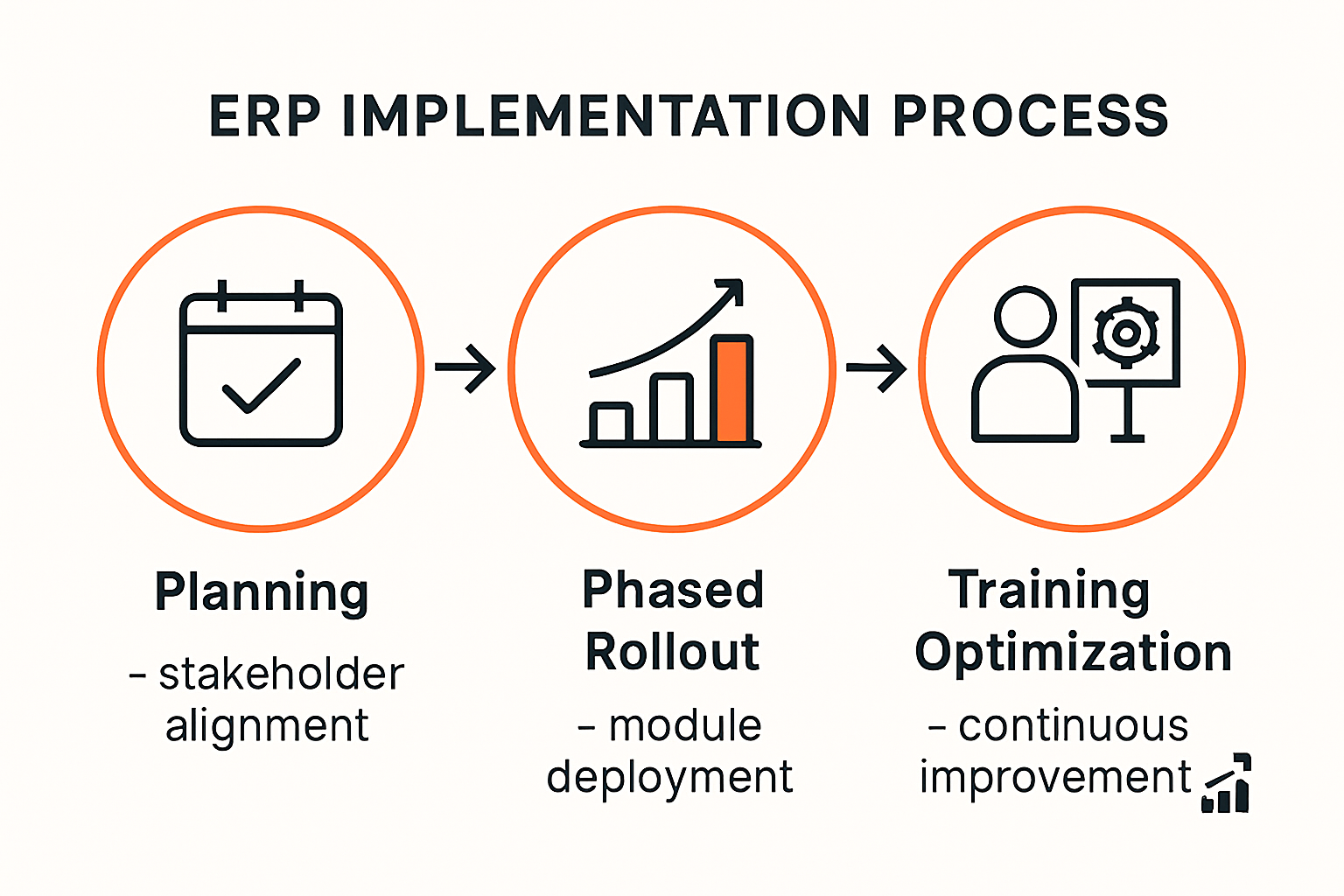
    A phased implementation approach allows businesses to minimize disruption and manage risk effectively. Rather than attempting a complete system overhaul simultaneously, organizations can strategically roll out ERP modules across different departments or business functions. This incremental approach provides opportunities for learning, adjustment, and refinement before full-scale deployment.

    Odoo ERP’s modular architecture is particularly advantageous in this context, enabling businesses to customize and expand their system incrementally. By starting with core modules and progressively integrating more advanced functionalities, businesses can manage complexity, control costs, and maintain operational continuity.

    Continuous optimization is equally important. Regular system audits, performance reviews, and feedback collection help identify potential improvements and ensure the ERP platform continues to meet evolving business requirements. Businesses should establish mechanisms for ongoing system evaluation, allowing for timely updates, integrations, and refinements.

    ERP implementation process flow for businesses

    Choosing the right implementation partner is as crucial as selecting the ERP platform itself. Bista Solutions, with its extensive experience and recognition as a leading Odoo Gold Partner, offers comprehensive support throughout the implementation journey. Our team provides end-to-end guidance, from initial strategy development to post-implementation support, ensuring a smooth and successful digital transformation.

    Successful ERP implementation is not a destination but a continuous journey of technological evolution and organizational adaptation. By adopting a strategic, comprehensive, and people-centric approach, businesses can transform their ERP implementation from a potential challenge into a powerful catalyst for growth and operational excellence.

    The following table presents a concise checklist of critical steps for successful ERP implementation as outlined in the article, alongside their primary objectives. This can help organizations ensure all essential elements are covered during the process.

    Implementation Step Objective
    Internal assessment & planning Identify inefficiencies, define clear objectives
    Build cross-functional implementation team Address diverse needs, foster buy-in
    Develop detailed implementation roadmap Outline milestones, resources, outcomes
    Comprehensive employee training Build competence, reduce resistance
    Phased module rollout Manage risk, allow for learning
    Continuous optimization Refine system, ensure evolving business fit

    Frequently Asked Questions

    What are the key benefits of using ERP platforms for small and mid-sized businesses?

    ERP platforms enhance operational efficiency, provide real-time insights across departments, and support scalability, allowing businesses to optimize resource allocation and reduce costs as they grow.

    How can small businesses choose the right ERP solution?

    Small businesses should look for an ERP solution that offers comprehensive business function integration, advanced reporting capabilities, scalability, and strong security features while considering their unique operational needs.

    What key features should I look for in an ERP platform?

    Look for features such as comprehensive integration of business functions, advanced analytics, modular architecture for scalability, cloud compatibility for remote work, and strong data security protocols.

    How does phased implementation benefit ERP deployment?

    Phased implementation allows organizations to roll out ERP modules gradually, minimizing disruption, allowing for adjustments, and enabling staff to adapt to the new system incrementally.

    Power Your Growth With the ERP Partner Trusted Across North America

    Are you struggling with outdated processes that hold your business back? If your company is searching for an ERP platform that actually fits your growth goals, you know the pain of disconnected systems, slow reporting, and scaling limitations. This article explained how seamless integration, scalability, and real-time insights are non-negotiable for small and mid-sized businesses that want to thrive.


      As the largest Odoo implementer in North America and an award-winning Odoo Gold Partner, Bista Solutions understands that you need more than just software. You need a solution expertly customized for your needs, backed by a team that ensures a stress-free rollout and 24/7 support. Ready to unlock operational efficiency and prepare for the future? Connect with our ERP specialists today and experience why over 350 businesses rely on Bista Solutions to drive their digital transformation. Let us show you how to move from complexity to clarity—schedule your free consultation now and transform your business with confidence.

      What is Odoo Workflow Automation? Key Benefits for Businesses

      Odoo workflow office collaboration
      • by Uzlifat Mir
      • Aug 29, 2025
      • 0
      • Category:

      Odoo workflow automation is changing how companies get work done. Some businesses have cut manual tasks by up to 40 percent just by automating routine operations with Odoo. Most people think automation is all about faster systems and fewer mistakes. Yet the real surprise is how Odoo’s flexible integration and real-time insights can actually spark smarter decisions and fuel business growth from the inside out.

      Table of Contents

      Quick Summary

      Takeaway Explanation
      Odoo automates business processes efficiently Odoo enables businesses to design customized workflows that minimize manual tasks and reduce human errors.
      Integration across modules enhances collaboration Odoo’s seamless connections between different modules improve data consistency and streamline operations across departments.
      Real-time analytics support informed decision-making The platform provides detailed performance metrics, allowing businesses to identify bottlenecks and make data-driven decisions.
      Scalability accommodates business growth Odoo’s flexible architecture allows workflow automation to adapt as organizations evolve, ensuring long-term effectiveness.
      Implementing Odoo requires careful planning Assess current processes, customize modules, and ensure effective training to maximize the impact of automation.

      Understanding Odoo Workflow Automation Basics

      Workflow automation represents a transformative approach to business process management, and Odoo ERP provides a powerful platform for implementing sophisticated automated workflows across organizational operations. At its core, Odoo workflow automation enables businesses to design, execute, and optimize complex business processes with unprecedented efficiency and precision.

      The Fundamental Mechanics of Odoo Workflow Automation

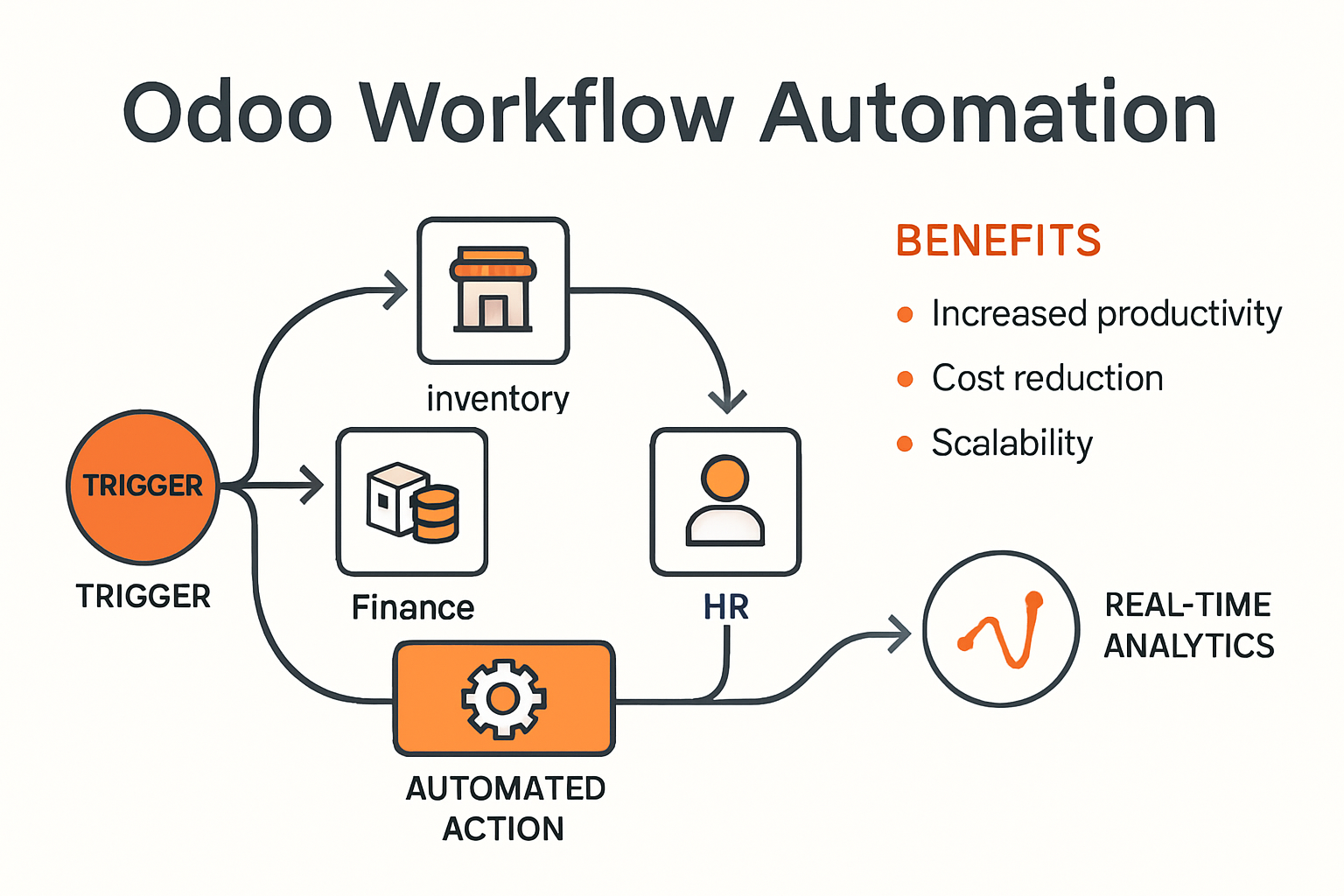
      Odoo workflow automation functions as an intelligent system that connects different business processes, eliminating manual interventions and reducing human error. The platform allows organizations to create customized workflows that automatically trigger specific actions based on predefined conditions. For instance, when a sales order reaches a certain value, the system can automatically generate an invoice, notify the finance team, and update inventory levels without requiring manual input.

      The automation capabilities extend across multiple business domains, including sales, procurement, human resources, and customer relationship management. By establishing rules and conditions, businesses can create seamless sequences of actions that streamline operations and enhance overall productivity. learn more about process optimization techniques that can transform your business efficiency.

      Key Components of Effective Workflow Automation

      Successful workflow automation in Odoo relies on several critical components. First, the system offers robust process mapping tools that allow businesses to visualize and design complex workflows with intuitive drag-and-drop interfaces. These tools enable organizations to model precise sequences of actions, defining exact conditions, triggers, and expected outcomes.

      Second, Odoo provides advanced integration capabilities that connect different modules and external systems. This means workflows can span multiple departments and software platforms, creating a holistic automation strategy. For example, a workflow might start in the sales module, trigger actions in inventory management, and simultaneously update financial reporting systems.

      Third, real-time tracking and reporting functionalities allow businesses to monitor workflow performance, identify bottlenecks, and continuously optimize their automated processes. The system generates comprehensive analytics that provide insights into workflow efficiency, helping businesses make data-driven decisions about process improvements.

      To better understand the critical parts that make Odoo workflow automation effective, the following table summarizes the key components and their primary roles within the system.

      Component Description
      Process Mapping Tools Visualize, design, and model complex workflows using intuitive drag-and-drop interfaces.
      Advanced Integration Seamless connection of modules and external systems for holistic business process automation.
      Real-Time Tracking & Reporting Monitor workflow performance, identify bottlenecks, and optimize processes with analytics.
      Custom Triggers & Conditions Automatically initiate actions based on set rules, reducing manual intervention.
      Comprehensive Analytics Generate insights that enable data-driven decisions and process improvements.

      Businesses implementing Odoo workflow automation can expect significant benefits. By reducing manual tasks, organizations minimize human error, accelerate process completion times, and free up employee resources for more strategic activities. The automation platform supports scalability, allowing workflows to adapt and grow alongside business needs.

      Moreover, Odoo’s workflow automation is not a one-size-fits-all solution. The platform’s flexibility enables businesses to create highly customized workflows tailored to their unique operational requirements. Whether you are a small startup or a large enterprise, Odoo provides the tools to design automation strategies that align perfectly with your organizational goals and processes.

      Core Features of Odoo Workflow Automation

      Odoo workflow automation represents a comprehensive solution for businesses seeking to optimize their operational processes through intelligent, integrated technology. The platform offers a robust set of features designed to transform how organizations manage, execute, and monitor their business workflows with unprecedented precision and efficiency.

      Advanced Process Configuration and Modeling

      At the heart of Odoo workflow automation lies its powerful process configuration capabilities. Businesses can design intricate workflows using intuitive drag-and-drop interfaces that allow for complex condition-based actions and automated decision-making. These workflows can span multiple departments, creating seamless interconnections between sales, procurement, inventory management, and financial reporting systems.

      The platform enables users to establish precise triggers and conditions that automatically initiate specific actions. For example, a workflow might automatically generate purchase orders when inventory reaches a predetermined threshold, send notifications to relevant team members, or update financial records in real-time. explore our comprehensive workflow optimization strategies to understand how these configurations can revolutionize your business operations.

      Intelligent Integration and Modular Flexibility

      Odoo workflow automation distinguishes itself through exceptional integration capabilities. The platform supports seamless connections between different business modules, allowing for holistic process management that transcends traditional departmental boundaries. Each module communicates dynamically, ensuring data consistency and eliminating manual data entry across various business functions.

      The modular architecture means businesses can customize workflows to match their unique operational requirements. Whether you are a small startup or a large enterprise, Odoo provides the flexibility to create tailored automation strategies. This adaptability ensures that workflow automation grows and evolves alongside your business, supporting scalability and continuous improvement.

      Real-Time Monitoring and Performance Analytics

      Comprehensive monitoring and analytics form a critical component of Odoo workflow automation. The platform generates detailed performance metrics that provide deep insights into workflow efficiency, bottlenecks, and potential optimization opportunities. Real-time dashboards allow managers to track process performance, identify potential issues, and make data-driven decisions quickly.

      These analytics go beyond simple reporting. They offer predictive insights that help businesses anticipate challenges, optimize resource allocation, and continuously refine their automated processes. By providing a granular view of operational performance, Odoo empowers organizations to drive continuous improvement and operational excellence.

      Odoo workflow automation process and benefits illustration

      Businesses implementing Odoo workflow automation can expect significant benefits. The platform reduces manual interventions, minimizes human error, accelerates process completion times, and frees up valuable employee resources for strategic activities. Moreover, the comprehensive nature of Odoo’s workflow automation means that organizations can achieve a holistic approach to process management that drives efficiency and innovation.

      As businesses continue to navigate increasingly complex operational landscapes, Odoo workflow automation emerges as a critical tool for maintaining competitive advantage. By providing sophisticated, flexible, and intelligent automation capabilities, the platform enables organizations to transform their operational processes, enhance productivity, and create more agile, responsive business models.

      Business Benefits of Automating with Odoo

      Odoo workflow automation delivers transformative advantages that extend far beyond traditional process management, providing businesses with strategic tools to enhance operational efficiency, reduce costs, and drive sustainable growth. By implementing intelligent automation strategies, organizations can unlock unprecedented levels of productivity and competitive advantage.

      Operational Efficiency and Cost Reduction

      Workflow automation through Odoo dramatically reduces manual administrative tasks, enabling businesses to allocate human resources more strategically. The platform eliminates repetitive processes, minimizes data entry errors, and accelerates task completion times. By automating routine workflows across departments like sales, procurement, and finance, companies can significantly reduce operational expenses and improve overall productivity.

      Automated processes ensure consistent execution of business rules, reducing the likelihood of human errors that can lead to costly mistakes. For instance, automatic invoice generation, inventory tracking, and purchase order management create a streamlined operational environment that enhances accuracy and reduces administrative overhead. discover our comprehensive accounting optimization techniques to understand how automation can transform your financial processes.

      Odoo workflow operational efficiency

      Enhanced Decision-Making and Scalability

      Odoo’s workflow automation provides real-time insights and comprehensive analytics that empower business leaders to make data-driven decisions. The platform generates detailed performance metrics, allowing managers to identify bottlenecks, track key performance indicators, and develop strategic improvements. By offering granular visibility into business processes, Odoo enables proactive management and continuous optimization.

      Moreover, the modular and flexible nature of Odoo’s automation solutions supports business scalability. As organizations grow and evolve, their workflow automation can adapt seamlessly. Whether you are a small startup or a large enterprise, Odoo’s architecture allows for customized workflow configurations that align with your specific operational requirements. This scalability ensures that your automation strategy remains relevant and effective throughout different stages of business development.

      Competitive Advantage and Innovation

      Businesses that leverage Odoo workflow automation gain a significant competitive edge by creating more agile and responsive operational models. Automation frees up employee time and resources, allowing teams to focus on strategic initiatives, innovation, and value-added activities. Instead of being bogged down by repetitive administrative tasks, employees can concentrate on creative problem-solving and business growth.

      The platform’s comprehensive integration capabilities enable businesses to create holistic automation strategies that span multiple departments. This interconnected approach breaks down traditional organizational silos, fostering collaboration and creating a more unified and efficient business ecosystem. By implementing intelligent workflow automation, companies can respond more quickly to market changes, customer needs, and emerging opportunities.

      Odoo workflow automation represents more than just a technological solution. It is a strategic approach to business process management that empowers organizations to optimize their operations, reduce costs, and drive continuous improvement. The ability to automate complex workflows while maintaining flexibility and scalability positions businesses to thrive in an increasingly competitive and dynamic business environment.

      As digital transformation continues to reshape industries, workflow automation emerges as a critical tool for businesses seeking to enhance their operational efficiency, make data-driven decisions, and create more innovative and responsive organizational structures. Odoo provides the technological foundation for businesses to not just survive but excel in this rapidly evolving landscape.

      Getting Started with Odoo Workflow for Your Company

      Implementing workflow automation through Odoo requires a strategic approach that combines careful planning, organizational assessment, and targeted technological integration. Businesses looking to transform their operational processes can follow a structured methodology to ensure successful adoption and maximize the potential of Odoo’s powerful automation capabilities.

      The process of implementing Odoo workflow automation involves several clear steps. The table below outlines these steps along with their primary objectives, helping businesses approach automation methodically.

      Step Primary Objective
      Assess Current Processes Map workflows, identify inefficiencies, and document baseline operations.
      Engage Stakeholders Involve team members from all departments for comprehensive insight and buy-in.
      Design Automation Strategy Select Odoo modules, define triggers/rules, and establish integration points.
      Customize & Configure Tailor workflows and approval hierarchies to specific organizational needs.
      Implement Training & Change Management Ensure staff understands new workflows and smoothly adapts to change.
      Monitor & Optimize Perform regular reviews, monitor data integrity, and refine automation strategies continuously.

      Assessing Your Current Business Processes

      Before diving into Odoo workflow automation, organizations must conduct a comprehensive evaluation of their existing business processes. This critical first step involves mapping current workflows, identifying inefficiencies, and understanding the specific pain points that automation can address. Leadership teams should engage stakeholders from different departments to gather holistic insights into operational challenges and potential improvement areas.

      The assessment phase requires detailed documentation of existing workflows, including process steps, time consumption, error rates, and interdepartmental interactions. By creating a clear baseline, businesses can precisely target automation opportunities and develop a more focused implementation strategy. Explore our comprehensive CRM workflow optimization guide to understand how to effectively analyze your current business processes.

      Designing and Implementing Your Workflow Automation Strategy

      Once the initial assessment is complete, businesses can begin designing their Odoo workflow automation strategy. This phase involves selecting appropriate Odoo modules, configuring workflow rules, and establishing integration points between different business functions. The modular nature of Odoo allows for a phased approach, enabling organizations to start with critical areas and gradually expand automation across the entire business ecosystem.

      Key considerations during implementation include selecting the right modules, defining precise automation triggers, establishing clear approval hierarchies, and ensuring seamless data flow between different system components. Businesses should prioritize modules that offer the most immediate impact, such as sales, procurement, or inventory management. Customization is crucial during this stage, as each organization requires unique workflow configurations that align with their specific operational requirements.

      Best Practices for Successful Odoo Workflow Automation

      Successful Odoo workflow automation demands a holistic approach that goes beyond technological implementation. Organizations must invest in comprehensive training programs to ensure team members understand and effectively utilize the new automated systems. Change management becomes a critical component, helping employees adapt to new workflows and embrace the technological transformation.

      Technical considerations include maintaining robust data integrity, implementing strong security protocols, and establishing continuous monitoring mechanisms. Regular performance reviews and analytics tracking allow businesses to refine and optimize their workflow automation strategies continuously. Organizations should create feedback loops that enable ongoing improvements and adaptations as business needs evolve.

      Businesses must also remain flexible and open to iterative improvements. Workflow automation is not a one-time implementation but a continuous journey of optimization and refinement. By maintaining a proactive approach and staying current with Odoo’s latest features and capabilities, organizations can ensure their automation strategies remain cutting-edge and aligned with emerging business requirements.

      Odoo workflow automation represents a powerful opportunity for businesses to transform their operational efficiency. By following a structured implementation approach, organizations can unlock significant productivity gains, reduce operational costs, and create more agile and responsive business models. The key lies in careful planning, strategic implementation, and a commitment to continuous improvement and learning.

      Frequently Asked Questions

      What is Odoo workflow automation?

      Odoo workflow automation is a business process management tool that allows companies to automate and optimize their workflows, reducing manual tasks and enhancing efficiency across various operational domains.

      What are the key benefits of using Odoo workflow automation for businesses?

      The key benefits include operational efficiency, cost reduction, enhanced decision-making through real-time analytics, and scalability to adapt to growing business needs.

      How does Odoo integrate different business processes?

      Odoo provides advanced integration capabilities that allow seamless connections between various modules, enabling a holistic approach to business process automation across departments such as sales, procurement, and finance.

      What steps should a business follow to implement Odoo workflow automation?

      Businesses should assess current processes, engage stakeholders, design a tailored automation strategy, customize workflows, train employees, and continuously monitor and optimize the implemented automation strategies.

      Unlock the Full Power of Odoo Workflow Automation with Bista Solutions

      Feeling overwhelmed by manual tasks and disconnected business operations? The article shows how Odoo workflow automation can cut manual work, reduce mistakes, and give you real-time insights. But what if you do not have the technical expertise, or you do not know where to start for your business? Many companies struggle to design workflows that fit their unique needs or to keep processes running smoothly as they scale.


        Bista Solutions has helped over 350 organizations worldwide overcome these challenges with tailored Odoo workflow automation and ERP solutions. We are the largest Odoo ERP implementer in North America and have been named Odoo Best Partner across North America for several years. Our expert team can help you analyze your processes, design custom workflows, and fully integrate Odoo across your business. Ready to minimize errors and unlock real-time analytics for smarter decision-making? Contact the Bista Solutions team today to get a personalized roadmap for your workflow automation journey. Do not let inefficiency hold your company back. Experience the difference a trusted Odoo Gold Partner can make.

        How to Evaluate ERP Vendors and Avoid Costly Mistake? What Factors Affect Cost? How to Migrate from Legacy Systems to a Modern ERP

        ERP vendor evaluation

        Choosing an ERP vendor can make or break a company’s operations and future growth. Over 55 percent of ERP projects go over budget or suffer major delays, and that is a staggering statistic. Most people fixate on finding the software with the most features, but the real difference comes from how you assess vendors, manage hidden costs, and handle migration from old systems. The smart approach is never just about technology. It is about seeing the risks everyone else misses.

        Table of Contents

        Quick Summary

        Takeaway Explanation
        Conduct a thorough vendor assessment Evaluate vendors through detailed functional and technical assessments to meet specific industry requirements.
        Understand total cost of ownership Analyze all costs, including implementation, licensing, maintenance, and hidden expenses, for better financial planning.
        Prioritize vendor reputation Research vendor stability and customer support history to minimize implementation risks and enhance success.
        Prepare for data migration carefully Develop a robust data migration strategy, including data cleansing and testing, to ensure accuracy and continuity.
        Implement change management strategies Address human factors with comprehensive training and communication to foster successful ERP adoption.

        Key Factors When Evaluating ERP Vendors

        Selecting the right ERP vendor represents a critical strategic decision that can dramatically impact your organization’s operational efficiency and long-term success. The complexity of this process demands a comprehensive and systematic approach to vendor evaluation, ensuring that the chosen solution aligns precisely with your business requirements and growth objectives.

        Comprehensive Functional and Technical Assessment

        Evaluating an ERP vendor goes far beyond surface-level features. Businesses must conduct a rigorous functional and technical assessment that examines multiple critical dimensions. First, analyze the vendor’s ability to meet your specific industry requirements. Not all ERP systems are created equal, and industry-specific functionality can significantly influence implementation success.

        Key technical considerations include system architecture, scalability, integration capabilities, and security protocols. A robust ERP solution should offer flexible customization options without compromising core system stability. Look for vendors who provide comprehensive APIs and seamless integration potential with existing business systems. learn more about our ERP implementation approach and understand how strategic planning can mitigate potential technical challenges.

        Additionally, assess the vendor’s technology roadmap. An ideal ERP partner demonstrates consistent innovation, regular system updates, and a clear vision for future technological advancements. This forward-thinking approach ensures your investment remains relevant and adaptable to emerging business needs.

        Total Cost of Ownership and Financial Evaluation

        Beyond the initial implementation cost, businesses must conduct a holistic financial evaluation of potential ERP vendors. The total cost of ownership encompasses implementation expenses, licensing fees, ongoing maintenance, training, and potential customization costs. Many organizations underestimate the long-term financial implications of their ERP selection.

        Careful financial analysis should include:

        • Implementation Costs: Detailed breakdown of initial setup, configuration, and migration expenses
        • Licensing Models: Understanding subscription structures, user-based pricing, and potential scalability costs
        • Maintenance and Support: Ongoing technical support, system updates, and potential upgrade expenses

        Transparency from the vendor regarding these financial aspects is crucial. Request comprehensive pricing models and seek clarity on potential hidden costs that could emerge during implementation or subsequent system expansion.

        Vendor Reputation and Support Ecosystem

        The vendor’s reputation and support ecosystem are equally critical factors in the evaluation process. Research the vendor’s track record, client testimonials, industry certifications, and long-term stability. A vendor with a proven history of successful implementations and strong customer support can significantly reduce implementation risks.

        Consider the following vendor evaluation criteria:

        • Implementation Success Rate: Historical performance and client satisfaction metrics
        • Technical Support Quality: Responsiveness, expertise, and availability of support resources
        • Training and Knowledge Transfer: Comprehensive onboarding and continuous learning opportunities
        • Global and Local Support Capabilities: Ability to provide localized support aligned with your business context

        By meticulously evaluating these key factors, organizations can make informed decisions that minimize implementation risks and maximize the potential for ERP system success. Remember, selecting an ERP vendor is not just a technology investment but a strategic partnership that will shape your business processes for years to come.

        Understanding the True Cost of ERP Solutions

        Understanding the true cost of ERP solutions requires a comprehensive approach that goes beyond simple price tags. Organizations must recognize that ERP investments involve complex financial considerations that extend far beyond initial implementation expenses.

        Direct and Indirect Cost Components

        ERP solution costs encompass multiple interconnected financial dimensions. Direct costs typically include software licensing, hardware infrastructure, and initial implementation expenses. However, the most significant financial implications often emerge through indirect costs that are frequently overlooked during initial budgeting.

        Indirect costs represent a substantial portion of the total investment and include critical elements such as employee training, productivity disruptions during system transition, potential workflow reengineering, and ongoing technical support. explore our detailed breakdown of implementation expenses to gain deeper insights into these nuanced financial considerations.

        The table below summarizes the key direct and indirect cost components involved in ERP implementations, highlighting both immediate and long-term expenses organizations should consider.

        Cost Component Type Description
        Software Licensing Direct Fees for using the ERP system software
        Hardware Infrastructure Direct Costs for new or upgraded servers and hardware
        Implementation Expenses Direct Initial setup, configuration, and migration costs
        Employee Training Indirect Time and resources for user education and skill development
        Productivity Disruptions Indirect Temporary dips in efficiency during system transition
        Workflow Reengineering Indirect Process redesign to align with new ERP capabilities
        Ongoing Technical Support Indirect Continued maintenance, helpdesk, and updates

        Organizations must develop a holistic financial model that accounts for both immediate and long-term expenses. This approach involves calculating potential return on investment, understanding scalability costs, and evaluating the system’s adaptability to future business requirements.

        Hidden Expenses and Long-Term Financial Planning

        Beyond surface-level expenses, organizations encounter several hidden costs that can significantly impact their ERP investment. Customization requirements often represent unexpected financial challenges. While out-of-the-box solutions might seem cost-effective initially, extensive customizations can dramatically increase implementation and maintenance expenses.

        Key hidden expense categories include:

        • Integration Complexity: Costs associated with connecting the ERP system with existing technological infrastructure
        • Ongoing Maintenance: Regular system updates, technical support, and potential upgrade expenses
        • User Training and Change Management: Comprehensive training programs and productivity transition support
        • Performance Optimization: Continuous system tuning and potential hardware upgrades

        Successful financial planning requires a forward-looking perspective that anticipates potential technological evolution and business growth. Organizations should develop flexible budgeting strategies that accommodate potential system expansions and emerging technological requirements.

        Strategic Financial Considerations

        Effective ERP cost management demands a strategic approach that balances immediate financial constraints with long-term organizational objectives. Businesses must evaluate vendors not just on initial pricing but on their ability to provide sustainable, scalable solutions that align with strategic growth plans.

        Consider implementing a comprehensive financial assessment framework that includes:

        • Total Cost of Ownership Analysis: Detailed evaluation of all direct and indirect expenses
        • ROI Projection: Quantifiable benefits and potential efficiency gains
        • Scalability Assessment: Understanding cost implications of future system expansions
        • Risk Mitigation Strategy: Financial planning for potential implementation challenges

        Ultimately, understanding the true cost of ERP solutions requires a nuanced, multifaceted approach that transcends traditional financial evaluation methods. Organizations must view ERP investments as strategic partnerships rather than mere technological purchases, focusing on long-term value creation and operational transformation.

        Steps to Migrate from Legacy Systems to Modern ERP

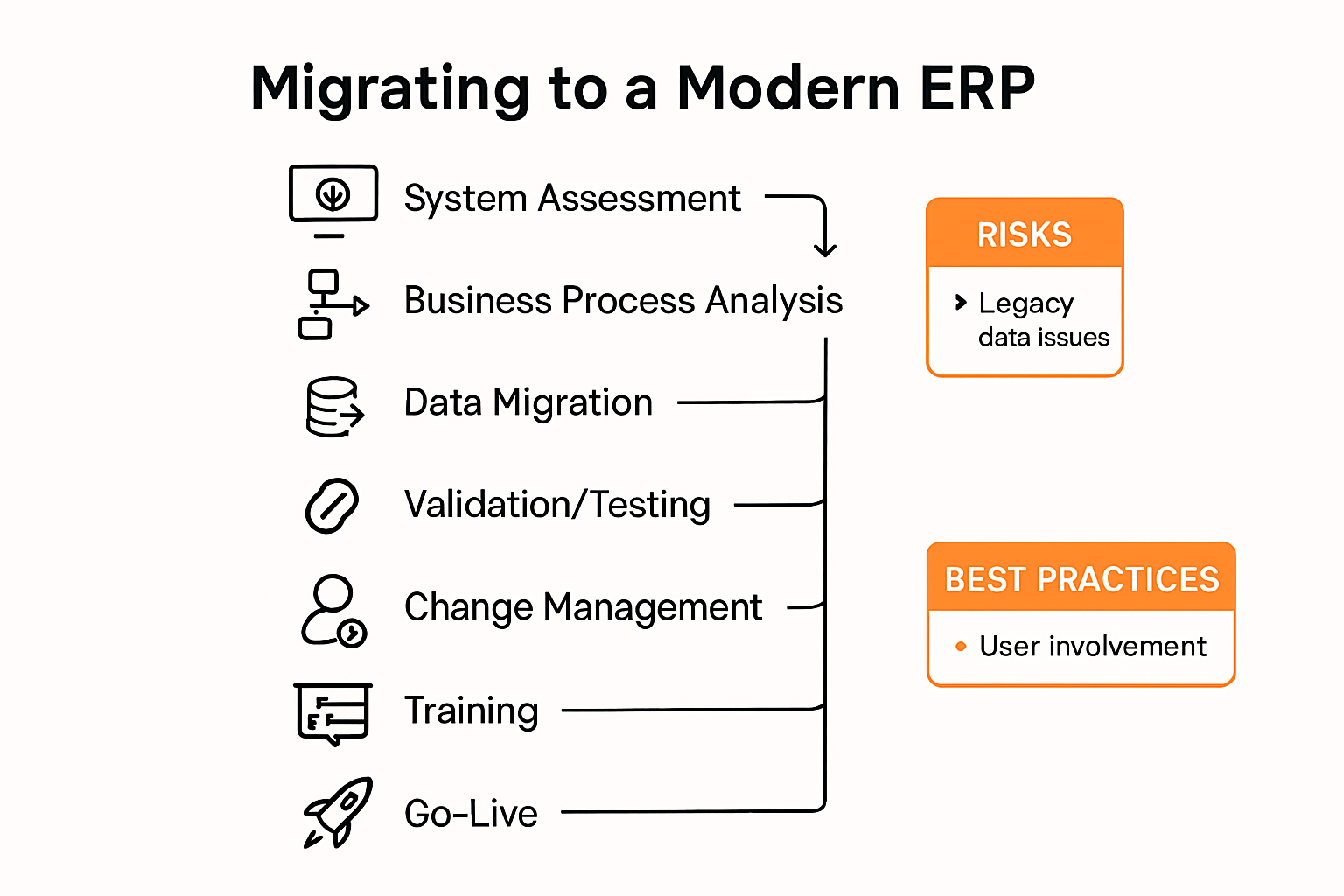
        Migrating from legacy systems to a modern ERP solution represents a transformative journey that demands strategic planning, meticulous execution, and comprehensive organizational alignment. This complex process requires a structured approach that goes beyond technical implementation and addresses both technological and human factors.

        Comprehensive System Assessment and Planning

        Successful migration begins with a thorough evaluation of existing technological infrastructure and business processes. Organizations must conduct an exhaustive audit of current systems, identifying critical data flows, operational dependencies, and potential integration challenges. explore our comprehensive ERP implementation roadmap to understand the nuanced approach required for seamless system transition.

        Key assessment activities include:

        • Current System Mapping: Detailed documentation of existing technological ecosystem
        • Business Process Analysis: Identifying inefficiencies and optimization opportunities
        • Data Quality Evaluation: Assessing data integrity, completeness, and migration readiness
        • Stakeholder Requirements Gathering: Comprehensive consultation with departments to understand specific operational needs

        This initial phase establishes a strategic foundation that guides subsequent migration steps, ensuring alignment between technological capabilities and organizational objectives.

        This table outlines the typical steps involved in migrating from legacy systems to a modern ERP, aligning each step with its main activities based on the article’s guidance.

        Migration Step Main Activities
        Comprehensive System Assessment System mapping, process analysis, data quality evaluation
        Stakeholder Requirements Gathering Consultation with departments, identifying needs
        Data Migration Strategy Data cleansing, mapping, transformation, validation
        Parallel Running Operating old and new systems to ensure business continuity
        Change Management and Training Training programs, communication, leadership alignment
        Cultural Transformation Fostering innovation, addressing resistance

        Legacy to ERP migration step-by-step infographic

        Data Migration and System Integration Strategy

        Data migration represents a critical and complex component of ERP system transformation. Organizations must develop a robust strategy that ensures data accuracy, completeness, and minimal operational disruption. This process involves careful data cleansing, transformation, and validation to maintain historical information integrity.

        Essential data migration considerations include:

        • Data Cleansing: Removing redundant, outdated, or incorrect information
        • Mapping and Transformation: Aligning legacy data structures with new ERP system requirements
        • Validation and Testing: Comprehensive verification of migrated data accuracy
        • Parallel Running: Maintaining legacy systems during initial transition to ensure business continuity

        Successful data migration requires a phased approach that minimizes risks and allows for incremental validation. Organizations should prioritize critical business data and develop contingency plans for potential migration challenges.

        ERP data migration

        Change Management and Organizational Readiness

        Technological migration extends far beyond system implementation. Effective change management represents a crucial element in ensuring successful ERP system adoption. Organizations must develop comprehensive strategies that address human factors, including employee training, cultural adaptation, and stakeholder engagement.

        Key change management components include:

        • Comprehensive Training Programs: Developing role-specific learning paths
        • Communication Strategy: Transparent communication about migration objectives and benefits
        • Leadership Alignment: Ensuring executive support and active involvement
        • Cultural Transformation: Addressing potential resistance and fostering a culture of technological innovation

        By adopting a holistic approach that balances technological implementation with human-centric strategies, organizations can transform ERP migration from a technical project into a strategic organizational initiative. The journey requires patience, strategic planning, and a commitment to continuous improvement.

        Frequently Asked Questions

        What factors should I consider when evaluating ERP vendors?

        When evaluating ERP vendors, consider factors such as comprehensive functional and technical assessment, total cost of ownership, vendor reputation, and the support ecosystem. Ensure the vendor’s solution aligns with your specific industry needs and offers robust integration capabilities.

        How can I avoid hidden costs in ERP solutions?

        To avoid hidden costs in ERP solutions, conduct a thorough analysis of all potential expenses, including implementation, maintenance, training, and ongoing support. Ask vendors for transparent pricing models and anticipate indirect costs related to productivity disruptions and necessary system customizations.

        What steps should I follow to migrate from a legacy system to a modern ERP?

        To successfully migrate, start with a comprehensive assessment of current systems, gather stakeholder requirements, develop a data migration strategy, and execute change management and training programs. Implement parallel running of old and new systems to ensure business continuity during the transition.

        Why is change management crucial during ERP migration?

        Change management is crucial during ERP migration as it addresses employee training, cultural adaptation, and stakeholder engagement. Effective change management fosters buy-in and reduces resistance to new processes, ultimately enhancing the success of the ERP implementation.

        Ready to Avoid ERP Mistakes? Choose a Partner with Proven Results

        Choosing the right ERP vendor is a major decision. If you feel overwhelmed by hidden costs, complex data migrations, and the risk of project overruns described in this article, you are not alone. Many organizations struggle with vendor assessments, total cost of ownership, and the daunting task of moving from legacy systems to a modern, reliable platform. You need a team that understands every technical and organizational challenge.

          Bista Solutions is North America’s largest Odoo ERP partner and a multi-year winner of the Odoo Best Partner award. We have delivered over 350 successful ERP projects by turning complexity into growth for our clients. Connect with experts who prioritize risk reduction, cost transparency, and tailored migration strategies. Contact our team now to start your journey to predictable and successful ERP implementation. If you want a deeper look at our systematic ERP approach before reaching out, visit our ERP resources and blogs. Move forward with confidence and get the support you need today.

          How to Select ERP: A Step-by-Step Guide for Success

          ERP selection workshop

          Choosing an ERP system can feel overwhelming for any business. With over 70 percent of ERP projects running over budget or past schedule, the stakes are higher than most people expect. Yet the hidden truth is that companies who front-load their selection process with careful planning often see the fastest paybacks and smoothest transitions. Suddenly, what looks risky becomes your smartest move.

          Table of Contents

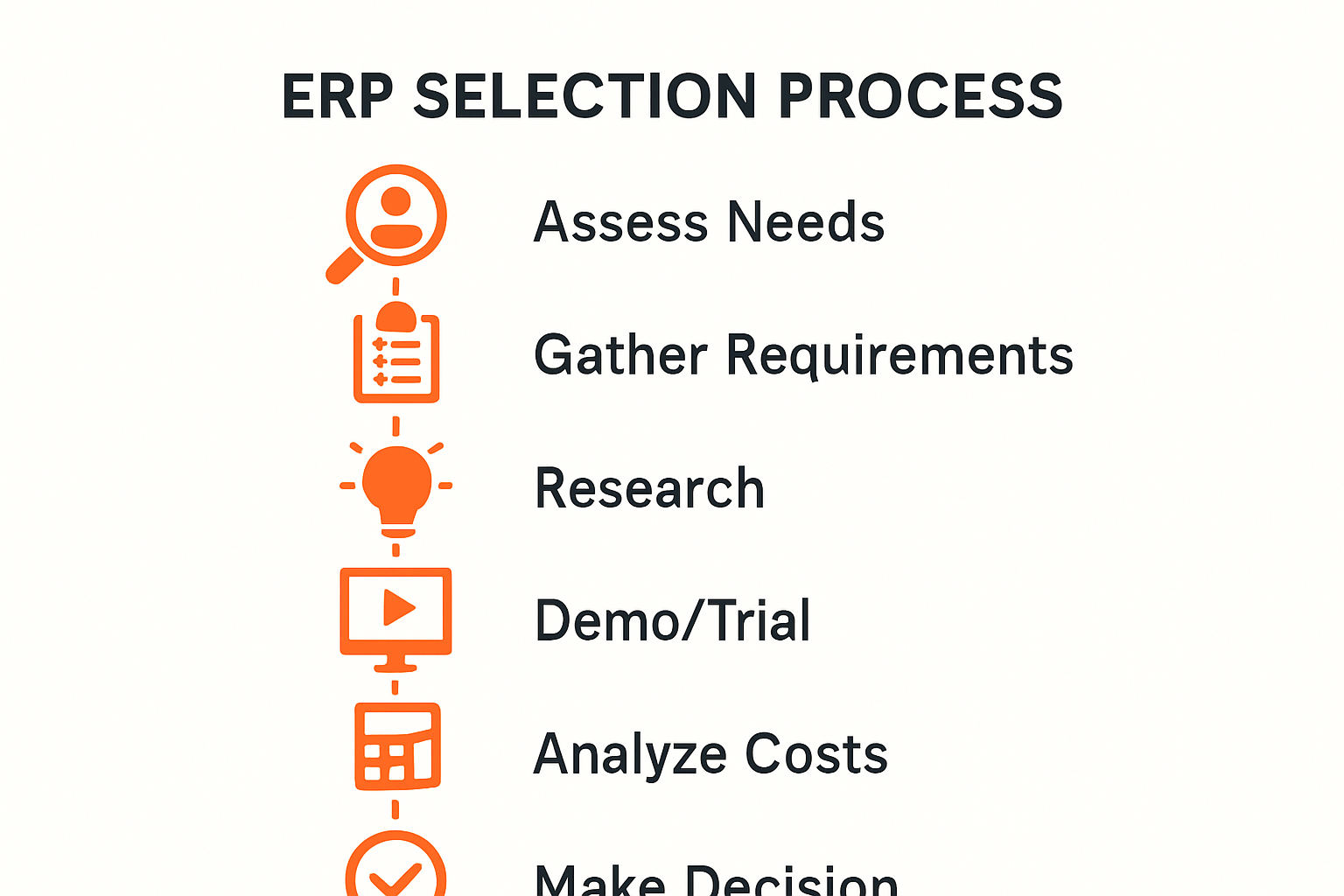
          Here is a step overview table to help you visualize each step in the ERP selection process, including its purpose and a key action focus.

          Step Purpose Key Action
          Assess Your Current Business Needs Identify operational challenges, integration needs, and pain points Conduct internal audit and engage stakeholders
          Define ERP Requirements and Goals Translate business needs into actionable technical specifications Organize requirements workshop; prioritize features
          Research and Evaluate ERP Solutions Compare ERP products to match your requirements Build evaluation matrix; shortlist vendors
          Request Demos and Trial Versions Test ERP solutions in real-world scenarios Create demo scripts; facilitate stakeholder trials
          Analyze Costs and Vendor Support Assess total cost, support, and long-term fit Review TCO, vendor SLAs, and reference checks
          Make Final Decision and Plan Implementation Ensure organizational consensus and prepare deployment strategy Use decision matrix; build implementation plan

          Quick Summary

          Key Point Explanation
          1. Assess current business needs thoroughly Conduct an internal audit to identify operational challenges and integration requirements before selecting an ERP solution.
          2. Engage stakeholders from all departments Involve team leaders to gather insights on specific needs, ensuring comprehensive coverage of operational pain points during the assessment.
          3. Prioritize ERP requirements strategically Distinguish between must-have and nice-to-have features to focus on critical functionalities that align with organizational objectives.
          4. Create a vendor evaluation framework Develop a structured comparison matrix to objectively assess ERP options based on functional capabilities, support, and cost.
          5. Plan implementation with clear strategies Formulate a detailed implementation plan, including timelines and risk mitigation, to ensure a smooth transition and organizational adaptation.

          ERP selection step-by-step process timeline graphic

          Step 1: Assess Your Current Business Needs

          Selecting an Enterprise Resource Planning (ERP) solution begins with a comprehensive assessment of your current business environment. This critical first step determines the foundation for your entire ERP implementation strategy. Understanding your existing operational landscape helps pinpoint precise requirements, challenges, and opportunities for technological transformation.

          To effectively assess your business needs, start by conducting a thorough internal audit of your current processes, systems, and departmental workflows. Map out how information currently flows through your organization, identifying bottlenecks, manual data entry points, and areas of inefficient communication. Pay special attention to recurring pain points that consume excessive time or resources.

          To ensure a thorough and successful needs assessment, use this checklist to verify that all crucial activities and documentation tasks have been completed.

          Needs Assessment Task Description Completion Criteria
          Conduct Internal Audit Review processes, systems, department workflows Audit report completed
          Map Information Flow Identify bottlenecks and manual entry points Visual workflow created
          Engage Stakeholders Interview team leaders in each department All key departments consulted
          Gather Pain Points Document recurring challenges and inefficiencies Pain points summarized
          Categorize Requirements Divide into must-have and nice-to-have features Requirements lists finalized
          Align With Growth Strategy Evaluate ERP needs for scalability and future expansion Growth scenarios documented
          Cross-Reference Solutions Compare needs with available ERP platforms Alignment matrix created

          Engaging stakeholders across different departments becomes crucial during this assessment phase. Schedule comprehensive interviews and collaborative sessions with team leaders from finance, operations, human resources, sales, and customer service. Each department will offer unique insights into their specific challenges and requirements. Ask targeted questions about their current software limitations, reporting capabilities, and efficiency barriers. These conversations will reveal nuanced operational needs that might not be immediately apparent from surface level observations.

          Document your findings systematically, creating a detailed inventory of current technological capabilities, integration requirements, and strategic business objectives. Categorize these findings into must-have capabilities and nice-to-have features. This approach ensures that your eventual ERP selection aligns precisely with your organization’s specific needs.

          Look beyond immediate operational requirements and consider your long-term business growth strategy. An ideal ERP solution should not just address current challenges but also provide scalability and flexibility for future expansion. Consider potential scenarios like increased transaction volumes, geographic expansion, or new product line introductions. Learn more about strategic ERP planning to ensure your selection supports sustained organizational development.

          Verify the completeness of your assessment by cross-referencing your documented needs against potential ERP solutions. A successful initial assessment will provide a clear, comprehensive blueprint that guides subsequent selection and implementation steps, ultimately setting the stage for a transformative technological investment.

          Step 2: Define Your ERP Requirements and Goals

          Transitioning from your initial business needs assessment, defining precise ERP requirements becomes the strategic blueprint for your technological transformation. This critical step transforms broad organizational insights into actionable, specific system requirements that will guide your entire ERP selection process.

          Begin by organizing a comprehensive requirements gathering workshop that includes representatives from every key department. The goal is to translate operational challenges into concrete technological specifications. During these sessions, focus on understanding workflow intricacies, data management needs, reporting expectations, and integration requirements across different business functions. Encourage participants to articulate not just current limitations but also future growth aspirations.

          Structure your requirements documentation across several key dimensions. Financial requirements should outline budgeting processes, accounting standards, and reporting needs. Operational requirements must capture production workflows, inventory management, and supply chain interactions. Human resources requirements should detail recruitment, payroll, performance management, and employee lifecycle tracking capabilities. By systematically breaking down requirements, you create a holistic view of your organizational technological ecosystem.

          Prioritize your requirements using a strategic categorization method. Distinguish between critical must-have functionalities and desirable enhancement features. This approach prevents getting overwhelmed by potential system capabilities and maintains focus on core business needs. Explore our comprehensive ERP implementation guide to understand how strategic requirement definition impacts long-term system success.

          Consider potential scalability and future technological adaptability while defining requirements. An ideal ERP solution should not merely address current operational challenges but provide flexibility for emerging business models, potential market expansions, and technological innovations. Engage in forward-looking discussions that anticipate potential organizational shifts and technological trends.

          Verify the completeness of your requirements definition by conducting a thorough review with senior leadership. Ensure alignment between departmental needs and overarching organizational strategy. A well-defined requirements document serves as a foundational roadmap, significantly increasing the likelihood of selecting an ERP solution that genuinely transforms your business operational capabilities.

          Step 3: Research and Evaluate ERP Solutions

          Researching and evaluating ERP solutions transforms your documented requirements into actionable insights that will guide your technological transformation. This critical step bridges the gap between understanding your organizational needs and identifying potential software platforms that can genuinely support your business objectives.

          Initiate your research by creating a comprehensive vendor landscape map. Cast a wide initial net that includes both industry-specific ERP solutions and broader enterprise platforms. Leverage professional networks, industry conferences, technology review websites, and recommendations from peers in similar business sectors. Pay particular attention to solutions that have demonstrated success within your specific industry vertical, as these will likely offer more nuanced functionality aligned with your operational requirements.

          Develop a structured evaluation framework that systematically scores potential ERP solutions against your predefined requirements. Create a detailed comparison matrix that includes critical parameters such as functional capabilities, integration potential, scalability, user experience, total cost of ownership, and vendor reputation. Conduct thorough demonstrations and request detailed product documentation from potential vendors. During these interactions, challenge vendors to demonstrate specific scenarios that mirror your unique business processes.

          Beyond technical capabilities, assess the vendor’s long-term viability and support ecosystem. Investigate their implementation methodology, ongoing support structures, training resources, and commitment to continuous product development. Look for vendors who demonstrate a clear understanding of emerging technological trends and a proven track record of adapting their solutions to changing business landscapes. Explore our comprehensive ERP implementation insights to understand the nuanced considerations beyond basic feature comparisons.

          Engage in direct conversations with references provided by potential ERP vendors. Request detailed case studies from organizations with similar operational complexity and industry characteristics. These discussions will offer unfiltered insights into real-world implementation experiences, potential challenges, and actual return on investment.

          Verify the completeness of your evaluation by creating a final shortlist of 3-5 ERP solutions that most closely align with your organizational requirements. Ensure this list represents a balanced mix of functionality, cost-effectiveness, and future adaptability. A meticulous research and evaluation process significantly increases the probability of selecting an ERP solution that will serve as a genuine catalyst for organizational growth and operational excellence.

          Step 4: Request Demos and Trial Versions

          Requesting demos and trial versions represents a pivotal moment in your ERP selection journey, transforming theoretical evaluations into hands-on technological exploration. This step allows your organization to experience potential solutions directly, moving beyond marketing materials and sales presentations into genuine system interaction.

          Structure your demo request process with strategic precision. Develop a comprehensive script that mirrors your actual business workflows, challenging each ERP solution to demonstrate its capabilities within your specific operational context. Prepare a detailed scenario list that encompasses complex, multi-departmental processes unique to your organization. Request that vendors configure their demo environments to closely replicate your current technological ecosystem, including potential integration points with existing systems.

          When scheduling demonstrations, insist on comprehensive, end-to-end system walkthroughs. Invite key stakeholders from different departments to participate, ensuring a holistic evaluation perspective. Finance team members should assess reporting capabilities, operations professionals should examine workflow management features, and IT specialists should investigate technical integration potential. Encourage each participant to document their observations, noting both strengths and potential limitations of each demonstrated solution.

          Approach trial versions with a structured implementation strategy. Discover our comprehensive ERP implementation guide to understand nuanced testing methodologies. Select a controlled subset of your business processes for initial trial, typically focusing on core functional areas like financial management, inventory tracking, or customer relationship management. Create a dedicated testing team with clear evaluation criteria and performance benchmarks. This approach allows for meaningful system assessment without disrupting entire organizational operations.

          During trial periods, systematically validate each solution against your predefined requirements. Test system responsiveness, user interface intuitiveness, reporting capabilities, and potential customization flexibility. Pay particular attention to performance under simulated peak operational conditions. Document any technical challenges, user experience friction points, and unexpected system behaviors.

          Verify the completeness of your demo and trial evaluation by consolidating feedback from all stakeholders. Develop a comprehensive scoring matrix that objectively compares each solution’s performance across critical dimensions. A thorough, methodical approach to demos and trials transforms abstract software selection into a data-driven, strategically informed decision-making process.

          Step 5: Analyze Costs and Vendor Support

          Analyzing costs and vendor support transforms your ERP selection from a technical evaluation into a strategic financial decision. This critical step requires a comprehensive examination of both immediate implementation expenses and long-term technological investment potential.

          Total cost of ownership extends far beyond the initial software licensing fees. Develop a detailed financial model that encompasses implementation costs, hardware infrastructure requirements, customization expenses, staff training, ongoing maintenance, and potential future upgrade investments. Create a multi-year projection that realistically captures both direct and indirect expenditures associated with your ERP implementation. Consider potential productivity disruptions during system transition and factor these potential opportunity costs into your comprehensive financial assessment.

          Vendor support capabilities represent an equally crucial evaluation dimension. Investigate the vendor’s support infrastructure with forensic attention to detail. Assess their technical support responsiveness, available communication channels, service level agreements, and long-term product development roadmaps. Request comprehensive documentation outlining their customer support processes, average response times, and escalation procedures. Schedule direct conversations with existing client references to gain unfiltered insights into the vendor’s actual support performance.

          Explore our detailed ERP implementation cost breakdown to understand the nuanced financial considerations that often escape initial evaluations. Look beyond surface-level pricing structures and examine the vendor’s commitment to continuous product improvement, technological innovation, and ongoing system adaptability.

          During your analysis, create a comparative matrix that objectively scores potential ERP solutions across multiple financial and support dimensions. Include metrics such as implementation complexity, estimated return on investment, scalability potential, and vendor reputation. Consider the total economic impact, not just immediate costs. A solution with a slightly higher upfront investment might provide substantially greater long-term value through enhanced operational efficiency, reduced maintenance requirements, and superior technological flexibility.

          Verify the completeness of your cost and support analysis by conducting a final comprehensive review with key financial and operational stakeholders. Ensure your evaluation encompasses both quantitative financial metrics and qualitative support considerations. A meticulous, multifaceted approach to cost and vendor support analysis transforms ERP selection from a procurement exercise into a strategic organizational investment.

          ERP cost analysis

          Step 6: Make Your Final Decision and Plan Implementation

          Making your final ERP decision and initiating implementation marks the culmination of your strategic technological transformation journey. This pivotal moment requires a balanced approach that combines comprehensive analysis, organizational alignment, and forward-thinking implementation planning.

          Consolidate your evaluation findings into a comprehensive decision matrix that objectively scores each potential ERP solution across multiple critical dimensions. Include weighted criteria such as functional alignment, total cost of ownership, vendor support quality, scalability potential, and cultural compatibility with your organization. Engage key stakeholders from various departments in a collaborative decision-making session, ensuring broad organizational consensus and commitment to the selected solution.

          Executive leadership endorsement becomes crucial at this stage. Prepare a detailed presentation that clearly articulates the strategic rationale behind your ERP selection. Demonstrate how the chosen solution directly addresses current operational challenges and supports long-term business growth objectives. Highlight potential return on investment, anticipated efficiency improvements, and the transformative potential of the new technological platform.

          Explore our comprehensive ERP implementation roadmap to understand the nuanced considerations of successful system deployment. Develop a detailed implementation strategy that includes realistic timelines, resource allocation, potential risk mitigation plans, and clear milestone definitions. Consider a phased implementation approach that allows for incremental system rollout, minimizing operational disruption and providing opportunities for continuous refinement.

          Create a dedicated implementation team with clearly defined roles and responsibilities. Select team members who combine technical expertise with strong interpersonal skills and a deep understanding of your organization’s operational nuances. Establish clear communication protocols, regular progress review mechanisms, and robust change management strategies to support smooth organizational adaptation.

          Verify the completeness of your decision and implementation planning by conducting a final comprehensive review with all key stakeholders. Ensure alignment between technological capabilities, organizational objectives, and implementation approach. A meticulously planned implementation transforms your ERP selection from a mere software procurement into a strategic organizational transformation initiative.

          Ready to Make Your ERP Selection Count?

          Choosing the right ERP platform is not just about ticking boxes on a feature list. The reality is more complex. Whether you are facing workflow bottlenecks, integration headaches, or uncertainty about costs and support, every step in your ERP journey impacts your organization’s future. If you recognized your own struggles in the discussions about mapping requirements, evaluating the true total cost of ownership, or planning a seamless implementation, you are not alone. Many companies hesitate at these crossroads and risk picking solutions that fail to scale or adapt over time.


            Let your ERP selection mark real progress, not more confusion. As the largest Odoo ERP implementer in North America and a multi-year Odoo Best Partner, Bista Solutions brings unmatched expertise, end-to-end support, and tailored strategies to meet your challenges. Get expert help at every step, from initial needs assessment to implementation and ongoing support. Your business deserves a solution built for today and ready for tomorrow. Connect with the Bista Solutions team now and start your journey toward a future-ready ERP system.

            Frequently Asked Questions

            What are the first steps to assess my business needs for ERP selection?

            Start with a comprehensive internal audit of your current business processes, systems, and workflows. Engage stakeholders from various departments to gather insights on operational challenges and requirements. Document your findings systematically to create a detailed inventory that guides your ERP selection.

            How can I effectively define my ERP requirements and goals?

            Organize a requirements gathering workshop that includes representatives from key departments. During these sessions, translate operational challenges into specific technological specifications, prioritizing them into must-have and nice-to-have categories to maintain focus on essential capabilities.

            What criteria should I use to evaluate different ERP solutions?

            Create a structured evaluation framework that scores ERP solutions against your predefined requirements, including functional capabilities, integration potential, scalability, user experience, total cost of ownership, and vendor reputation. Conduct thorough vendor demonstrations and check real-world case studies for insights.

            How can I ensure the successful implementation of the selected ERP solution?

            Develop a detailed implementation strategy that includes timelines, resource allocations, and risk mitigation plans. Create an implementation team with clearly defined roles and establish communication protocols for regular progress reviews. Consider a phased approach to minimize operational disruption.

            What Are the Benefits of Working With Odoo ERP Certified Partner Bista Solutions in 2025?

            Odoo ERP business benefits

            Choosing an ERP partner can shape the future of your business. Most companies struggle with software rollouts that stall or never deliver real change. But here is the surprising part. Bista Solutions has managed over 350 successful Odoo ERP implementations worldwide and supports clients 24/7. The real advantage is not just technical know-how. It is the long-term partnership and custom strategy that fuel measurable results for manufacturers and mid-size firms.

            Table of Contents

            Quick Summary

            To help readers quickly understand the distinct advantages of partnering with Bista Solutions as an Odoo ERP certified partner, the table below summarizes the key benefits highlighted throughout the article.

            Benefit Description
            Expert Implementation Specialized knowledge and strategies that ensure Odoo ERP aligns with unique business requirements
            24/7 Comprehensive Support Ongoing, around-the-clock support minimizes disruptions and ensures continuous system optimization
            Proven Track Record Over 350 successful implementations worldwide and recognition as Odoo Best Partner across North America
            Customized Solutions for Manufacturers Tailored ERP solutions that optimize production, inventory, and supply chains for manufacturing businesses
            Scalable Solutions for Mid-Size Companies Flexible and adaptive ERP environments that support business growth and changing operational needs
            Long-Term Strategic Partnership Focus on building an ongoing relationship that delivers continuous innovation and business transformation
            Tangible Business Results Measurable outcomes such as cost reduction, productivity gains, improved decision making, and accelerated growth
            Takeaway Explanation
            Choose Bista Solutions for Expert ERP Implementation Bista Solutions offers specialized knowledge and customized strategies for effective Odoo ERP deployment that align with unique business needs.
            Benefit from Comprehensive 24/7 Support Their ongoing support ensures continuous system optimization and minimal disruptions, enhancing operational efficiency and adaptability.
            Establish a Long-Term Technology Partnership Partnering with Bista Solutions transforms your ERP journey into a strategic collaboration aimed at your continuous digital advancement.
            Experience Tailored Manufacturing Solutions Bista’s precision-driven ERP implementations help manufacturers optimize processes, reduce waste, and enhance productivity in a competitive market.
            Achieve Significant Business Transformation Their solutions lead to measurable improvements in operational costs, productivity, and decision-making, fostering sustainable growth for mid-size firms.

            Why Choose an Odoo ERP Certified Partner for Your Business

            Selecting the right Odoo ERP partner can transform your business operations and drive significant growth. When you work with a certified partner like Bista Solutions, you gain access to specialized expertise that goes far beyond basic software implementation.

            Expert Implementation and Strategic Guidance

            Choosing an Odoo ERP certified partner means you are not just purchasing software but investing in a comprehensive business transformation strategy. Certified partners like Bista Solutions bring deep technical knowledge and industry-specific insights that ensure your ERP solution is precisely tailored to your unique business requirements. These professionals understand how to map complex business processes, configure modules strategically, and create integrated solutions that address your specific operational challenges.

            With over 350 successful global ERP implementations, Bista Solutions demonstrates an unparalleled ability to translate technical capabilities into tangible business value. Their team of 300+ ERP resources includes developers, functional consultants, and technical experts who can seamlessly navigate the intricate landscape of enterprise resource planning.

            Comprehensive Support and Continuous Optimization

            Beyond initial implementation, an Odoo ERP certified partner provides ongoing support that ensures your system remains efficient and aligned with your evolving business needs. Bista Solutions offers comprehensive support across North America with 24/7 availability through their offshore teams. This means you receive dedicated assistance at any time, minimizing potential disruptions and maintaining continuous operational momentum.

            Their approach goes beyond traditional technical support. By understanding complex business workflows, they help you continuously optimize your ERP system, identify potential improvements, and leverage new features that can drive competitive advantage. This proactive strategy transforms your ERP from a mere software tool into a dynamic business enhancement platform.

            Long-Term Partnership and Strategic Value

            Working with an Odoo ERP certified partner is fundamentally about establishing a long-term strategic relationship. Bista Solutions, recognized as the Odoo Best Partner across North America multiple times, brings credibility and proven track record to your digital transformation journey. Their consistent recognition reflects not just technical proficiency but a commitment to delivering exceptional value.

            As a Gold Partner, they have demonstrated exceptional capabilities in implementing scalable, innovative solutions that are specifically tailored to meet unique business requirements. This means you are not just getting a software implementation but a strategic technology partner who understands your industry’s nuances and can help you leverage ERP technology to achieve significant business objectives.

            By choosing a certified Odoo ERP partner like Bista Solutions, you are making a strategic investment in your business’s technological infrastructure. You gain access to expertise, continuous support, and a partnership dedicated to driving your operational excellence and digital transformation.

            Key Benefits of Working With Bista Solutions in the USA

            Bista Solutions stands out as a premier Odoo ERP implementation partner in the United States, offering unique advantages that transform how businesses approach enterprise resource planning. Their commitment to excellence and deep understanding of technological solutions make them an exceptional choice for organizations seeking robust ERP implementations.

            Proven Track Record of Success

            With over 350 successful global ERP implementations, Bista Solutions demonstrates an extraordinary capability to deliver complex technological solutions across diverse industries. Their team of 300+ ERP resources includes dedicated developers, functional consultants, and technical experts who bring comprehensive knowledge to every project. As a recognized Odoo Gold Partner awarded multiple times across North America, they have consistently proven their ability to create scalable, innovative solutions tailored to specific business requirements.

            The company’s impressive recognition as Odoo Best Partner across multiple years highlights their consistent performance and commitment to technological excellence. This track record is not just about implementing software but about creating strategic technological partnerships that drive meaningful business transformation.

            Comprehensive and Customized Support Ecosystem

            Bista Solutions offers an unparalleled support ecosystem designed to meet the complex needs of modern businesses. Their 24/7 support availability through onshore and offshore teams ensures that businesses receive immediate assistance whenever challenges arise. This comprehensive approach goes beyond traditional technical support by exploring advanced analytics strategies that help organizations make data-driven decisions.

            Their implementation strategy focuses on understanding each client’s unique operational landscape. By mapping intricate business processes and configuring Odoo ERP modules strategically, they create solutions that are not just technologically sound but also perfectly aligned with specific business objectives. This personalized approach ensures that the ERP system becomes a true enabler of organizational efficiency and growth.

            Strategic Long-Term Technology Partnership

            Choosing Bista Solutions means investing in more than just an ERP implementation. It means establishing a strategic technology partnership committed to your ongoing digital transformation. Their team does not simply deploy software but works closely with clients to continuously optimize systems, identify improvement opportunities, and leverage emerging technologies.

            As a Gold Partner with deep industry expertise, Bista Solutions understands that successful ERP implementation is an evolving journey. They provide continuous guidance, helping businesses adapt their technological infrastructure to changing market demands. This forward-thinking approach ensures that your ERP system remains a dynamic tool for operational excellence rather than a static technological solution.

            By selecting Bista Solutions as your Odoo ERP partner, you are choosing a team dedicated to translating technological capabilities into tangible business value. Their proven methodology, comprehensive support, and commitment to innovation make them an ideal partner for businesses seeking to optimize their operational performance through advanced ERP solutions.

            Real Results for Manufacturers and Mid-Size Companies

            Manufacturers and mid-size companies face unique technological challenges that require sophisticated yet adaptable enterprise resource planning solutions. Bista Solutions has consistently demonstrated an exceptional ability to deliver transformative Odoo ERP implementations specifically tailored to these complex business environments.

            Precision-Driven Manufacturing Solutions

            For manufacturing businesses, technological efficiency is not just an advantage but a critical requirement for survival and growth. Bista Solutions understands this fundamental need, offering Odoo ERP implementations that go beyond standard software deployment. Their approach focuses on creating integrated systems that address the intricate workflows specific to manufacturing operations.

            By mapping precise manufacturing processes, they help businesses optimize production scheduling, inventory management, quality control, and supply chain operations. Their implementation strategy considers every nuanced requirement, from tracking raw material usage to managing complex production sequences. This granular approach ensures that manufacturers can reduce operational waste, improve productivity, and maintain competitive edge in increasingly dynamic market conditions.

            Infographic showing Odoo ERP benefits for manufacturers

            Scalable Technology for Mid-Size Business Growth

            Mid-size companies require flexible technological solutions that can scale alongside their evolving business needs. Bista Solutions provides Odoo ERP implementations that are not just technologically robust but strategically designed to support continuous business expansion. Explore advanced business scaling strategies that can transform your operational capabilities.

            Their expertise lies in creating customized ERP environments that adapt to unique business models. Whether it is integrating multiple departments, streamlining financial reporting, or creating comprehensive customer relationship management systems, Bista Solutions ensures that mid-size companies have access to enterprise-grade technological capabilities without prohibitive implementation costs.

            Tangible Business Transformation

            The following table outlines the ways Bista Solutions supports both manufacturers and mid-size businesses, making it easy to compare their tailored approaches based on specific business needs.

            Business Type Key Challenges Addressed Focus Areas in ERP Implementation Results Delivered
            Manufacturers Complex production and inventory processes Production scheduling, supply chain, quality control Reduced waste, improved productivity, process optimization
            Mid-Size Companies Need for scalable, flexible solutions Departmental integration, reporting, CRM Enhanced visibility, business scalability, lower costs

            The real value of Bista Solutions’ Odoo ERP implementations is best understood through tangible business outcomes. By leveraging their deep technological expertise and industry-specific knowledge, they help businesses achieve significant operational improvements. Their implementations consistently demonstrate measurable benefits such as reduced operational costs, enhanced productivity, improved decision-making capabilities, and accelerated business growth.

            For manufacturing companies, this might translate to more accurate production forecasting, reduced inventory carrying costs, and improved resource allocation. Mid-size businesses often experience enhanced visibility into their operations, more efficient cross-departmental communication, and the ability to make data-driven strategic decisions quickly.

            Choosing Bista Solutions means selecting a partner committed to your technological transformation. Their proven track record of successful implementations across diverse industries demonstrates their ability to deliver not just software solutions, but comprehensive business enhancement strategies. By understanding the unique challenges of manufacturers and mid-size companies, they create Odoo ERP implementations that serve as powerful catalysts for sustainable business growth.

            ERP business transformation manufacturing

            Frequently Asked Questions

            What are the main benefits of partnering with Bista Solutions for Odoo ERP?

            Bista Solutions offers expert implementation, comprehensive 24/7 support, and a proven track record of successful ERP implementations, ensuring a long-term partnership that drives business transformation.

            How does Bista Solutions ensure the Odoo ERP system is tailored to my business needs?

            Bista Solutions conducts thorough assessments of unique business requirements and maps complex processes to configure Odoo ERP modules strategically, creating customized solutions for optimal efficiency.

            What type of support does Bista Solutions provide after implementing Odoo ERP?

            They provide ongoing 24/7 support through dedicated onshore and offshore teams, helping to optimize your ERP system continuously and address any issues that may arise, ensuring minimal disruptions to operations.

            Why is it advantageous to work with a certified Odoo ERP partner like Bista Solutions?

            Working with a certified partner like Bista Solutions delivers not just technical expertise, but also a strategic long-term relationship focused on continuous improvement and leveraging technology for sustainable business growth.

            Ready to Transform Your Business With an Award-Winning Odoo ERP Partner?

            Many companies face stalled technology projects and a lack of real results when choosing an ERP partner. In the article above, we explored how certified expertise, round-the-clock support, and tailored strategies lead to measurable change. If you need custom solutions for complex workflows or demand 24/7 reliability, partnering with the largest Odoo ERP implementer in North America is your next step. Discover how our proven approach can address your unique pain points and fuel long-term growth.


              Do not settle for generic software rollouts that do not fit your business. Take action now and connect with our team to see how our end-to-end ERP, BPM, and CRM solutions can help you achieve operational excellence. Reach one of our experts today through our contact page for a consultation and start turning strategy into real business results. For more insights on aligning technology to your goals, visit Best ERP for Your Business.

              How Odoo ERP System Supports Compliance in Highly Regulated Industries

              Odoo ERP compliance
              • by Uzlifat Mir
              • Aug 11, 2025
              • 0
              • Category:

              Compliance in manufacturing is a constant headache for US businesses, with penalties for regulatory failures reaching millions of dollars and risking total shutdown. Most companies scramble to keep pace with ever-changing rules, wrestling with piles of documentation and strict reporting deadlines. What few realize is that a tool like Odoo ERP doesn’t just help you meet requirements, it can actually turn compliance into a business advantage.

              Table of Contents

              Quick Summary

              Takeaway Explanation
              Odoo ERP simplifies compliance management Odoo centralizes regulatory documentation and automates reporting, simplifying compliance tracking for manufacturers.
              Robust data security features ensure compliance Odoo provides role-based access controls and encryption, protecting sensitive data and meeting regulatory standards.
              Real-time reporting identifies compliance risks early The system offers automated compliance reports and dashboards that help proactively address potential issues before they escalate.
              Custom implementation meets industry-specific needs Tailored configurations of Odoo ERP ensure alignment with unique regulatory requirements in different manufacturing sectors.
              Training and support maximize user adoption Effective training sessions and ongoing support are crucial for leveraging Odoo ERP’s features and ensuring successful implementation.

              Compliance Challenges for US Manufacturing Businesses

              Manufacturing businesses in the United States face increasingly complex compliance requirements that demand sophisticated technological solutions. The regulatory landscape has transformed dramatically, presenting multifaceted challenges that require strategic technological interventions.

              US manufacturing businesses encounter an intricate web of regulatory mandates across multiple domains. Quality control standards, cybersecurity protocols, data protection regulations, and industry specific requirements create significant operational complexity. Companies must track numerous regulations from agencies like FDA, OSHA, EPA, and industry specific bodies that impose strict reporting and documentation standards.

              The financial and operational risks associated with non compliance are substantial. Penalties can range from substantial monetary fines to complete operational shutdowns. Small and medium manufacturing enterprises often struggle with maintaining comprehensive compliance tracking systems that can effectively monitor and adapt to evolving regulatory frameworks.

              Technology as a Compliance Management Solution

              Enterprise resource planning systems like advanced compliance management solutions have emerged as critical tools for addressing these complex challenges. Modern ERP platforms provide integrated approaches that centralize compliance documentation, automate reporting processes, and create real time visibility into regulatory adherence.

              Odoo ERP systems specifically offer comprehensive features that help manufacturers develop robust compliance strategies. These systems enable businesses to implement standardized processes, maintain detailed audit trails, and generate accurate compliance reports with minimal manual intervention. By leveraging advanced technological capabilities, manufacturers can transform compliance from a potential liability into a strategic organizational advantage.

              Data Security and Regulatory Documentation

              Manufacturing businesses must manage extensive documentation that demonstrates ongoing regulatory compliance. This requires sophisticated data management capabilities that ensure information accuracy, accessibility, and security. Cybersecurity regulations demand rigorous protection of sensitive operational and customer data, creating additional layers of complexity for manufacturing organizations.

              Odoo ERP systems address these challenges by providing secure, centralized data management platforms. These solutions offer role based access controls, encryption protocols, and comprehensive audit logging mechanisms. Manufacturers can confidently track and manage sensitive information while maintaining strict adherence to industry specific regulatory requirements.

              Bista Solutions understands the intricate compliance landscape facing US manufacturing businesses. Our Odoo ERP implementation strategies are designed to transform regulatory challenges into operational opportunities, helping businesses stay ahead of complex compliance requirements while maintaining operational efficiency and competitive advantage.

              Odoo ERP Features for Regulatory Compliance

              Odoo ERP provides sophisticated features designed to help businesses navigate complex regulatory requirements with precision and confidence. The system architecture enables comprehensive compliance management across multiple operational domains, transforming regulatory challenges into strategic opportunities.

              To help readers quickly grasp the most important features Odoo ERP offers for compliance in manufacturing, here’s a summary table outlining each key feature and its main purpose.

              Odoo ERP Feature Purpose/Benefit
              Integrated Documentation & Audit Trails Maintains transparent records for regulatory inspections
              Advanced Access Controls & Data Protection Restricts sensitive data access and ensures security compliance
              Real-Time Compliance Reporting & Monitoring Automates reports and dashboards for proactive risk management
              Custom Implementation Aligns ERP features to specific industry regulations
              Training & Continuous Support Maximizes user adoption and long-term compliance success

              Integrated Documentation and Audit Trail Management

              One of the most critical compliance features in Odoo ERP is its robust documentation and audit trail capabilities. The system automatically generates detailed logs of all business transactions, user activities, and system modifications. This creates an immutable record that supports transparency and accountability.

              Manufacturers can track every change made within the system, including timestamps, user identifications, and specific modifications. These comprehensive audit trails are essential for demonstrating compliance during regulatory inspections. By maintaining granular documentation, businesses can quickly respond to auditor requests and provide evidence of their adherence to industry standards.

              Advanced Access Control and Data Protection

              Odoo ERP implements sophisticated access control mechanisms that align with stringent regulatory requirements. Learn more about our advanced compliance solutions that enable organizations to implement role based permissions, ensuring that sensitive information is accessible only to authorized personnel.

              The system provides multi level security protocols that allow businesses to:

              • Restrict User Access: Define precise user roles and permissions
              • Implement Encryption: Protect sensitive data through advanced encryption techniques
              • Monitor User Activities: Track and log all system interactions for comprehensive security management

              These features are particularly crucial in highly regulated industries where data privacy and protection are paramount. By providing granular control over information access, Odoo ERP helps businesses maintain compliance with complex regulatory frameworks.

              Visual flowchart of Odoo ERP compliance management process

              Real Time Compliance Reporting and Monitoring

              Odoo ERP offers powerful reporting tools that enable businesses to generate comprehensive compliance reports with minimal manual intervention. The system can automatically compile data from various modules, creating detailed insights into regulatory adherence.

              Bista Solutions has developed custom reporting features that allow manufacturers to:

              • Generate automated compliance reports
              • Create customizable dashboards tracking key regulatory metrics
              • Set up automatic alerts for potential compliance deviations
              • Integrate multiple regulatory standards into a unified reporting framework

              The reporting capabilities extend beyond simple data compilation. Intelligent analytics help businesses proactively identify potential compliance risks before they become significant issues. This predictive approach transforms compliance from a reactive task to a strategic business function.

              By leveraging Odoo ERP’s comprehensive compliance features, manufacturing businesses can build resilient, adaptable systems that not only meet current regulatory requirements but also anticipate future challenges. Bista Solutions specializes in tailoring these advanced features to meet the unique needs of each organization, ensuring that compliance becomes a competitive advantage rather than a burden.

              Benefits of Odoo ERP for Auto Parts and Equipment Industries

              Auto parts and equipment manufacturers operate in an environment of intense regulatory scrutiny and rapid technological transformation. Odoo ERP emerges as a comprehensive solution that addresses the complex operational challenges specific to these industries, providing robust tools for compliance, efficiency, and strategic growth.

              Precision Inventory and Supply Chain Management

              The auto parts and equipment industries demand exceptional inventory precision and supply chain transparency. Odoo ERP provides advanced tracking mechanisms that enable manufacturers to monitor component lifecycles, manage complex supplier relationships, and maintain real-time visibility into inventory levels.

              Key inventory management capabilities include:

              • Automated stock tracking across multiple warehouses
              • Real-time component traceability
              • Predictive inventory forecasting
              • Seamless integration with vendor management systems

              These features ensure manufacturers can maintain strict quality control standards while optimizing operational efficiency. By providing granular insights into inventory movements, Odoo ERP helps businesses minimize waste, reduce carrying costs, and respond quickly to market demands.

              Regulatory Compliance and Quality Assurance

              Explore our comprehensive electronic repair solutions that demonstrate how technology can transform regulatory challenges into strategic advantages. Auto parts and equipment manufacturers must adhere to numerous industry standards, including safety regulations, environmental guidelines, and technical specifications.

              Odoo ERP addresses these complex requirements through comprehensive compliance tools that:

              • Automate documentation processes
              • Generate detailed audit trails
              • Track quality control metrics
              • Ensure consistent reporting across organizational functions

              The system enables manufacturers to implement standardized quality assurance protocols, reducing the risk of non-compliance and potential legal complications. By centralizing compliance documentation, businesses can quickly respond to regulatory inquiries and demonstrate their commitment to industry standards.

              Advanced Reporting and Analytics

              Modern auto parts and equipment manufacturers require sophisticated analytical capabilities to remain competitive. Odoo ERP delivers powerful reporting tools that transform raw operational data into actionable business intelligence.

              Manufacturers can leverage advanced analytics to:

              • Identify production inefficiencies
              • Predict maintenance requirements
              • Optimize resource allocation
              • Monitor key performance indicators in real-time

              The integrated reporting framework allows businesses to make data-driven decisions, identifying potential improvements and strategic opportunities. By providing comprehensive insights across multiple operational domains, Odoo ERP enables manufacturers to develop proactive management strategies.

              ERP audit trail compliance

              Bista Solutions specializes in customizing Odoo ERP implementations for auto parts and equipment industries. Our expertise ensures that each solution is precisely tailored to meet the unique operational requirements of our clients, transforming technological complexity into a competitive advantage. We understand that compliance is not just about meeting regulations but about creating a robust, adaptable business ecosystem that can thrive in a rapidly evolving industrial landscape.

              Best Practices for Implementing Odoo ERP in Texas

              Implementing an Enterprise Resource Planning system requires strategic planning and precise execution, particularly for manufacturing businesses across Texas. Bista Solutions has developed a comprehensive approach to Odoo ERP implementation that addresses the unique challenges faced by local businesses.

              Strategic Planning and Organizational Assessment

              Successful Odoo ERP implementation begins with a thorough organizational assessment. Texas manufacturers must carefully evaluate their existing operational processes, identifying specific pain points and compliance requirements unique to their industry. This initial diagnostic phase helps businesses create a tailored implementation strategy that aligns technological solutions with specific business objectives.

              Key considerations during the planning phase include:

              • Comprehensive workflow analysis
              • Identification of current system limitations
              • Evaluation of regulatory compliance requirements
              • Assessment of organizational readiness for technological transformation

              For manufacturers in Texas, the process of implementing Odoo ERP involves several strategic phases. The following table organizes the main steps discussed, making it easier to follow the best practices outlined in the article.

              Implementation Step Key Activities & Considerations
              Organizational Assessment Analyze workflows, system limitations, and compliance requirements
              Strategic Planning Develop roadmaps, allocate resources, set milestones
              Customization & Integration Configure modules, ensure system connectivity, align with compliance
              Training Role-based programs, user documentation, hands-on sessions
              Continuous Support Post-launch support, performance optimization, adapting to change

              Businesses must develop a clear roadmap that outlines implementation milestones, resource allocation, and expected outcomes. Learn more about our comprehensive implementation cost strategies to ensure a financially sustainable approach to digital transformation.

              Customization and Integration Strategies

              Odoo ERP implementation in Texas requires a nuanced approach to customization. While the platform offers robust out-of-the-box functionality, successful deployment demands careful configuration to meet specific industry requirements. Manufacturing businesses must focus on:

              • Precise Module Configuration: Tailoring modules to match existing business processes
              • Integration Capabilities: Ensuring seamless connectivity with existing technological ecosystems
              • Scalability: Developing solutions that can adapt to future business growth
              • Compliance Alignment: Configuring systems to meet industry-specific regulatory requirements

              Bista Solutions specializes in creating custom implementations that transform standard ERP functionality into strategic business tools. Our team works closely with Texas manufacturers to develop solutions that go beyond basic system deployment, creating comprehensive technological ecosystems that drive operational excellence.

              Training and Continuous Support

              Implementation success hinges on effective user adoption and ongoing support. Texas businesses must invest in comprehensive training programs that ensure team members can effectively utilize the new ERP system. This involves:

              • Developing role-specific training modules
              • Creating comprehensive user documentation
              • Implementing hands-on training sessions
              • Establishing ongoing support mechanisms

              The implementation process extends far beyond initial system deployment. Continuous support and iterative improvements are crucial for maximizing the value of Odoo ERP. Bista Solutions provides dedicated support teams that help businesses navigate potential challenges, optimize system performance, and continuously adapt to changing business requirements.

              For Texas manufacturers, Odoo ERP implementation represents more than a technological upgrade. It is a strategic transformation that enables businesses to enhance operational efficiency, ensure regulatory compliance, and create a foundation for sustainable growth. Our approach goes beyond traditional implementation, focusing on creating adaptable technological solutions that empower businesses to thrive in a complex and rapidly evolving industrial landscape.

              Frequently Asked Questions

              How can Odoo ERP help with compliance in manufacturing?

              Odoo ERP centralizes regulatory documentation, automates reporting processes, and provides real-time visibility into compliance adherence, making it easier for manufacturers to meet regulatory requirements.

              What features does Odoo ERP offer for data security?

              Odoo ERP provides role-based access controls, encryption protocols, and detailed audit trails to ensure sensitive data is protected and meets industry-specific regulatory standards.

              How does Odoo ERP support real-time compliance monitoring?

              The system automates compliance reporting and creates customizable dashboards that track key regulatory metrics, allowing manufacturers to identify potential compliance risks early.

              What are the benefits of implementing Odoo ERP for highly regulated industries?

              Implementing Odoo ERP allows businesses to streamline compliance processes, enhance data security, improve inventory management, and leverage advanced analytics, turning compliance challenges into strategic advantages.

              Ready to Turn Compliance Headaches Into a Competitive Edge?

              If you are struggling to keep up with complex regulatory requirements and endless documentation, you are not alone. Many manufacturers face serious risks due to manual compliance processes and a lack of real-time transparency. Odoo ERP, highlighted throughout this article, offers integrated documentation, bulletproof audit trails, and powerful reporting tools that help you avoid costly penalties and stay ahead of changing regulations. With proven success across highly regulated industries, our team at Bista Solutions brings deep expertise in custom Odoo ERP deployments designed for operational precision and ongoing compliance.


                Do not wait until the next audit or a compliance error disrupts your business. Contact the largest Odoo Gold Partner in North America for a tailored compliance solution. Talk to our experts today and see how our award-winning implementations and 24/7 support can help your company turn compliance challenges into real business advantages. Secure your peace of mind and stay ahead of the curve with Bista Solutions. Visit us now at https://www.bistasolutions.com/contact-us/.

                Inventory Management Best Practices for US Manufacturing

                factory inventory management best practices

                US manufacturers spend an astonishing over $1 trillion each year on inventory costs alone, and yet many still run into shortages or waste. Surprising, right? Having plenty of stock on hand does not guarantee smooth production or customer satisfaction. The real secret lies in smart inventory management practices that use technology and strategy to keep both costs and delays in check—setting the leaders apart from the rest.

                Table of Contents

                Quick Summary

                Takeaway Explanation
                Maintain Inventory Balance Balance between stock levels and customer demand to avoid production delays and excess costs.
                Leverage Technology Use barcode, RFID, and digital systems for accurate real-time inventory tracking.
                Implement Demand Forecasting Analyze historical data to predict future inventory needs and minimize excess stock.
                Adopt Automated Tracking Solutions Integrate automated systems for efficient inventory management and reduced human error.
                Utilize Predictive Analytics Employ AI for informed inventory decisions, improving efficiency and reducing costs.

                Key Principles of Inventory Management

                Successful inventory management represents the strategic backbone of manufacturing operations. Manufacturers must develop a comprehensive approach that balances precision, efficiency, and cost-effectiveness to maintain optimal inventory levels and drive business performance.

                Understanding Inventory Control Fundamentals

                Inventory management goes beyond simple stock tracking. It involves a complex system of monitoring, analyzing, and optimizing product quantities to meet customer demand while minimizing unnecessary holding costs. For US manufacturers, this means creating a dynamic strategy that responds quickly to market fluctuations and operational requirements.

                The core objective is maintaining the right balance. Too little inventory risks production delays and lost sales opportunities. Conversely, excessive inventory ties up capital, increases storage expenses, and potentially leads to product obsolescence. learn more about advanced inventory strategies with modern ERP solutions like Odoo can help manufacturers navigate these challenges.

                Economic Principles of Inventory Management

                Economic principles drive effective inventory management practices. Manufacturers must consider several critical factors:

                • Demand Forecasting: Accurate prediction of product requirements based on historical data, seasonal trends, and market analysis.
                • Cost Optimization: Calculating and minimizing total inventory holding costs, including storage, insurance, and potential depreciation.
                • Risk Mitigation: Developing strategies to manage supply chain uncertainties and potential disruptions.

                Implementing these principles requires sophisticated tools and methodologies. Odoo ERP provides comprehensive inventory management modules that enable manufacturers to track real-time stock levels, automate reordering processes, and generate detailed analytical reports.

                Infographic of economic principles of inventory management in manufacturing

                Technology-Driven Inventory Management

                Modern manufacturing relies heavily on technology to implement inventory management best practices. Advanced software solutions enable real-time tracking, predictive analytics, and seamless integration across different business functions. Bista Solutions, as a leading Odoo implementation partner, helps manufacturers leverage cutting-edge technology to transform their inventory management strategies.

                Key technological capabilities include:

                • Automated inventory tracking
                • Intelligent demand forecasting
                • Seamless supplier communication
                • Multi-location inventory management
                • Advanced reporting and analytics

                By embracing these technological innovations, manufacturers can create more responsive, efficient, and data-driven inventory management systems that adapt to changing market conditions and business needs.

                Manufacturers who master these key principles will position themselves for operational excellence, reduced costs, and improved competitive advantage in the dynamic US manufacturing landscape.

                Effective Inventory Tracking Methods

                Inventory tracking represents a critical operational function for US manufacturers, demanding precision, technological integration, and strategic implementation. Manufacturers must develop robust methods that provide real-time visibility, accuracy, and actionable insights into their inventory management processes.

                Barcode and RFID Technology

                Modern inventory tracking relies heavily on advanced technological solutions. Barcode and Radio Frequency Identification (RFID) technologies have transformed how manufacturers monitor and manage their inventory. These systems enable instant product identification, movement tracking, and data collection with unprecedented accuracy.

                Barcode scanning allows manufacturers to track individual items through unique identifiers, recording every movement from warehouse receipt to final distribution. RFID technology takes this a step further by enabling wireless tracking without direct line-of-sight scanning. explore advanced tracking solutions that can revolutionize your inventory management approach.

                Implementing these technologies provides multiple benefits:

                To help readers quickly compare popular inventory tracking technologies mentioned, here’s a summary table of their key features and benefits:

                Technology How It Works Key Benefits
                Barcode Scans item labels using hand-held devices Real-time tracking, minimizes manual errors
                RFID Uses wireless radio waves to identify items, no line-of-sight needed Provides instant updates, automates data collection
                Digital Inventory Management Systems Integrates multiple tracking methods via software platform Offers automation, predictive alerts, advanced analytics
                • Instant Tracking: Real-time location and quantity updates
                • Error Reduction: Minimized manual data entry mistakes
                • Comprehensive Reporting: Detailed movement and stock level insights

                Cycle Counting Strategies

                Cycle counting represents a sophisticated approach to continuous inventory verification. Unlike traditional annual physical inventories that disrupt operations, cycle counting involves regularly scheduled partial inventory checks. This method allows manufacturers to maintain ongoing accuracy without significant operational interruptions.

                Effective cycle counting requires systematic planning. Manufacturers typically categorize inventory items based on value, turnover rate, and criticality. High-value or fast-moving items receive more frequent inspections, ensuring maximum accuracy where it matters most. Odoo ERP provides comprehensive tools that streamline these complex counting processes, enabling manufacturers to implement sophisticated cycle counting strategies with minimal manual intervention.

                Digital Inventory Management Systems

                Digital inventory management systems represent the pinnacle of tracking technology. These comprehensive platforms integrate multiple tracking methods, providing manufacturers with unprecedented visibility and control. Bista Solutions specializes in implementing Odoo ERP systems that offer advanced tracking capabilities across multiple business functions.

                Key features of modern digital inventory management include:

                • Automated stock level monitoring
                • Predictive low-stock alerts
                • Seamless supplier communication
                • Multi-location inventory synchronization
                • Advanced reporting and analytics

                These digital systems transform inventory tracking from a reactive administrative task to a proactive strategic function. By leveraging real-time data and intelligent algorithms, manufacturers can optimize stock levels, reduce holding costs, and improve overall operational efficiency.

                Successful inventory tracking is not about implementing a single method but creating a comprehensive, technology-driven approach that adapts to changing business needs. Manufacturers who invest in advanced tracking technologies position themselves for greater operational excellence and competitive advantage in the dynamic US manufacturing landscape.

                Technology Solutions for Inventory Control

                Technology has revolutionized inventory control for US manufacturers, transforming traditional manual processes into sophisticated, data-driven systems that optimize operational efficiency and strategic decision-making. Modern technology solutions provide unprecedented visibility, accuracy, and control over inventory management processes.

                Enterprise Resource Planning Systems

                Enterprise Resource Planning (ERP) systems represent the cornerstone of advanced inventory control technology. These comprehensive platforms integrate multiple business functions, providing manufacturers with a holistic view of their inventory management. explore comprehensive inventory management solutions that can transform your operational capabilities.

                Odoo ERP stands out as a powerful solution for manufacturers seeking advanced inventory control. The system offers real-time tracking, automated inventory management, and sophisticated reporting capabilities. Key features include:

                • Automated stock level monitoring
                • Multi-location inventory synchronization
                • Intelligent demand forecasting
                • Seamless supplier communication
                • Advanced analytical reporting

                Automated Tracking Technologies

                Cutting-edge tracking technologies have dramatically enhanced inventory control capabilities. Manufacturers now leverage advanced systems that provide instant, accurate inventory insights. Barcode and Radio Frequency Identification (RFID) technologies enable precise tracking of inventory items across complex supply chains.

                Automated tracking technologies offer significant advantages:

                • Real-Time Visibility: Instant location and quantity updates
                • Reduced Human Error: Minimized manual data entry mistakes
                • Enhanced Efficiency: Faster inventory processing and management

                Bista Solutions specializes in implementing these advanced tracking technologies, helping manufacturers transform their inventory control processes through innovative technological solutions.

                Artificial Intelligence and Predictive Analytics

                Below is a summary of technology-driven solutions for inventory control, showing each system’s main advantages and areas of application:

                Solution Type Main Features Benefit to Manufacturers
                ERP Systems (e.g., Odoo) Real-time tracking, supplier integration, advanced analytics Centralized control, improved accuracy
                Automated Tracking (Barcode/RFID) Automated data capture, real-time location tracking Reduces errors, increases efficiency
                AI & Predictive Analytics Demand forecasting, risk identification, smart reordering Proactive management, cost reduction

                Artificial Intelligence (AI) and predictive analytics represent the future of inventory control technology. These advanced systems go beyond traditional tracking, providing intelligent insights and predictive capabilities that enable manufacturers to make proactive inventory management decisions.

                AI-powered inventory management systems can:

                • Predict future inventory requirements
                • Identify potential supply chain disruptions
                • Optimize stock levels based on complex market variables
                • Generate intelligent reordering recommendations

                Odoo ERP incorporates advanced AI capabilities that enable manufacturers to move from reactive to predictive inventory management. By analyzing historical data, market trends, and operational patterns, these systems provide unprecedented insights into inventory optimization.

                The integration of these technology solutions represents a fundamental shift in inventory control. Manufacturers who embrace these advanced technologies gain significant competitive advantages, transforming inventory management from a traditional administrative function to a strategic business driver.

                Successful implementation requires a comprehensive approach that combines technological solutions with strategic planning and continuous improvement. Manufacturers must view technology not as a standalone solution but as an integral part of their overall inventory management strategy.

                Tips for Reducing Inventory Costs

                Reducing inventory costs represents a critical strategic objective for US manufacturers seeking to optimize operational efficiency and maintain competitive advantage. Manufacturers must develop sophisticated approaches that balance inventory requirements with financial prudence, leveraging advanced methodologies and technological solutions.

                Demand Forecasting and Optimization

                Accurate demand forecasting serves as the foundation for reducing inventory costs. Manufacturers must develop robust predictive models that analyze historical data, market trends, and operational patterns to anticipate product requirements with precision. learn about advanced vendor lead time strategies that can significantly impact inventory cost management.

                Odoo ERP provides manufacturers with powerful analytical tools that transform demand forecasting from a reactive to a proactive process. By integrating multiple data sources and utilizing intelligent algorithms, manufacturers can:

                • Predict seasonal demand fluctuations
                • Identify potential inventory surplus risks
                • Generate precise reordering recommendations
                • Minimize unnecessary stock accumulation

                Inventory Optimization Strategies

                Strategic inventory optimization involves implementing targeted approaches that reduce holding costs and improve overall operational efficiency. Manufacturers must develop nuanced strategies that go beyond simple stock reduction, focusing on intelligent inventory management.

                Key optimization strategies include:

                • Just-in-Time (JIT) Inventory: Minimizing stock levels by receiving goods only as they are needed in the production process
                • ABC Inventory Classification: Categorizing inventory items based on their value and strategic importance
                • Vendor Managed Inventory (VMI): Collaborating with suppliers to manage inventory levels more effectively

                Bista Solutions specializes in helping manufacturers implement these sophisticated inventory optimization techniques, leveraging Odoo ERP to create more responsive and cost-effective inventory management systems.

                Technology-Driven Cost Reduction

                Advanced technological solutions play a crucial role in reducing inventory costs. Modern manufacturers can leverage cutting-edge tools and methodologies to minimize financial inefficiencies and optimize inventory management processes.

                Technology-driven cost reduction strategies include:

                • Automated inventory tracking systems
                • Real-time stock level monitoring
                • Predictive analytics for inventory planning
                • Intelligent reordering algorithms
                • Advanced reporting and data visualization tools

                Artificial Intelligence and machine learning technologies enable manufacturers to develop increasingly sophisticated inventory cost management approaches. These systems can analyze complex variables, identify potential cost-saving opportunities, and provide actionable insights that traditional methods cannot detect.

                Successful inventory cost reduction requires a holistic approach that combines strategic planning, technological innovation, and continuous improvement. Manufacturers must view inventory management as a dynamic process that requires ongoing optimization and adaptation.

                By implementing these comprehensive strategies, US manufacturers can transform inventory from a potential financial burden into a strategic asset that drives operational excellence and competitive advantage. The key lies in developing a flexible, technology-enabled approach that balances precision, efficiency, and financial prudence.

                inventory cost reduction discussion

                Frequently Asked Questions

                What are the key principles of effective inventory management for US manufacturers?

                Successful inventory management involves balancing precision, efficiency, and cost-effectiveness. Key principles include understanding inventory control fundamentals, applying economic principles like demand forecasting and cost optimization, and leveraging technology for real-time tracking and predictive analytics.

                How can technology improve inventory management in manufacturing?

                Technology enhances inventory management by enabling real-time tracking, automated systems for inventory control, and advanced reporting capabilities. Solutions like ERP systems, barcode and RFID technologies, and AI-driven predictive analytics help manufacturers optimize their processes and reduce inefficiencies.

                What are some effective inventory tracking methods manufacturers should consider?

                Manufacturers can utilize various tracking methods, including barcode scanning, RFID technology, cycle counting strategies, and digital inventory management systems. These methods provide real-time visibility and help maintain accurate inventory records while streamlining operations.

                How can demand forecasting help reduce inventory costs?

                Demand forecasting is essential for minimizing inventory costs as it allows manufacturers to predict future product needs based on historical data and market trends. By accurately anticipating demand, manufacturers can avoid excess stock, optimize reorder quantities, and improve cash flow.

                Take Control of Your Inventory with Bista Solutions

                Are you frustrated by costly stockouts, excess inventory, or manual tracking errors? The article has outlined how technology-driven inventory management can streamline operations, reduce errors, and keep costs in check. But making the leap from theory to real-world results takes a proven partner. That is where Bista Solutions comes in.


                  When you work with Bista Solutions, you get access to the largest Odoo ERP implementation team in North America and decades of combined experience transforming manufacturers just like you. Our Odoo-based solutions tackle issues like inaccurate cycle counting, lack of real-time tracking, and inefficient demand forecasting. Don’t let outdated systems hold your business back. Reach out to our experts today through our contact page and start building an inventory management system that keeps costs low and operations smooth. Take the first step now to achieve true operational excellence.

                  Top Cloud ERP Advantages for Manufacturing Businesses

                  cloud erp manufacturing

                  Manufacturing businesses are racing to keep up as technology shifts faster than ever. Think about this. A cloud ERP can cut operational costs by up to 30 percent while boosting productivity across teams worldwide. It sounds like just another software upgrade, right? Yet the real shake-up is how these platforms break down barriers for even the most traditional plants, letting them work smarter, safer, and on a truly global scale.

                  Table of Contents

                  Quick Summary

                  Takeaway Explanation
                  Leverage real-time data for agile decision-making Cloud ERP systems provide instant insights, allowing manufacturers to quickly adapt to demand and operational changes.
                  Implement scalable ERP solutions for growth Modular cloud ERP systems grow with your business needs, avoiding large upfront costs linked to traditional systems.
                  Enhance collaboration with remote access Cloud ERP enables teams to communicate seamlessly from anywhere, ensuring continuous workflow in distributed environments.
                  Enhance data security with advanced features Cloud ERP platforms offer multi-layered security, including encryption and access controls, protecting sensitive data effectively.
                  Automate processes to optimize efficiency Cloud ERP reduces manual tasks and improves accuracy through automation, directly enhancing productivity and reducing costs.

                  Boosting Efficiency With Cloud ERP Solutions

                  Manufacturing businesses face constant pressure to improve operational efficiency and reduce costs. Cloud ERP solutions represent a transformative approach to solving these complex challenges. By leveraging advanced technology, companies can dramatically enhance their operational capabilities and make more informed decisions in real time.

                  Real-Time Data Management and Operational Insights

                  Cloud ERP systems provide manufacturers with unprecedented visibility into their entire operational ecosystem. These solutions enable businesses to track inventory, monitor production processes, and analyze performance metrics instantly. With intelligent automation insights, companies like those using Odoo ERP can eliminate traditional data silos and create a unified information environment.

                  The power of real-time data cannot be overstated. Manufacturers can now respond to changes in demand, supply chain disruptions, or quality control issues within minutes instead of days or weeks. This agility translates directly into competitive advantage. By having immediate access to critical information, production teams can make rapid adjustments, optimize resource allocation, and minimize potential bottlenecks.

                  Scalable Technology for Growing Manufacturing Enterprises

                  Cloud ERP solutions offer unparalleled scalability that traditional on-premise systems simply cannot match. As manufacturing businesses expand, their technological infrastructure must adapt quickly. Bista Solutions understands this dynamic and provides cloud ERP implementations that grow seamlessly with your organization.

                  Scalability means more than just adding user licenses. It encompasses the ability to integrate new modules, connect with emerging technologies, and support increasingly complex business processes. Whether you are a small auto parts manufacturer in Texas or a mid-sized equipment production company, cloud ERP can accommodate your unique operational requirements.

                  The modular nature of modern cloud ERP platforms like Odoo allows businesses to add functionality precisely when needed. This approach eliminates massive upfront technology investments and provides a more flexible, cost-effective solution for managing business operations.

                  Enhanced Collaboration and Remote Accessibility

                  In an era of distributed workforces and global supply chains, cloud ERP solutions break down communication barriers. Team members can access critical business information from anywhere, using any device. This accessibility ensures that production managers, sales teams, and executive leadership remain connected and informed.

                  Collaboration features embedded within cloud ERP systems enable seamless communication across departments. Production schedules, inventory levels, and customer orders can be instantly shared and updated. The result is a more responsive, agile manufacturing environment that can quickly adapt to changing market conditions.

                  By implementing a robust cloud ERP solution, manufacturing businesses can transform their operational efficiency. The combination of real-time data, scalable technology, and enhanced collaboration creates a powerful platform for growth and innovation. Bista Solutions remains committed to helping manufacturers leverage these technological advances to achieve their strategic objectives.

                  Enhanced Data Security and Compliance Benefits

                  Data security represents a critical concern for manufacturing businesses in an increasingly complex digital environment. Cloud ERP solutions provide robust mechanisms to protect sensitive information while ensuring comprehensive regulatory compliance across multiple industry standards.

                  Advanced Cybersecurity Protection Strategies

                  Cloud ERP platforms like Odoo ERP deliver multi-layered security architectures that significantly reduce potential vulnerabilities. These solutions implement sophisticated encryption protocols that protect data during transmission and storage. Manufacturers can now safeguard critical intellectual property, financial records, and customer information with unprecedented levels of protection.

                  Modern cloud ERP systems utilize advanced authentication mechanisms including multi-factor authentication, role-based access controls, and comprehensive user activity monitoring. These features ensure that only authorized personnel can access specific organizational data. Bista Solutions understands the critical nature of data protection and designs implementations with security as a primary consideration.

                  infographic showing cloud ERP security and compliance layers

                  Comprehensive Regulatory Compliance Management

                  Manufacturing businesses must navigate complex regulatory landscapes that demand meticulous documentation and adherence to industry standards. Cloud ERP solutions provide automated compliance tracking and reporting capabilities that dramatically simplify regulatory requirements. learn about enterprise security protocols that can transform your organizational approach to data management.

                  Automated compliance features allow businesses to generate precise audit trails, track modifications, and maintain transparent records that meet stringent regulatory requirements. Whether addressing manufacturing quality standards, financial reporting regulations, or industry-specific compliance mandates, cloud ERP systems provide comprehensive documentation capabilities.

                  Continuous Security Updates and Risk Mitigation

                  Cloud ERP platforms represent dynamic security ecosystems that continuously evolve to address emerging technological threats. Unlike traditional on-premise systems that require manual updates, cloud solutions provide automatic security patches and upgrades. This approach ensures that manufacturing businesses always operate with the most current protective technologies.

                  Risk mitigation becomes significantly more straightforward with cloud ERP implementations. Centralized data management allows for rapid identification and resolution of potential security vulnerabilities. Businesses can implement proactive monitoring strategies that detect and neutralize potential threats before they can cause significant damage.

                  Bista Solutions recognizes that data security extends beyond technological implementations. Our approach combines cutting-edge technological solutions with strategic advisory services that help manufacturers develop comprehensive security frameworks. By integrating advanced cloud ERP technologies, businesses can create resilient, adaptive security infrastructures that protect critical organizational assets.

                  The convergence of advanced security protocols, automated compliance management, and continuous technological updates makes cloud ERP solutions an indispensable tool for modern manufacturing enterprises. As cyber threats become increasingly sophisticated, investing in robust cloud ERP security represents a strategic imperative for businesses seeking to protect their operational integrity and maintain stakeholder trust.

                  To illustrate the main security and compliance capabilities discussed, the following table summarizes the distinct benefits of advanced cloud ERP data security features:

                  Security Feature Description Benefit
                  Multi-layered Security Encryption in transit and storage, plus firewalls Protects sensitive and confidential data
                  Multi-factor Authentication Requires multiple credentials for system access Reduces unauthorized access risk
                  Role-based Access Controls Grants permissions by user role Ensures appropriate data visibility
                  Continuous Security Updates Automatic patches and upgrades Keeps defenses current and proactive
                  Automated Compliance Tools Generates audit trails and compliance reports Simplifies regulatory adherence

                  Reducing Costs and Scaling Operations Easily

                  Manufacturing businesses constantly seek strategies to optimize operational expenses while maintaining flexibility for future growth. Cloud ERP solutions represent a powerful mechanism for achieving these critical objectives, offering unprecedented opportunities to reduce costs and scale operations with remarkable efficiency.

                  Eliminating Infrastructure and Maintenance Expenses

                  Traditional on-premise ERP systems require substantial upfront investments in hardware, software licenses, and dedicated IT infrastructure. Cloud ERP platforms like Odoo ERP fundamentally transform this economic model by shifting technology expenses from capital expenditures to predictable operational costs. Manufacturers can now access cutting-edge technological capabilities without massive initial investments.

                  The cloud model eliminates expensive server maintenance, hardware upgrades, and complex IT support requirements. Businesses can redirect resources previously allocated to technology infrastructure toward core manufacturing activities. explore strategic cost reduction methods that can revolutionize your operational financial strategy.

                  By leveraging cloud infrastructure, companies reduce energy consumption, minimize physical storage requirements, and streamline technological management. These efficiencies translate directly into meaningful cost savings across multiple operational dimensions.

                  Dynamic Scalability and Resource Optimization

                  Cloud ERP solutions provide unparalleled flexibility for manufacturing businesses seeking to adapt quickly to market changes. Companies can seamlessly add or reduce user licenses, integrate new modules, and expand computational resources without significant disruptions. This dynamic scalability ensures that technological infrastructure precisely matches current business requirements.

                  Bista Solutions understands that manufacturing enterprises require adaptable technological platforms. Our cloud ERP implementations enable businesses to scale operations horizontally and vertically with minimal friction. Whether experiencing rapid growth or navigating economic uncertainties, manufacturers can adjust their technological footprint rapidly and cost-effectively.

                  The modular nature of modern cloud ERP platforms allows businesses to implement functionality incrementally. This approach means companies only invest in capabilities they immediately require, avoiding unnecessary expenses and maintaining financial agility.

                  Enhancing Operational Efficiency and Productivity

                  Cloud ERP systems generate substantial productivity gains by automating complex business processes and providing real-time operational insights. Manufacturers can optimize resource allocation, reduce manual data entry, and minimize human error through intelligent automation technologies.

                  Advanced analytics embedded within cloud ERP platforms enable precise performance tracking and continuous improvement. Production managers can identify bottlenecks, forecast resource requirements, and make data-driven decisions that directly impact operational efficiency. These capabilities translate into tangible cost reductions and enhanced competitive positioning.

                  By centralizing data management and creating transparent, accessible information ecosystems, cloud ERP solutions help manufacturers eliminate redundant processes and streamline organizational workflows. The result is a leaner, more responsive operational model that can adapt quickly to changing market demands.

                  Bista Solutions remains committed to helping manufacturing businesses leverage cloud ERP technologies as strategic tools for cost reduction and operational excellence. Our comprehensive implementations provide manufacturers with the technological foundation needed to compete effectively in an increasingly dynamic global marketplace.

                  The table below summarizes the cost-related advantages of cloud ERP compared to traditional on-premise ERP systems, as discussed in this section:

                  Cost Factor Traditional On-Premise ERP Cloud ERP Solution
                  Upfront Hardware/Software Costs High Low/None
                  Ongoing Maintenance Needs Significant IT resources Managed by provider
                  Scalability Expenses Expensive, disruptive Pay-as-you-grow, seamless
                  Resource Optimization Rigid, overprovisioned Dynamic, based on demand
                  Physical Footprint/Energy Usage Large data center required Minimal, managed in cloud
                  Upgrade/Patch Cost & Frequency Infrequent, often delayed Automatic and continuous

                  Improving Collaboration for Distributed Teams

                  Manufacturing businesses are increasingly embracing distributed workforce models that demand sophisticated technological solutions for seamless communication and collaboration. Cloud ERP systems provide a comprehensive platform that breaks down traditional organizational barriers, enabling teams to work together effectively regardless of physical location.

                  Unified Communication and Information Sharing

                  Cloud ERP platforms like Odoo ERP create centralized information ecosystems that ensure every team member has access to real-time data. Departments can simultaneously view and update critical information, eliminating communication gaps and reducing potential misunderstandings. Production managers, sales teams, and inventory specialists can collaborate instantaneously, creating a more responsive and agile organizational environment.

                  The ability to share documents, track changes, and maintain comprehensive audit trails transforms how manufacturing teams communicate. Team members can annotate reports, assign tasks, and provide immediate feedback without complex email chains or disjointed communication processes. discover advanced collaboration techniques that can revolutionize your team’s productivity and engagement.

                  By providing a single source of truth, cloud ERP solutions ensure that all team members work from the same updated information. This approach minimizes errors, reduces redundant work, and accelerates decision-making processes across organizational departments.

                  Flexible Access and Remote Work Capabilities

                  Modern manufacturing businesses require technological solutions that support flexible work arrangements. Cloud ERP systems enable team members to access critical business information from any device, anywhere in the world. Whether employees are working from home, traveling, or located in different global offices, they can seamlessly connect and contribute to organizational objectives.

                  Bista Solutions recognizes that remote work capabilities extend beyond simple data access. Our cloud ERP implementations provide robust security protocols that protect sensitive information while enabling comprehensive collaboration. Role-based access controls ensure that team members only view and modify information relevant to their specific responsibilities.

                  The flexibility of cloud ERP platforms allows businesses to maintain productivity regardless of physical constraints. Sales teams can update customer interactions, production managers can monitor manufacturing processes, and finance teams can track financial metrics without being physically present in a central office.

                  Enhanced Cross-Functional Collaboration

                  Cloud ERP solutions break down traditional departmental silos, creating a more integrated and collaborative organizational culture. Manufacturing businesses can now align different functional areas more effectively, ensuring that production, sales, inventory, and financial teams work towards common strategic objectives.

                  Advanced collaboration features allow for real-time project tracking, transparent communication, and streamlined workflow management. Teams can create collaborative spaces, share insights, and develop comprehensive strategies that leverage collective organizational knowledge. This approach transforms how manufacturing businesses approach complex challenges and opportunities.

                  By providing tools that facilitate seamless communication and information sharing, cloud ERP systems help businesses create more agile, responsive, and innovative organizational cultures. Bista Solutions remains committed to helping manufacturing enterprises leverage technology to enhance collaboration, drive efficiency, and achieve strategic goals in an increasingly complex business environment.

                  The future of manufacturing depends on the ability to connect distributed teams effectively. Cloud ERP solutions represent a critical technological foundation that enables businesses to overcome traditional communication barriers and create more dynamic, collaborative work environments.

                  erp collaboration business meeting

                  Frequently Asked Questions

                  How can cloud ERP solutions boost operational efficiency in manufacturing?

                  Cloud ERP solutions enhance operational efficiency by providing real-time data management, which allows manufacturers to track inventory, monitor production processes, and analyze performance metrics instantly. This agility enables quicker adjustments to demand and resource allocation, ultimately improving productivity and reducing costs.

                  What are the scalability advantages of cloud ERP for manufacturing businesses?

                  Cloud ERP platforms offer unparalleled scalability, allowing manufacturers to add new users, integrate emerging technologies, and support complex business processes as they grow. This modular approach eliminates the need for large upfront investments associated with traditional systems, making it more cost-effective.

                  How do cloud ERP systems enhance data security for manufacturers?

                  Cloud ERP systems improve data security through multi-layered security architectures, including encryption, role-based access controls, and continuous security updates. These features protect sensitive information and ensure compliance with regulatory standards, safeguarding critical operational and financial data.

                  In what ways do cloud ERP solutions facilitate collaboration in distributed manufacturing teams?

                  Cloud ERP solutions enable enhanced collaboration by providing unified communication and information sharing across departments. With remote access capabilities, team members can collaboratively manage projects and share real-time data regardless of their physical location, improving responsiveness and agility.

                  Ready to Overcome Manufacturing Roadblocks with Advanced Cloud ERP?

                  Manufacturing leaders like you face real challenges every day. Delays caused by disconnected teams. Spiraling costs when operations cannot quickly adapt. The worry that your sensitive data and regulatory responsibilities are at risk. This article highlighted how cloud ERP transforms these pain points using real-time data, built-in security tools, and scalable technology. Bista Solutions has helped more than 350 manufacturers modernize with Odoo ERP by uniting collaboration, automation, and compliance in a single, easy-to-use platform. See the difference when industry experts guide your journey.


                    Do not let outdated systems slow your growth another day. Take control of your operations and put your company ahead of change. Reach out for a personalized cloud ERP assessment by visiting our Contact Us page. Explore the full impact of intelligent automation in manufacturing by reading about AI-powered ERP solutions. Let Bista Solutions help you turn today’s challenges into tomorrow’s results.

                    Business Process Automation for Manufacturing Success in 2025

                    Business Process Automation for manufacturing

                    Manufacturing leaders are racing to automate every step of production. Efficiency is the big promise and a recent study found that 84 percent of organizations say automation boosts operational efficiency in a big way. Surprise, though. Most folks think robots and fancy machines are the secret. The truth is that success in 2025 is more about smart process mapping and picking the right technology than the hardware itself.

                    Table of Contents

                    Quick Summary

                    Takeaway Explanation
                    Automate to Enhance Efficiency Business process automation streamlines workflows, reducing manual intervention and human error, leading to improved operational efficiency.
                    Focus on Technology Selection Choosing the right automation tools is crucial, as it aligns technology solutions with specific operational needs and ensures compatibility.
                    Implement Gradual Changes Start with pilot testing for automation to validate systems and minimize risks while allowing for adjustments before full deployment.
                    Leverage Advanced Technologies Utilize AI and machine learning to develop intelligent automation that continuously optimizes processes and addresses production challenges effectively.
                    Drive Cost Reductions Automating processes can significantly lower labor costs, decrease errors, and improve resource utilization, leading to greater financial optimization.

                    Understanding Business Process Automation Basics

                    Business process automation transforms how manufacturing organizations operate by systematically replacing manual tasks with intelligent technological solutions. At its core, business process automation represents a strategic approach to increasing operational efficiency and reducing human error through technology-driven workflows.

                    The Fundamental Concept of Business Process Automation

                    Business process automation involves using technology to perform recurring tasks and manage complex operational processes with minimal human intervention. According to IBM, this approach encompasses multiple automation strategies including task automation, workflow automation, and intelligent process management. Manufacturers can leverage these technologies to create more predictable, consistent, and measurable operational outcomes.

                    The key objective is not about replacing human workers but empowering them to focus on higher-value strategic activities. By automating repetitive and rule-based tasks, organizations can allocate human resources toward innovation, problem-solving, and critical thinking that technology cannot easily replicate.

                    Critical Components and Implementation Strategies

                    Successful business process automation requires a structured approach. TechTarget highlights several crucial components for effective implementation. First, organizations must conduct a comprehensive audit of existing processes to identify automation opportunities. This involves mapping current workflows, understanding bottlenecks, and determining which tasks are most suitable for technological intervention.

                    Effective implementation strategies typically involve:

                    • Process Mapping: Detailed documentation of current operational workflows
                    • Technology Selection: Choosing appropriate automation tools aligned with specific manufacturing needs
                    • Gradual Rollout: Implementing automation in phases to manage risk and allow organizational adaptation

                    The American Productivity & Quality Center reports that 84% of organizations believe automation significantly improves operational efficiency. This statistic underscores the transformative potential of strategic business process automation.

                    Technological Foundations and Future Outlook

                    Modern business process automation integrates advanced technologies like artificial intelligence, machine learning, and robotic process automation. These technologies enable more sophisticated, adaptive automation solutions that can learn from data, predict potential issues, and continuously optimize operational processes.

                    For manufacturers considering automation, the key is to start small, focus on measurable improvements, and gradually expand automation capabilities. Learn more about intelligent automation strategies to understand how advanced technologies can revolutionize manufacturing operations.

                    By embracing business process automation, manufacturers can create more agile, responsive, and competitive organizational structures prepared for the complex challenges of modern industrial environments.

                    Key Benefits for Manufacturing Companies

                    Business process automation offers manufacturing companies a strategic advantage in an increasingly competitive global marketplace. By transforming traditional operational approaches, manufacturers can unlock significant performance improvements and create more resilient, efficient organizational structures.

                    Operational Efficiency and Productivity Enhancement

                    According to TechTarget, business process automation directly impacts operational efficiency by reducing manual intervention and minimizing human error. Manufacturing companies can expect substantial productivity gains through automated workflows that streamline complex processes.

                    Specifically, automation enables manufacturers to:

                    • Reduce Processing Time: Eliminate bottlenecks and accelerate task completion
                    • Minimize Human Error: Decrease mistakes associated with manual data entry and repetitive tasks
                    • Optimize Resource Allocation: Redirect human capital toward strategic innovation and problem-solving

                    By implementing intelligent automation strategies, manufacturers create more predictable and consistent operational outcomes. Technology Magazine highlights that companies leveraging business process automation experience significant improvements in overall organizational performance.

                    Cost Reduction and Financial Optimization

                    Financial benefits represent another critical advantage of business process automation. Manufacturers can achieve substantial cost savings by reducing labor expenses, minimizing waste, and improving resource utilization. The BOC Group research indicates that automation leads to direct and indirect cost reductions across multiple operational domains.

                    Key financial benefits include:

                    • Lower Labor Costs: Reducing manual labor requirements
                    • Decreased Error-Related Expenses: Minimizing costly mistakes and rework
                    • Improved Resource Allocation: Optimizing workforce productivity

                    These financial optimizations enable manufacturers to reinvest savings into innovation, research, and strategic growth initiatives. Explore our insights on manufacturing ERP solutions to understand how technology can transform financial performance.

                    Enhanced Compliance and Quality Control

                    Modern manufacturing environments demand rigorous compliance and consistent quality standards. Business process automation provides robust mechanisms for tracking, documenting, and ensuring adherence to industry regulations and internal quality protocols.

                    Automation technologies enable manufacturers to:

                    • Create comprehensive audit trails
                    • Implement real-time monitoring systems
                    • Standardize quality control processes
                    • Reduce variability in production outcomes

                    By integrating advanced automation technologies, manufacturers can develop more transparent, accountable, and high-performing operational ecosystems. The result is not just improved efficiency but a fundamental transformation of how manufacturing organizations approach productivity, quality, and strategic growth.

                    As global competition intensifies, business process automation emerges as a critical differentiator for forward-thinking manufacturing companies seeking to optimize their operational capabilities and drive sustainable success.

                    Infographic showing benefits of business process automation in manufacturing

                    Steps to Automate Manufacturing Processes

                    Implementing business process automation in manufacturing requires a strategic and methodical approach. Successful transformation demands careful planning, precise execution, and continuous improvement to ensure technological investments deliver meaningful operational benefits.

                    Comprehensive Process Assessment and Analysis

                    Rockwell Automation emphasizes the critical first step of conducting a thorough evaluation of existing manufacturing processes. This initial assessment involves mapping current workflows, identifying inefficiencies, and determining which specific tasks are most suitable for automation.

                    Key considerations during process assessment include:

                    • Complexity of Current Workflows: Analyzing existing operational procedures
                    • Repetitive Task Identification: Pinpointing manual processes prone to human error
                    • Performance Bottlenecks: Recognizing areas where automation can significantly improve efficiency

                    Manufacturers must approach this stage with a strategic mindset, focusing on processes that offer the most significant potential for improvement and cost reduction.

                    Technology Selection and Implementation Strategy

                    According to MXD Process, selecting appropriate automation technologies is crucial for successful implementation. This involves evaluating various automation tools, understanding their capabilities, and aligning them with specific manufacturing requirements.

                    Effective technology selection requires:

                    • Comprehensive compatibility assessment with existing systems
                    • Scalability and future-proofing considerations
                    • Alignment with specific manufacturing operational needs

                    Learn more about advanced manufacturing ERP solutions to understand how integrated technologies can transform operational capabilities.

                    Pilot Testing and Continuous Improvement

                    TRA-C recommends a phased approach to automation implementation, starting with pilot testing and gradual system integration. This strategy allows manufacturers to mitigate risks, validate technological investments, and make necessary adjustments before full-scale deployment.

                    Critical elements of successful pilot testing include:

                    • Establishing clear performance metrics
                    • Conducting controlled, limited-scope implementations
                    • Gathering comprehensive feedback from operational teams
                    • Creating mechanisms for ongoing system optimization

                    The ultimate goal of business process automation in manufacturing is not just technological implementation but creating more intelligent, responsive, and efficient operational ecosystems. By following a structured approach that prioritizes careful assessment, strategic technology selection, and continuous improvement, manufacturers can transform their operational capabilities and drive sustainable competitive advantage.

                    Below is a summary table outlining the key steps and considerations for automating manufacturing processes, as described in this section:

                    Step Description Key Considerations
                    Comprehensive Process Assessment and Analysis Evaluate existing processes to identify automation opportunities Workflow complexity, repetitive tasks, bottlenecks
                    Technology Selection and Implementation Strategy Choose suitable automation tools and plan phased rollout System compatibility, scalability, specific needs
                    Pilot Testing and Continuous Improvement Test automation on a small scale and refine continuously Metrics, controlled tests, team feedback, optimization

                    Practical Examples and Use Cases in 2025

                    As manufacturing technology evolves, business process automation continues to revolutionize operational strategies, offering innovative solutions that transform traditional production methodologies. In 2025, manufacturers are leveraging advanced automation technologies to create more intelligent, responsive, and efficient operational ecosystems.

                    Production Tracking and Dynamic Line Reconfiguration

                    Cutting-edge research demonstrates sophisticated automation capabilities in manufacturing environments. A groundbreaking framework allows manufacturers to implement dynamic line reconfiguration, addressing operational disturbances with unprecedented precision. This system uses a digital twin approach, monitoring real-time production challenges and generating optimal reconfiguration strategies.

                    The research highlights remarkable capabilities, including:

                    • Near Real-Time Monitoring: Tracking production progress and resource requirements
                    • Proactive Disturbance Management: Preventing potential throughput drops
                    • Rapid Simulation and Optimization: Generating solution strategies at approximately 400 times real-time speed

                    In practical scenarios, this approach has demonstrated the ability to prevent significant throughput reductions, showcasing the transformative potential of intelligent automation technologies.

                    Intelligent Process Automation Across Manufacturing Functions

                    Blue Prism reveals the expansive potential of robotic process automation (RPA) in manufacturing. Beyond traditional applications, manufacturers are implementing intelligent automation across multiple operational domains.

                    Practical use cases include:

                    • Bill of Materials Management: Automating product data extraction and documentation
                    • Production Tracking: Creating near real-time progress overviews
                    • Component and Raw Material Monitoring: Predicting and managing resource requirements

                    Explore advanced AI-powered ERP solutions to understand how integrated technologies can transform manufacturing operations.

                    Below is a table summarizing practical automation use cases across manufacturing functions provided in this section:

                    Use Case Description
                    Bill of Materials Management Automating product data extraction & documentation
                    Production Tracking Near real-time overview of production progress
                    Component & Raw Material Monitoring Predicting/managing resource requirements
                    Dynamic Line Reconfiguration Real-time disturbance management & reconfiguration

                    Comprehensive Automation Strategies

                    Columbus Global outlines an expansive vision of manufacturing automation that extends far beyond traditional production processes. Modern manufacturers are implementing automation across diverse operational domains, creating more holistic and integrated organizational approaches.

                    Innovative automation applications encompass:

                    • Servitisation enablement
                    • Product recall and traceability systems
                    • Energy monitoring and sustainability tracking
                    • Automated waste management
                    • Quality control processes
                    • Supplier audit management
                    • Factory capacity utilization optimization
                    • Shift handover reporting
                    • Personal protective equipment management
                    • Employee recruitment and certification processes

                    automation strategies human teamwork

                    These examples illustrate that business process automation in 2025 is not merely a technological upgrade but a fundamental reimagining of manufacturing operational strategies. By embracing intelligent automation, manufacturers can create more adaptable, efficient, and resilient organizational structures capable of navigating increasingly complex global manufacturing landscapes.

                    Frequently Asked Questions

                    What is business process automation in manufacturing?

                    Business process automation in manufacturing refers to the use of technology to automate repetitive tasks and streamline complex operational processes, reducing manual intervention and human error.

                    How can automation improve operational efficiency in manufacturing?

                    Automation enhances operational efficiency by reducing processing time, minimizing human errors, and optimizing resource allocation, allowing manufacturers to focus on strategic activities.

                    What are the key benefits of implementing business process automation?

                    The key benefits include improved operational efficiency, cost reductions, enhanced compliance and quality control, and the ability to reallocate human resources toward innovation.

                    What steps are involved in implementing automation in manufacturing processes?

                    The steps include conducting a comprehensive process assessment, selecting suitable technologies, implementing them through pilot testing, and continuously improving the automated systems.

                    Ready for Real Manufacturing Transformation in 2025?

                    Is your manufacturing team feeling the pressure to eliminate bottlenecks and manual errors, but struggling to choose the right technology for your unique processes? The article highlights how process assessment, strategic tech selection, and intelligent automation are the real drivers for next-level efficiency—not just expensive hardware. If these challenges sound familiar, Bista Solutions is here to help you take the next step.


                    Business automation Manufacturing ERPAs the largest Odoo ERP implementer in North America, we specialize in building scalable, tailored solutions that address the specific process automation goals and pain points covered in this article. Our experienced consultants can help you map your workflows, select technology that fits your goals, and guide your automation journey from pilot testing to full rollout.

                    Do not let inefficiencies and indecision slow you down. Contact our expert team today to book your personalized automation assessment or learn more about our advanced manufacturing ERP solutions. Now is the time to future-proof your operations and secure long-term manufacturing success.

                    Article generated by BabyLoveGrowth