
Understanding The Hidden Costs of ERP Implementation: A Guide to Budgeting. Why Bista Solutions is Better ERP Implementor and Don’t Hide Any ERP Cost

by Uzlifat Mir
- Sep 09, 2025
- 0
- Category: ERP Software
ERP implementation sounds like a straightforward tech upgrade every company should eventually tackle. But here’s a shocker. Nearly half of all ERP projects run into hidden costs and unplanned budget overruns. Most leaders expect a simple digital transformation yet find themselves caught by surprise expenses and complex organizational changes. The real story is not just about installing software. It’s about navigating unpredictable financial waters that can either sink your project or turn it into a strategic advantage if you know where to look.
Table of Contents
- What Is ERP Implementation And Why It Matters
- Identifying Hidden Costs In ERP Implementation
- The Impact Of Underestimating ERP Budgets
- Bista Solutions: Transparency In ERP Costs
- Real-World Examples Of ERP Cost Surprises
Quick Summary
| Takeaway | Explanation |
|---|---|
| ERP implementation is complex and strategic. | It involves more than just software; it requires careful planning, alignment, and integration of business processes. |
| Understand hidden costs in ERP projects. | Consider expenses like staff training, system integration, and productivity losses, which often exceed initial budget estimates. |
| Plan for budget flexibility. | Comprehensive financial forecasting is essential to accommodate unexpected costs and ensure a smoother implementation process. |
| Choose the right ERP implementation partner. | Selecting experienced consultants can enhance your implementation success by aligning technology with organizational culture and goals. |
| Learn from real-world ERP challenges. | Analyzing case studies can prepare businesses for potential financial surprises and complexities in their own implementation journeys. |
What is ERP Implementation and Why It Matters
Enterprise Resource Planning (ERP) implementation represents a comprehensive digital transformation strategy that enables businesses to centralize and streamline their operational processes across multiple departments. At its core, ERP implementation involves deploying an integrated software system that connects various business functions like finance, human resources, supply chain management, and customer relationship management into a single, unified platform.
Understanding ERP Implementation Complexity
ERP implementation is far more than just installing new software. It is a strategic process that requires careful planning, organizational alignment, and significant technological infrastructure. Businesses undertake this complex journey to achieve several critical objectives:
- Consolidate disparate business processes into a single, integrated system
- Enhance operational efficiency and reduce manual data entry
- Provide real-time insights and reporting capabilities
- Standardize workflows across different organizational units
Implementing an ERP system demands substantial investments in technology, training, and organizational change management. Companies must carefully evaluate their current processes, identify potential gaps, and design a comprehensive implementation strategy that minimizes disruption while maximizing technological benefits.
The Strategic Importance of ERP Implementation
Modern businesses operate in an increasingly complex and competitive environment where agility and information accuracy are paramount. Learn more about our comprehensive ERP implementation approach to understand how Bista Solutions transforms technological challenges into strategic opportunities.
ERP systems serve as the technological backbone for organizations, enabling them to make data-driven decisions quickly and efficiently. By integrating multiple business functions into a cohesive platform, companies can:
- Reduce operational redundancies
- Improve cross-departmental communication
- Enhance financial reporting and compliance
- Scale business processes more effectively
While ERP implementation represents a significant undertaking, the potential benefits far outweigh the initial challenges. Organizations that successfully implement ERP solutions gain a competitive advantage through improved operational visibility, streamlined processes, and the ability to adapt rapidly to changing market dynamics.
Choosing the right implementation partner becomes crucial in this transformative journey. Experienced ERP consultants like Bista Solutions understand that successful implementation goes beyond technical deployment and requires a holistic approach that considers organizational culture, existing workflows, and long-term strategic goals.
Identifying Hidden Costs in ERP Implementation
ERP implementation involves substantial financial investments that extend far beyond the initial software licensing and deployment expenses. Many organizations underestimate the comprehensive financial commitment required for a successful digital transformation, leading to budget overruns and unexpected financial strain.
Unseen Expenses in ERP Implementation
Businesses often focus on direct software costs while overlooking the multifaceted financial implications of comprehensive ERP integration. Learn more about detailed ERP implementation cost breakdown to understand the nuanced financial landscape of enterprise technology investments.
The hidden costs of ERP implementation typically emerge across several critical areas:
- Extensive staff training and skill development programs
- Custom software configuration and integration expenses
- Data migration and system compatibility investments
- Hardware infrastructure upgrades
- Potential productivity losses during transition periods
Financial Impact and Strategic Considerations
Enterprise technology transformation requires a holistic financial perspective that goes beyond simple software acquisition. Organizations must anticipate and budget for indirect expenses that can significantly impact overall implementation costs. These expenses often include:
- Organizational change management initiatives
- Ongoing technical support and maintenance
- Potential consultant and implementation partner fees
- Additional software modules or functionalities
- Continuous employee skill enhancement
Successful ERP implementation demands a comprehensive financial strategy that accounts for both immediate and long-term investments. Proactive financial planning involves creating flexible budgets that accommodate unexpected challenges and technological adaptations.
Enterprise leaders must recognize that ERP implementation is not a one-time expense but a continuous investment in organizational efficiency and technological capabilities.
Below is a comparison table summarizing common hidden ERP implementation costs and their impacts, helping readers visualize areas that often lead to budget overruns.
| Hidden Cost Category | Description | Potential Impact |
|---|---|---|
| Staff Training | Expenses for upskilling employees on new ERP systems | Increased project duration and costs |
| Custom Configuration & Integration | Costs for adapting ERP to unique business requirements | Scope creep and higher technical expenses |
| Data Migration | Resources for transferring and validating legacy data | Project delays and unexpected fees |
| Hardware Upgrades | Investment in servers and technical infrastructure | Capital outlay beyond software costs |
| Productivity Loss During Transition | Reduced efficiency as teams adjust to new processes | Short-term revenue or operational impact |
| Change Management Initiatives | Programs to support organizational adaptation | Extra consulting and training fees |
| Ongoing Support & Maintenance | Post-launch technical support and system updates | Continued operational expenditure |
The Impact of Underestimating ERP Budgets
Underestimating ERP implementation budgets can create significant financial and operational challenges for organizations. What begins as a strategic technological investment can quickly transform into a complex and costly endeavor that strains organizational resources and disrupts business continuity.
Financial Risks of Budget Miscalculation
The consequences of inadequate budget planning extend far beyond simple monetary constraints. Learn more about ERP implementation considerations for specific industries to understand the nuanced financial implications across different business contexts.
Businesses that fail to comprehensively assess implementation costs often encounter substantial financial risks:
- Unexpected technology integration expenses
- Extended implementation timelines
- Increased consulting and technical support fees
- Potential operational disruptions
- Unplanned software customization costs
Operational and Strategic Implications
Budget underestimation can trigger a cascading series of operational challenges that compromise an organization’s technological transformation objectives. The financial strain created by unexpected expenses can lead to:
- Reduced implementation scope
- Compromised system functionality
Poor financial planning transforms ERP implementation from a strategic investment into a potential organizational liability. Comprehensive budget forecasting becomes crucial in mitigating potential risks and ensuring successful technological integration.
Successful ERP implementation requires a holistic approach that anticipates potential financial challenges and creates flexible budgetary frameworks. Organizations must move beyond traditional linear budgeting models and develop dynamic financial strategies that accommodate technological complexity and organizational variability.
Enterprise leaders must recognize that ERP budgets are not static documents but living financial frameworks that require continuous refinement and strategic adaptation. By adopting a proactive and comprehensive approach to financial planning, businesses can transform potential budget challenges into opportunities for technological innovation and organizational growth.
Bista Solutions: Transparency in ERP Costs
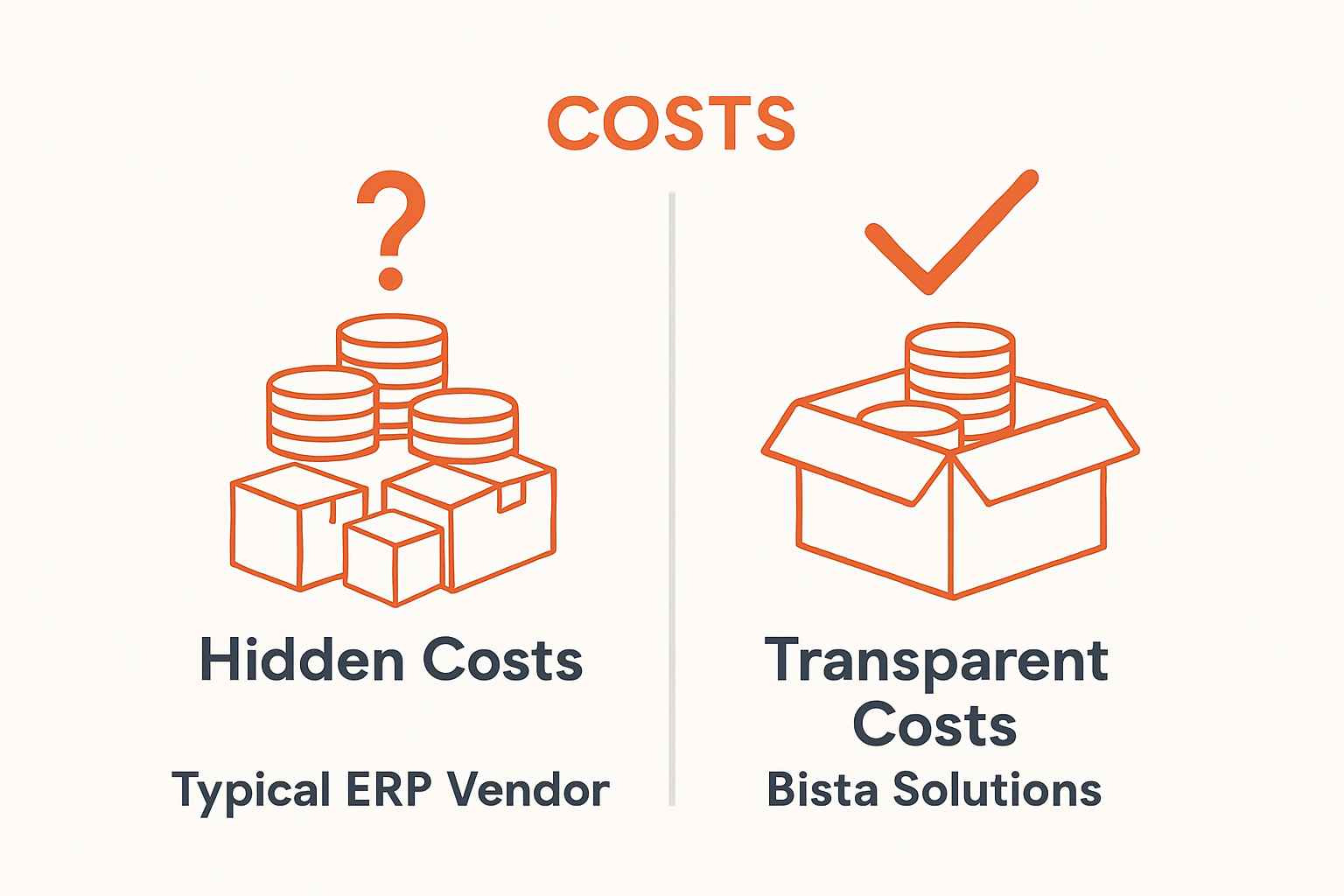
Bista Solutions distinguishes itself in the ERP implementation landscape through an unwavering commitment to financial transparency and comprehensive cost management. By prioritizing clear communication and detailed cost breakdowns, the company helps organizations navigate the complex financial terrain of enterprise technology investments.
A Holistic Approach to Cost Transparency
Discover our top strategies for managing ERP implementation costs and understand how Bista Solutions transforms potential financial challenges into strategic opportunities. The company’s approach goes beyond traditional implementation models by providing clients with:
- Comprehensive initial cost assessments
- Detailed breakdown of direct and indirect expenses
- Proactive financial risk management strategies
- Continuous budget tracking and optimization
- Transparent communication throughout the implementation process
Mitigating Financial Uncertainties
Bista Solutions recognizes that ERP implementation represents a significant organizational investment. The company’s unique methodology focuses on eliminating financial surprises by developing meticulously crafted implementation frameworks that account for potential variabilities and unexpected challenges.
Key elements of Bista Solutions’ transparent cost management include:
- Preliminary comprehensive financial assessments
- Customized budgeting frameworks
- Regular financial progress reporting
- Adaptive cost management strategies
- Detailed post-implementation financial reviews
By providing clients with a clear, predictable financial pathway, Bista Solutions transforms ERP implementation from a potentially risky venture into a strategic, well-managed technological investment. The company’s commitment to transparency ensures that organizations can make informed decisions, minimize financial risks, and achieve their technological transformation objectives with confidence.
Enterprise leaders seeking a reliable ERP implementation partner will find Bista Solutions’ approach refreshingly direct and strategically comprehensive.
The following table compares Bista Solutions’ approach to ERP cost transparency with common industry practices, highlighting how Bista addresses financial uncertainties that often challenge organizations.
| Aspect | Typical Industry Approach | Bista Solutions Approach |
|---|---|---|
| Initial Cost Assessment | Limited or high-level estimate | Comprehensive and detailed breakdown |
| Expense Transparency | Often unclear, possible hidden charges | Full disclosure of direct & indirect expenses |
| Budget Tracking | Infrequent updates | Regular progress reporting |
| Risk Management | Reactive to challenges | Proactive, adaptive strategic planning |
| Communication | Ad hoc or only when issues arise | Continuous and transparent communication |
| Post-Implementation Review | Rarely included | Detailed post-implementation financial review |

Real-World Examples of ERP Cost Surprises
Real-world ERP implementation experiences reveal the complex financial challenges organizations encounter when transitioning to integrated enterprise systems. These case studies underscore the critical importance of comprehensive budget planning and anticipating potential hidden expenses.
Unexpected Financial Challenges
Recognize the signs that indicate your business needs an ERP system to understand the potential transformative and financial implications of technological investments. Organizations across various sectors have experienced significant budget overruns due to unforeseen implementation complexities:
- Higher education institutions reporting 30-50% budget increases
- Government agencies experiencing multi-million dollar cost escalations
- Manufacturing companies encountering substantial unexpected integration expenses
- Healthcare organizations facing extended implementation timelines
- Financial service providers struggling with customization costs
Financial Impact Analysis
Multiple organizations have documented substantial financial challenges during ERP implementation. Comprehensive cost surprises often emerge through several critical areas:
- Underestimated training and change management expenses
- Complex data migration requirements
- Extensive system customization needs
- Additional hardware and infrastructure investments
- Prolonged implementation periods
These real-world examples demonstrate that ERP implementation is rarely a straightforward process. Financial surprises can dramatically impact an organization’s technological transformation strategy, potentially compromising operational efficiency and strategic objectives.
Successful ERP implementation requires a proactive approach that anticipates potential financial challenges. Organizations must develop flexible budgetary frameworks, maintain open communication channels with implementation partners, and continuously reassess technological investment strategies.
Enterprise leaders must recognize that ERP implementation represents a complex, multifaceted financial journey. By learning from others’ experiences and adopting a strategic, comprehensive approach to budgeting, businesses can minimize financial risks and maximize technological investment returns.
Take the Guesswork Out of ERP Costs With Bista Solutions
Many organizations begin their ERP journey only to discover hidden costs and financial surprises that threaten their budgets and progress. If you have struggled with confusing quotes or unexpected expenses during ERP implementation, you are not alone. The article reveals how underestimated budgets, unclear financial planning, and surprise fees can hold your business back. Our proven transparency and dedication eliminate these unknowns so you can focus on results.
Let Bista Solutions show you what real cost clarity looks like. As the largest Odoo ERP implementer in North America and a recognized Odoo Gold Partner, we break down each expense so there are no unpleasant surprises. We offer a detailed approach from initial assessment through to support, helping you make strategic decisions with confidence. Want to understand exactly what you will invest and why? Discover our transparent ERP cost management or contact our team now for your comprehensive cost breakdown. If you are ready to protect your budget and accelerate success, reach out today.
Frequently Asked Questions
What are the hidden costs associated with ERP implementation?
Hidden costs can include extensive staff training, custom software configuration, data migration expenses, hardware upgrades, and potential productivity losses during the transition period.
How can businesses effectively budget for ERP implementation?
Businesses should conduct a comprehensive financial assessment, anticipate indirect expenses, and create flexible budgets that accommodate unexpected challenges to ensure successful ERP implementation.
Why is it important to choose the right ERP implementation partner?
Choosing the right partner like Bista Solutions is crucial as they provide a holistic approach, considering organizational culture, existing workflows, and long-term strategic goals while ensuring transparency in cost management.
What can organizations do to mitigate financial uncertainties during ERP implementation?
Organizations can mitigate financial uncertainties by developing meticulous budgeting frameworks, maintaining clear communication with implementation partners, and continuously reassessing financial strategies throughout the implementation process.