How Odoo ERP Solution Automates Distribution Companies: Key Modules for 2025

How Odoo ERP Solution Automates Distribution Companies: Key Modules for 2025

Distribution companies are racing to keep up with rising demand and customer expectations. Shocking as it sounds, Odoo ERP systems can cut order processing times from hours to minutes by connecting sales, inventory, and shipping in one automated workflow. Yet what surprises most leaders is how these systems do more than just save time—they offer real-time business insights that can actually transform your decision-making for the future.

Table of Contents

Quick Summary

Takeaway Explanation
Integrate Odoo ERP for automation Odoo ERP automates inventory and order processes, enhancing operational efficiency in distribution companies.
Utilize advanced inventory management Real-time tracking and automatic reordering reduce stockouts and optimize inventory costs.
Leverage business intelligence tools Odoo’s reporting capabilities provide actionable insights into performance, aiding in strategic decision-making.
Implement modules strategically Selecting relevant Odoo modules tailored to business needs is crucial for maximizing operational efficiency.
Focus on continuous training and optimization Ongoing employee training and system optimization ensure effective use of Odoo ERP, enhancing overall productivity.

Odoo ERP Automation for Distribution Companies

Distribution companies face complex operational challenges that demand sophisticated technological solutions. Odoo ERP represents a comprehensive automation platform designed to transform how distribution businesses manage their core processes. By integrating multiple business functions into a unified system, Odoo provides unprecedented operational efficiency and real-time insights.

Streamlining Inventory Management

Inventory control represents the critical backbone of distribution operations. Odoo ERP offers advanced tracking mechanisms that enable businesses to monitor stock levels, predict demand, and minimize wastage. The system allows automatic reordering triggers, ensuring companies never experience stockouts while preventing unnecessary overstock situations. Real-time inventory tracking means distribution managers can make data-driven decisions instantly, reducing manual reconciliation efforts and potential human errors.

The platform’s intelligent algorithms analyze historical sales data, seasonal trends, and market fluctuations to generate precise inventory forecasts. Companies utilizing Odoo can optimize their warehouse management, reducing carrying costs and improving overall operational responsiveness. Learn more about our advanced inventory management strategies for distribution businesses.

Automating Order Processing and Logistics

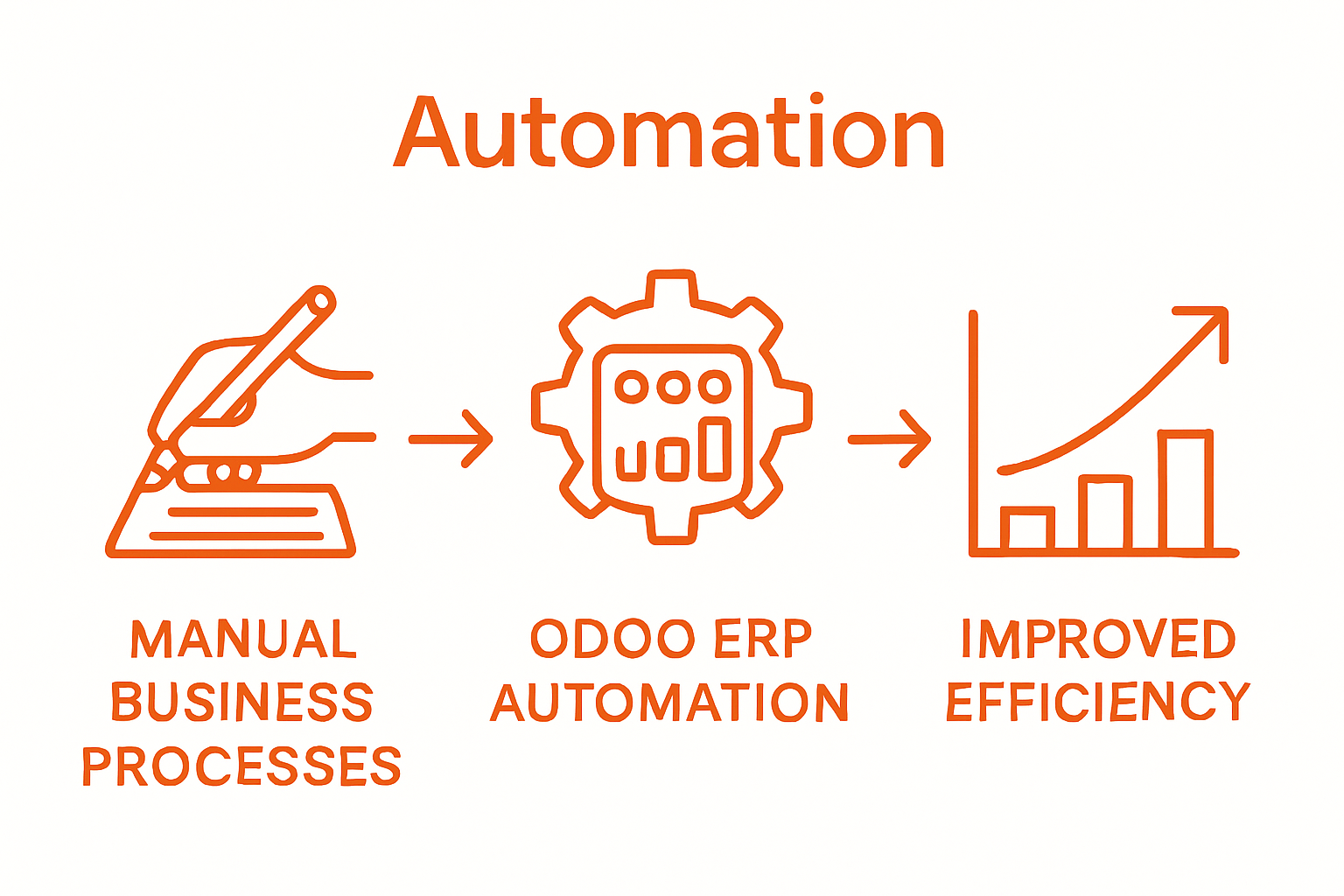
Order processing represents another critical area where Odoo ERP delivers substantial automation benefits. The system seamlessly integrates sales, procurement, and shipping functions, creating a streamlined workflow that minimizes manual intervention. Distribution companies can configure automated rules for order routing, shipping label generation, and customer communication – reducing processing times from hours to minutes.

By implementing intelligent routing algorithms, Odoo helps businesses optimize delivery schedules, select the most cost-effective shipping methods, and provide customers with accurate tracking information. The platform’s ability to connect with multiple shipping carriers and generate real-time shipping quotes ensures distribution companies maintain competitive pricing and operational flexibility.

Enhanced Reporting and Business Intelligence

Beyond operational automation, Odoo ERP provides robust reporting capabilities that transform raw data into actionable business intelligence. Distribution managers can access comprehensive dashboards displaying key performance indicators, financial metrics, and operational bottlenecks. These dynamic reports enable leadership to make strategic decisions based on accurate, up-to-the-minute information.

The system’s advanced analytics tools allow businesses to drill down into granular performance data, identifying trends, opportunities, and potential areas for improvement. By consolidating information from various departments – sales, inventory, logistics, and finance – Odoo creates a holistic view of business performance that traditional management approaches cannot match.

For distribution companies seeking comprehensive automation solutions, Odoo ERP represents a transformative technology platform. By integrating sophisticated modules that address inventory management, order processing, and business intelligence, the system empowers organizations to operate with unprecedented efficiency and strategic insight.

Must-Have Odoo Modules for Distributors in 2025

As distribution businesses evolve in 2025, selecting the right Odoo ERP modules becomes critical for maintaining competitive advantage. Bista Solutions recognizes that strategic module selection can transform operational efficiency, enabling businesses to streamline processes, reduce costs, and enhance customer satisfaction.

Inventory and Warehouse Management Modules

Distribution companies require robust inventory control mechanisms to succeed. Odoo’s advanced inventory management module provides comprehensive tracking capabilities that go beyond traditional stock management. The system enables real-time monitoring of product quantities, automatic reordering points, and multi-location inventory tracking. Companies can configure intelligent rules that trigger purchase orders when stock levels drop below predetermined thresholds.

Specialized features like serial number tracking, lot management, and quality control inspections ensure precise inventory accuracy. The module integrates seamlessly with barcode scanning technologies, allowing warehouse staff to update inventory instantaneously. Explore our comprehensive inventory management strategies that can revolutionize your distribution operations.

Sales and Procurement Automation

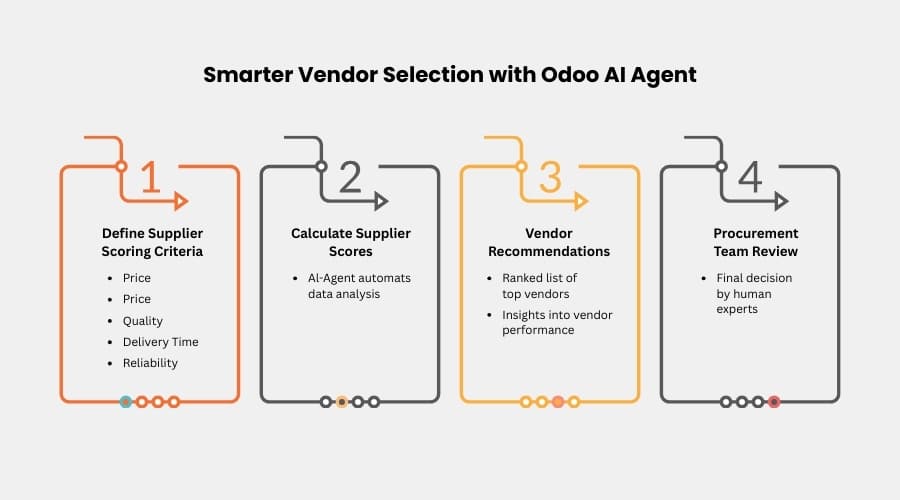
Effective distribution relies on sophisticated sales and procurement modules that simplify complex business processes. Odoo’s integrated sales module enables businesses to manage customer relationships, track sales pipelines, and generate accurate quotations with unprecedented speed. The procurement module complements sales functions by automating vendor selection, comparing price lists, and generating purchase orders based on predefined business rules.

Advanced features like automatic vendor lead time calculation help distribution companies optimize their supply chain management. The system analyzes historical purchasing data to predict optimal ordering schedules, reducing carrying costs and minimizing potential stockout scenarios. By connecting sales forecasts with procurement strategies, businesses can maintain lean and responsive inventory management.

Reporting and Business Intelligence

In 2025, data-driven decision-making separates successful distribution companies from their competitors. Odoo’s reporting and business intelligence modules provide comprehensive dashboards that transform raw operational data into actionable insights. Managers can access real-time analytics covering inventory turnover, sales performance, procurement efficiency, and financial metrics.

Customizable reporting tools allow businesses to create specific dashboards tailored to their unique operational requirements. Whether tracking key performance indicators, analyzing seasonal trends, or identifying potential bottlenecks, these modules empower leadership with accurate and timely information. The ability to generate detailed reports across multiple departments ensures a holistic business understanding.

Choosing the right Odoo modules represents a strategic investment in operational excellence. By carefully selecting and implementing modules that address inventory management, sales automation, and business intelligence, distribution companies can create a robust technological ecosystem that drives growth and innovation. Bista Solutions remains committed to helping businesses navigate this technological transformation, ensuring they leverage Odoo ERP’s full potential.

To provide a clear overview, the following table summarizes the essential Odoo ERP modules for distributors and highlights their key features as discussed in this section:

Module Key Features
Inventory & Warehouse Management Real-time tracking, auto-reordering, multi-location inventory, barcode integration, QA inspections
Sales Automation Customer management, sales pipeline tracking, and fast quotation generation
Procurement Automation Vendor selection, price list comparison, PO generation, lead time calculation
Business Intelligence & Reporting Real-time dashboards, KPI tracking, custom analytics, department-wide reporting

Real Business Benefits for US Manufacturers and Distributors

Odoo ERP represents a transformative technology solution for US manufacturers and distributors seeking operational excellence. By integrating sophisticated automation capabilities, the platform delivers measurable business benefits that directly impact bottom-line performance and competitive positioning.

Cost Reduction and Operational Efficiency

Manufacturers and distributors face constant pressure to optimize operational expenses while maintaining high-quality outputs. Odoo ERP addresses these challenges through comprehensive process automation that eliminates manual interventions and reduces human error. The system streamlines complex workflows across procurement, inventory management, production scheduling, and logistics, enabling businesses to significantly reduce administrative overhead.

Automated processes translate into tangible cost savings. Companies can minimize inventory carrying costs through intelligent demand forecasting, reduce procurement expenses by optimizing vendor selection, and eliminate redundant administrative tasks. These efficiency gains allow businesses to reallocate resources toward strategic growth initiatives. Discover how our ERP solutions drive operational transformation for manufacturers and distributors.

Enhanced Decision Making and Competitive Intelligence

In today’s rapidly evolving business environment, real-time data and actionable insights become critical competitive advantages. Odoo ERP provides comprehensive business intelligence tools that transform raw operational data into strategic insights. Executives can access dynamic dashboards displaying key performance indicators across multiple business functions, enabling rapid and informed decision-making.

The platform’s advanced analytics capabilities allow businesses to identify performance trends, predict potential bottlenecks, and develop proactive strategies. By consolidating information from sales, inventory, production, and financial departments, Odoo creates a holistic view of organizational performance. Manufacturers can track production efficiency, analyze product profitability, and optimize resource allocation with unprecedented precision.

Schedule A Demo


    Scalability and Technological Adaptability

    Odoo ERP scalability

    US manufacturers and distributors require flexible technological solutions that can evolve alongside their business needs. Odoo ERP’s modular architecture provides exceptional scalability, allowing companies to add or modify functionalities as they grow. Whether expanding product lines, entering new markets, or adapting to changing regulatory requirements, businesses can customize their ERP system without massive technological overhauls.

    The platform’s cloud-based infrastructure ensures seamless updates and integration with emerging technologies. Artificial intelligence and machine learning capabilities can be progressively incorporated, enabling businesses to stay at the forefront of technological innovation. This adaptability means manufacturers are not locked into rigid systems but can continuously optimize their technological ecosystem.

    By implementing Odoo ERP, US manufacturers and distributors can transform their operational capabilities. The platform offers more than traditional software solutions it provides a comprehensive technological framework for business growth. Through intelligent automation, data-driven insights, and unparalleled flexibility, Odoo empowers companies to navigate complex market dynamics with confidence and strategic agility. Bista Solutions remains committed to helping businesses unlock their full potential through cutting-edge ERP technologies.

    The following table summarizes the main business benefits Odoo ERP brings to US manufacturers and distributors, making it easier to see the direct impact in each operational area:

    Operational Area Business Benefit
    Cost Reduction Lower admin overhead, reduced inventory and procurement expenses, minimized manual tasks
    Operational Efficiency Streamlined workflows, automated processes, fewer errors
    Decision Making Real-time dashboards, strategic business intelligence, and performance trend analysis
    Scalability & Adaptability Modular architecture, cloud infrastructure, AI/ML integration, easy system customization

    How to Implement Odoo ERP for Seamless Operations

    Implementing an Enterprise Resource Planning system represents a transformative journey for distribution companies. Bista Solutions understands that successful Odoo ERP implementation requires strategic planning, comprehensive analysis, and a methodical approach tailored to each organization’s unique operational requirements.

    Assessment and Strategic Planning

    Successful Odoo ERP implementation begins with a thorough organizational assessment. Distribution companies must conduct an in-depth analysis of existing business processes, identifying current inefficiencies, bottlenecks, and specific operational challenges. This diagnostic phase involves comprehensive stakeholder interviews, workflow documentation, and detailed system requirements gathering. Learn more about our comprehensive ERP implementation strategy to understand the critical initial steps.

    Key evaluation areas include current technology infrastructure, data management practices, interdepartmental communication mechanisms, and specific industry-specific operational nuances. Businesses should map their existing processes against potential Odoo modules, determining precise customization requirements and integration strategies. This strategic alignment ensures that the ERP solution addresses specific operational needs rather than forcing businesses to adapt to generic software configurations.

    Phased Implementation and Custom Configuration

    Odoo ERP implementation follows a structured, modular approach that minimizes operational disruption. Rather than attempting a comprehensive system-wide transformation, Bista Solutions recommends a phased rollout strategy. This methodology allows businesses to implement modules progressively, validate performance, and make necessary adjustments before full-scale deployment.

    Custom configuration represents a critical implementation component. Distribution companies require tailored solutions that reflect their unique business models. Odoo’s flexible architecture enables extensive customization, allowing businesses to develop industry-specific workflows, reporting mechanisms, and integration protocols. Technical experts work closely with organizational stakeholders to design custom modules that seamlessly align with existing operational frameworks.

    Training and Continuous Optimization

    Technological implementation extends beyond software installation; technological transformation requires comprehensive organizational change management. Successful Odoo ERP deployment demands extensive training programs that empower employees to leverage new technological capabilities effectively. Bista Solutions develops customized training modules addressing various organizational roles, ensuring smooth technological adoption and minimal productivity disruption.

    Continuous optimization represents the final implementation phase. Distribution companies must establish robust feedback mechanisms, monitoring system performance, identifying potential improvements, and adapting configurations to evolving business requirements. Regular system audits, performance assessments, and stakeholder consultations enable businesses to maximize their Odoo ERP investment.

    Implementing Odoo ERP is more than a technological upgrade; it represents a strategic organizational transformation. By following a structured, methodical approach that prioritizes strategic planning, custom configuration, and continuous learning, distribution companies can unlock unprecedented operational efficiency. Bista Solutions remains committed to guiding businesses through this complex but rewarding technological journey, ensuring that each implementation delivers measurable, sustainable business value.

    Frequently Asked Questions

    What is Odoo ERP and how does it benefit distribution companies?

    Odoo ERP is an integrated software solution that automates various business processes, including inventory management, order processing, and logistics for distribution companies. It improves operational efficiency by minimizing manual interventions and providing real-time insights.

    How does Odoo ERP automate order processing?

    Odoo ERP automates order processing by integrating sales, procurement, and shipping functions into a single workflow. It allows for automated order routing, shipping label generation, and customer communication, significantly reducing processing times from hours to minutes.

    What key modules should distributors focus on when implementing Odoo ERP in 2025?

    Distribution companies should focus on key modules such as Inventory and Warehouse Management, Sales & Procurement Automation, and Reporting & Business Intelligence to enhance operational efficiency and decision-making capabilities.

    How does Odoo ERP improve inventory management for distribution companies?

    Odoo ERP enhances inventory management by providing real-time tracking, automatic reordering triggers, and the ability to monitor stock levels across multiple locations. This ensures companies can manage their inventory effectively and reduce stockouts or overstock situations.

    Ready to Unlock Real Savings and Automation in Distribution?

    Distribution businesses today cannot afford to waste time on manual processes or miss out on critical business insights. As highlighted in this article, the pain of stockouts, order delays, and a lack of real-time data often holds back ambitious companies from reaching new growth. Odoo ERP is designed to automate inventory management, streamline order processing, and generate the actionable intelligence that modern distributors demand.


      Bista Solutions is not just another technology provider. We are the largest Odoo implementer in North America and an award-winning Odoo Gold Partner. With hundreds of successful ERP projects for distributors and manufacturers, our team understands your industry’s unique requirements. Take advantage of our expertise and let us show you how to transform your operations with proven solutions. Act now to discover a smarter way to manage your supply chain, cut costs, and stay ahead of your competition. Get started by contacting us through our expert team or exploring how our ERP implementation strategy delivers real results for distribution leaders. Do not let this opportunity for game-changing automation pass your business by.

      Enterprise Resource Planning Explained for US Manufacturers 2025

      Enterprise Resource Planning Explained for US Manufacturers 2025

      US manufacturers are turning to enterprise resource planning to stay ahead in a tough market. Surprisingly, while ERP often gets described as just another back-office tool, its real impact is much more dramatic. Studies show manufacturers can cut operational costs by up to 23% after adopting the right ERP system, which flips the script on what most companies expect from their business software and sparks a conversation about smarter, more profitable operations.

      Table of Contents

      Quick Summary

      Takeaway Explanation
      ERP integrates all business processes Centralizes operations across various departments for streamlined efficiency.
      Improves operational efficiency and reduces costs Automates tasks, reducing manual input and administrative overhead significantly.
      Enhances production planning and inventory management Provides visibility into inventory and production dynamics, fostering informed decisions.
      Facilitates strategic decision-making Offers real-time analytics, enabling rapid insights and responsive actions to market changes.
      Choosing the right ERP is critical Essential to assess technological compatibility, customization, and strategic implementation for success.

      What Is Enterprise Resource Planning

      Enterprise resource planning (ERP) represents a comprehensive software solution that enables manufacturers to integrate and manage their core business processes in one centralized system. At its foundation, ERP connects different departments and functions within an organization to create a streamlined operational environment.

      Core Components of Enterprise Resource Planning

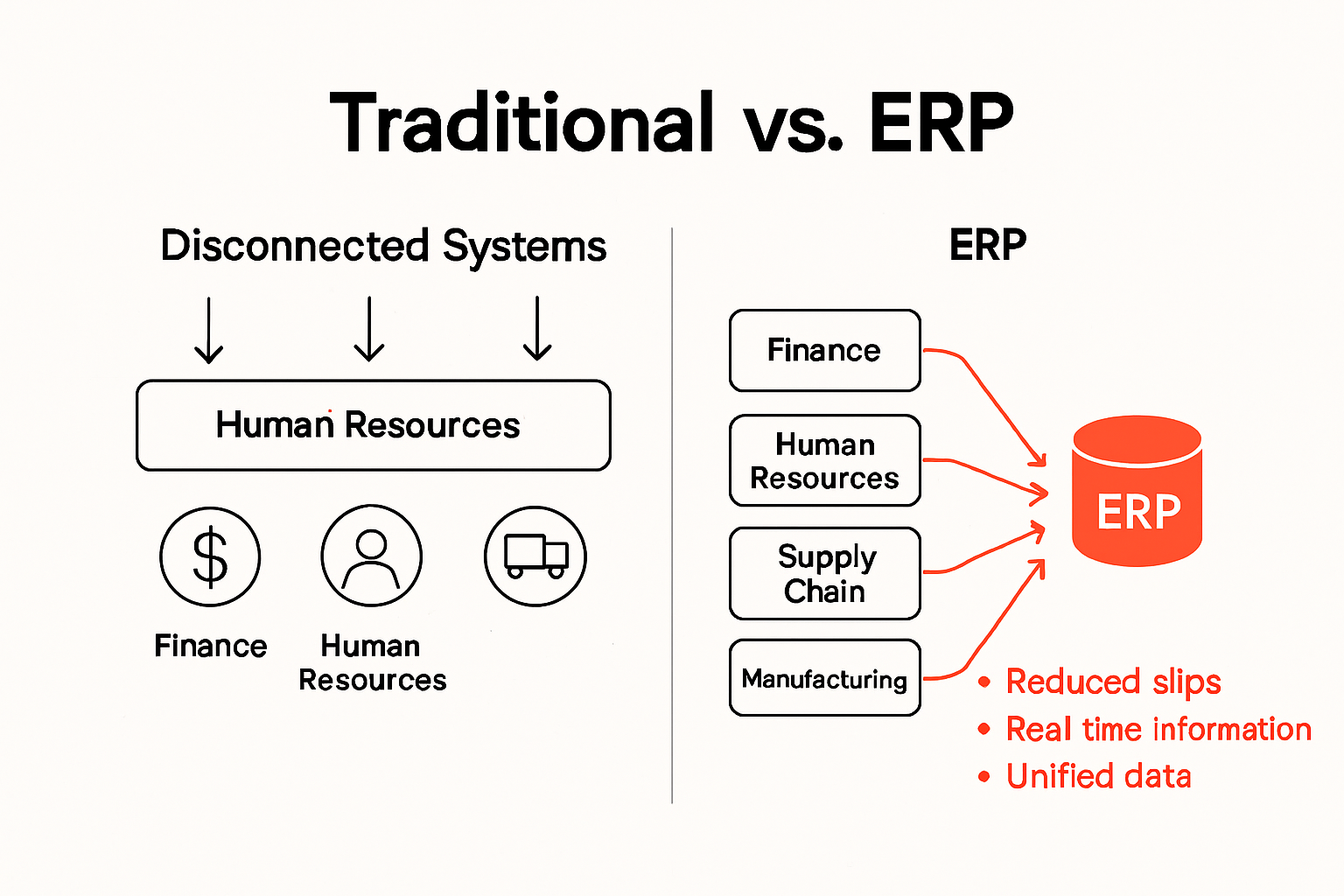
      Modern ERP systems function as the central nervous system for manufacturing businesses. These platforms consolidate critical operational areas including finance, human resources, supply chain management, manufacturing, and customer relationship management into a single integrated framework. Our comprehensive ERP guide reveals how these interconnected modules eliminate data silos and enable real-time information sharing across an organization.

      The primary goal of enterprise resource planning is to transform fragmented business processes into a cohesive digital ecosystem. By providing a unified view of business operations, manufacturers gain unprecedented visibility into their entire organizational workflow. Odoo ERP exemplifies this approach by offering modular solutions that can be customized to match specific manufacturing requirements.

      Infographic showing ERP integration benefits for manufacturers

      Strategic Value for Manufacturing Businesses

      For US manufacturers, enterprise resource planning goes beyond simple software implementation. It represents a strategic approach to operational excellence. These systems enable businesses to:

      • Data Integration: Combine information from multiple departments into a single source of truth
      • Process Optimization: Automate routine tasks and reduce manual data entry errors
      • Decision Making: Generate real time analytics and reporting for faster strategic decisions

      Bista Solutions understands that each manufacturing business has unique operational needs. Our expertise in Odoo ERP implementation ensures that enterprise resource planning solutions are precisely tailored to address specific industry challenges. By leveraging advanced ERP technologies, manufacturers can enhance productivity, reduce operational costs, and maintain a competitive edge in an increasingly complex business environment.

      The evolution of enterprise resource planning has transformed from basic accounting software to sophisticated platforms that provide predictive insights and intelligent automation. Modern manufacturers recognize that ERP is no longer optional but a critical tool for sustainable growth and operational efficiency.

      As we approach 2025, enterprise resource planning continues to revolutionize how manufacturing businesses operate. The ability to integrate complex business processes, provide real time insights, and support data driven decision making makes ERP an indispensable strategic asset for forward thinking manufacturers across the United States.

      Key Benefits of ERP for US Manufacturers

      Enterprise resource planning delivers transformative advantages for US manufacturers seeking operational excellence and competitive advantage. By integrating complex business processes into a unified system, ERP solutions provide manufacturers with unprecedented capabilities to optimize performance and drive strategic growth.

      Operational Efficiency and Cost Reduction

      Manufacturers gain substantial operational benefits through comprehensive ERP implementation. These systems dramatically reduce manual data entry and administrative overhead by automating routine tasks across multiple departments. learn about intelligent automation strategies to understand how advanced ERP technologies streamline business processes.

      Odoo ERP exemplifies how manufacturers can achieve remarkable efficiency gains. By centralizing data and eliminating redundant processes, companies can reduce operational costs by up to 23% and dramatically improve resource allocation. The ability to track real-time performance metrics enables leadership to make informed decisions quickly and accurately.

      Enhanced Production Planning and Inventory Management

      Advanced ERP systems revolutionize production planning for US manufacturers. These platforms provide granular visibility into inventory levels, production schedules, and supply chain dynamics. Manufacturers can:

      • Demand Forecasting: Predict product requirements with unprecedented accuracy
      • Inventory Optimization: Minimize excess stock while preventing stockouts
      • Resource Allocation: Intelligently distribute manufacturing resources based on precise data insights

      Bista Solutions understands that each manufacturing business requires a unique approach to resource management. Our expertise in Odoo ERP ensures that implementation strategies are precisely tailored to address specific industry challenges and organizational requirements.

      Strategic Decision Making and Competitive Advantage

      Enterprise resource planning transforms data into actionable business intelligence. By consolidating information from finance, sales, production, and customer relationship management, manufacturers gain a holistic view of their operational ecosystem. This comprehensive perspective enables leadership to:

      • Identify potential inefficiencies before they impact performance
      • Develop proactive strategies based on predictive analytics
      • Respond rapidly to market changes and customer demands

      As we approach 2025, ERP systems represent more than technological solutions. They are strategic assets that enable US manufacturers to navigate complex business environments with agility and precision. The integration of advanced analytics, artificial intelligence, and real-time reporting creates unprecedented opportunities for innovation and growth.

      Modern manufacturers recognize that enterprise resource planning is no longer optional but essential for sustainable success. By leveraging sophisticated ERP technologies, businesses can transform operational challenges into opportunities for expansion and competitive differentiation.

      To help readers scan the primary business benefits of ERP for manufacturers mentioned in the article, here is a summary table of key advantages:

      Key Benefit Description
      Operational Efficiency Automates routine tasks, cuts administrative costs, and optimizes workflows
      Cost Reduction Lowers operational expenses by up to 23% through streamlined processes
      Enhanced Production Planning Improves accuracy in demand forecasting and production scheduling
      Inventory Management Reduces excess stock, prevents stockouts, and optimizes component tracking
      Real-Time Data and Analytics Enables rapid, data-driven decision-making with comprehensive business intelligence
      Quality Control and Compliance Supports regulatory requirements and detailed audit trails
      Strategic Agility Boosts the ability to respond swiftly to market changes and customer demands

      How ERP Solves Challenges for Auto Parts and Equipment Businesses

      Auto parts and equipment manufacturers face complex operational challenges that demand sophisticated technological solutions. Enterprise resource planning emerges as a critical tool for addressing these intricate business requirements, transforming potential operational obstacles into opportunities for strategic growth and efficiency.

      Inventory and Supply Chain Management

      The auto parts and equipment sector requires precise inventory tracking and seamless supply chain coordination. explore intelligent automation strategies to understand how advanced ERP technologies revolutionize inventory management. Odoo ERP provides manufacturers with real-time visibility into inventory levels, enabling businesses to:

      • Component Tracking: Monitor critical parts across multiple warehouses
      • Supplier Management: Evaluate and manage vendor performance dynamically
      • Demand Forecasting: Predict future inventory requirements with exceptional accuracy

      By centralizing inventory data, manufacturers can reduce carrying costs, minimize stockouts, and optimize procurement processes. The ability to track each component from acquisition to final product installation represents a significant competitive advantage in the fast-moving auto parts industry.

      Regulatory Compliance and Quality Control

      Auto parts and equipment businesses operate in a highly regulated environment with stringent quality standards. Enterprise resource planning systems provide comprehensive tools for maintaining compliance and ensuring product quality. Bista Solutions recognizes that manufacturers need robust systems to:

      • Document every stage of production
      • Generate detailed quality control reports
      • Maintain comprehensive audit trails
      • Track product variations and potential defects

      Our expertise in Odoo ERP enables businesses to implement rigorous quality management processes that meet or exceed industry standards. By automating compliance documentation, manufacturers can reduce human error and create transparent records that protect both the business and its customers.

      Operational Efficiency and Cost Management

      Enterprise resource planning transforms how auto parts and equipment businesses approach operational efficiency. These integrated systems break down departmental silos, creating a unified platform that connects production, sales, finance, and customer service. Manufacturers gain unprecedented insights into:

      • Production workflow optimization
      • Resource allocation strategies
      • Real-time performance metrics
      • Cost reduction opportunities

      As we approach 2025, ERP technologies continue to evolve, offering more intelligent and predictive capabilities. For auto parts and equipment manufacturers, these systems are no longer optional but essential tools for maintaining competitiveness. The ability to rapidly adapt to market changes, optimize resource utilization, and make data-driven decisions positions businesses for sustainable growth.

      Modern manufacturers understand that enterprise resource planning represents more than software implementation. It is a strategic approach to transforming operational challenges into opportunities for innovation and market leadership. By leveraging advanced ERP technologies, auto parts and equipment businesses can create more agile, responsive, and efficient organizations.

      Below is a table organizing the main challenges for auto parts and equipment manufacturers and corresponding ERP solutions as discussed in the section above:

      Challenge ERP Solution
      Inventory & Component Tracking Centralized, real-time inventory and component monitoring
      Supplier/Vendor Management Dynamic supplier evaluation and management tools
      Regulatory Compliance Automated documentation, audit trails, and compliance reporting
      Quality Control Quality management modules and defect tracking
      Workflow and Operational Efficiency Unified platform connecting departments, breaking data silos
      Forecasting and Demand Planning Advanced analytics for accurate demand and inventory forecasting
      Cost Management Resource optimization and cost reduction strategies

      Choosing the Right ERP System in 2025

      Selecting the appropriate enterprise resource planning system represents a critical strategic decision for manufacturers in 2025. The evolving technological landscape demands a comprehensive approach to ERP selection that goes beyond traditional software evaluation and focuses on future readiness, scalability, and transformative potential.

      Technology and Compatibility Considerations

      Modern manufacturers must evaluate ERP systems through a multifaceted lens that considers technological integration and future adaptability. discover implementation best practices to understand the nuanced approach required for successful ERP selection. Odoo ERP exemplifies next-generation solutions by offering modular architectures that enable seamless technological integration.

      Key technological factors manufacturers should assess include:

      • Cloud Compatibility: Ensure systems support hybrid and cloud deployment models
      • AI and Machine Learning Integration: Validate advanced predictive analytics capabilities
      • Scalability: Confirm the system can grow with business complexity
      • API Openness: Verify robust integration potential with existing technological ecosystems

      Bista Solutions recognizes that technological compatibility extends beyond immediate functional requirements. The right ERP system should serve as a strategic platform for continuous innovation and operational transformation.

      Industry Specific Customization

      Enterprise resource planning solutions in 2025 must offer unprecedented levels of industry-specific customization. Manufacturers require systems that understand their unique operational nuances and can be tailored to address specific workflow challenges. Odoo ERP stands out by providing flexible modules that can be precisely configured for different manufacturing segments.

      Critical customization considerations include:

      • Workflow Adaptability: Systems must support complex manufacturing processes
      • Reporting Flexibility: Robust analytics that provide actionable insights
      • Regulatory Compliance: Built-in mechanisms for industry-specific standards
      • User Experience: Intuitive interfaces that minimize training requirements

      Strategic Implementation and Change Management

      Choosing the right ERP system transcends technological selection. Successful implementation requires a holistic approach that encompasses organizational culture, change management, and strategic alignment. Manufacturers must view ERP not as a software purchase but as a transformative organizational initiative.

      Key implementation strategies include:

      • Comprehensive stakeholder engagement
      • Phased rollout approaches
      • Continuous training and skill development
      • Dedicated change management resources

      As we approach 2025, enterprise resource planning represents more than technological infrastructure. It is a strategic enabler of operational excellence and competitive differentiation. Manufacturers who approach ERP selection with a forward-thinking, comprehensive perspective will position themselves to thrive in an increasingly complex and dynamic business environment.

      The future of manufacturing belongs to organizations that can seamlessly blend technological innovation with strategic vision. By carefully evaluating ERP systems through a multidimensional lens, businesses can transform potential technological challenges into opportunities for unprecedented growth and efficiency.

      ERP warehouse cost management

      Frequently Asked Questions

      What is Enterprise Resource Planning (ERP), and how does it benefit manufacturers?

      Enterprise Resource Planning (ERP) is a comprehensive software system that integrates and manages core business processes in one centralized platform. For manufacturers, ERP can reduce operational costs, enhance productivity, and streamline processes across various departments, leading to significant business efficiencies.

      How can ERP help with production planning and inventory management?

      ERP systems provide real-time visibility into inventory levels, production schedules, and supply chain dynamics. This enables manufacturers to accurately forecast demand, optimize inventory levels, and intelligently allocate resources, thus improving overall production efficiency.

      What challenges do auto parts manufacturers face that ERP systems can solve?

      Auto parts manufacturers often struggle with complex inventory tracking, supply chain coordination, regulatory compliance, and quality control. ERP systems address these challenges by providing centralized inventory management, automation of compliance processes, and enhanced data visibility to streamline operations.

      What should manufacturers consider when choosing an ERP system in 2025?

      Manufacturers should evaluate ERP systems based on technological compatibility, scalability, industry-specific customization, and change management strategies. It’s essential to choose a system that can adapt to future needs, integrate with existing technologies, and cover specific operational requirements.

      Take Charge of Your Manufacturing Future with Award-Winning Odoo ERP Expertise

      Are you struggling with disconnected systems, manual processes, and a lack of real-time insight that holds your manufacturing business back? The article “Enterprise Resource Planning Explained for US Manufacturers 2025” highlighted the real pain of managing complex operations without an integrated approach. Missing out on streamlined operations, automated production planning, and effective inventory control can put your company at a disadvantage in an increasingly competitive landscape.


        Bista Solutions stands as North America’s most trusted Odoo Gold Partner, recognized for delivering ERP solutions that directly address these challenges. Our team understands how vital it is to transform siloed data into unified, actionable intelligence. From implementing industry-tailored modules to providing 24/7 support, our experts have a record of 350+ successful projects and cutting-edge Odoo ERP implementation. If operational efficiency and agile growth are your goals for 2025, let us help you build a platform for long-term success. Connect with our specialists through our contact page and begin your journey toward an optimized manufacturing operation today. Act now to ensure your business is ready for the future of enterprise resource planning.

        7 Top Challenges in Field Services & How Odoo ERP Solves Them

        7 Top Challenges in Field Services & How Odoo ERP Solves Them

        Field service teams face more than just a few daily hiccups. They wrestle with confusing schedules, paperwork mountains, and constant communication gaps. Yet, despite all this chaos, most teams still rely on outdated tools and manual methods. That seems wild when the numbers show that manual workflow errors can increase administrative costs by up to 30 percent. Turns out, technology is not the sidekick anymore. It is now the only real way to cut through those obstacles and completely transform how field service gets done.

        Table of Contents

        Quick Summary

        Takeaway Explanation
        Implement digital platforms for communication. Digital communication platforms enhance real-time information sharing and reduce operational bottlenecks for field service teams.
        Adopt intelligent scheduling solutions. Intelligent scheduling systems optimize technician assignments and improve response times, transforming scheduling into a competitive advantage.
        Streamline inventory management systems. Advanced inventory management technologies enable real-time tracking, reducing carrying costs and enhancing operational efficiency.
        Utilize automated invoicing tools. Automated invoicing systems improve accuracy, speed up payment processing, and reduce administrative burdens significantly.
        Leverage data analytics for decision-making. Implementing advanced analytics platforms helps organizations transform data into actionable insights, supporting strategic planning and operational improvements.

        1: Understanding Common Field Service Challenges

        Field service organizations encounter numerous complex challenges that can significantly impact operational efficiency, customer satisfaction, and overall business performance. These challenges are often multifaceted, requiring sophisticated technological solutions to address effectively.

        Traditional field service management has been plagued by communication gaps, inefficient scheduling, and limited real-time tracking. Organizations frequently struggle with coordinating technicians, managing work orders, and maintaining accurate customer records. The manual processes that many businesses rely on create substantial bottlenecks in service delivery.

        Key challenges in field services include:

        • Inconsistent communication between the office and field teams
        • Difficulty in tracking technician locations and performance
        • Complex scheduling and resource allocation
        • Manual paperwork and documentation errors
        • Limited visibility into service history and customer interactions

        Field service professionals are often overwhelmed by administrative tasks that detract from their primary responsibility: providing high-quality customer service. Technicians spend considerable time managing paperwork, updating spreadsheets, and navigating fragmented communication channels instead of focusing on resolving client issues.

        Technology has emerged as a critical solution to these persistent challenges. Modern enterprises recognize the need for integrated digital platforms that can streamline operations, enhance communication, and provide real-time insights. Discover advanced field service solutions that can transform your operational efficiency and customer experience.

        The complexity of field service management requires a holistic approach that addresses both technological and human factors. Successful organizations understand that solving these challenges is not just about implementing new software, but about creating a comprehensive strategy that empowers technicians, improves communication, and ultimately delivers exceptional service to customers.

        2: Improving Real-Time Communication for Teams

        Effective communication stands as the backbone of successful field service operations. Modern businesses recognize that traditional communication methods create significant operational bottlenecks and reduce overall team productivity. Field service teams require instantaneous information sharing and seamless collaboration to deliver exceptional customer experiences.

        The communication challenges in field service environments are complex and multifaceted. Technicians often operate in remote locations, making real-time coordination extremely difficult. Paper-based systems and disconnected communication channels lead to delays, misunderstandings, and reduced service quality.

        Critical communication barriers include:

        • Geographical dispersion of field technicians
        • Lack of centralized information management
        • Inconsistent reporting mechanisms
        • Limited mobile communication platforms

        Field service organizations need integrated solutions that transcend traditional communication limitations. Digital communication platforms enable teams to share critical information instantly, track work orders in real-time, and maintain comprehensive documentation of service interactions.

        Technological solutions like Odoo Field Service ERP Software provide comprehensive communication tools that transform how teams interact. These platforms offer mobile-responsive interfaces, instant messaging capabilities, and centralized information repositories that ensure every team member has access to the most current data.

        The implementation of advanced communication technologies goes beyond mere information exchange. It represents a fundamental shift in how field service teams collaborate, plan, and execute their responsibilities. By breaking down communication silos, organizations can create more responsive, agile, and customer-centric service models that adapt quickly to changing operational demands.

        Successful communication strategies integrate technological solutions with human-centered design, recognizing that effective collaboration requires both robust digital tools and a culture of transparent, proactive information sharing.

        3: Streamlining Scheduling and Dispatching Activities

        Scheduling and dispatching activities represent critical operational challenges for field service organizations. The complexity of managing technician assignments, optimizing routes, and ensuring timely service delivery can overwhelm traditional management approaches.

        Field service managers frequently struggle with manual scheduling processes that consume significant administrative time and introduce substantial inefficiencies. Unpredictable service demands and dynamic workforce requirements create additional layers of complexity that manual systems cannot effectively manage.

        The most significant scheduling challenges include:

        • Inefficient route planning and optimization
        • Difficulty matching technician skills with specific job requirements
        • Limited real-time visibility into technician availability
        • Complex workforce management across multiple locations

        Successful organizations recognize that intelligent scheduling goes beyond simply assigning technicians to jobs. It requires a comprehensive approach that considers technician expertise, geographical proximity, job complexity, and customer priority levels.

        Learn about advanced production planning strategies that can transform your operational efficiency. Automated scheduling systems enable businesses to make data-driven decisions, reducing response times and improving overall service quality.

        Digital dispatching platforms provide real-time insights that allow managers to dynamically adjust assignments based on emerging priorities. These systems eliminate guesswork by presenting clear, actionable information about technician locations, skill sets, and current workloads.

        The ultimate goal of streamlined scheduling is not just operational efficiency but creating a predictable and responsive service environment. By leveraging intelligent technologies, field service organizations can transform scheduling from a logistical challenge into a strategic competitive advantage that delights customers and empowers technicians.

        4: Enhancing Inventory Management Techniques

        Inventory management represents a critical challenge for field service organizations, where inefficient tracking and inadequate stock control can significantly disrupt operational performance. Traditional inventory management approaches often result in excessive carrying costs, unexpected stockouts, and inefficient resource allocation.

        Complex inventory dynamics require sophisticated management strategies that go beyond simple stock tracking. Field service teams must navigate intricate supply chains, manage diverse equipment requirements, and maintain precise parts inventories across multiple locations.

        The most prevalent inventory management challenges include:

        • Inconsistent parts tracking and documentation
        • High carrying costs for excessive inventory
        • Difficulty predicting accurate parts requirements
        • Limited visibility into stock levels across different locations

        Successful inventory management demands a comprehensive technological approach that provides real-time insights and predictive capabilities. Organizations need systems that can automatically monitor stock levels, forecast future requirements, and streamline procurement processes.

        Explore advanced warehouse management solutions that can revolutionize your inventory control strategies. Modern ERP systems enable businesses to implement intelligent inventory tracking mechanisms that reduce waste, optimize resource allocation, and improve overall operational efficiency.

        Digital inventory management platforms offer unprecedented transparency, allowing field service managers to make data-driven decisions. These systems provide granular insights into parts usage, equipment lifecycle, and potential supply chain disruptions, enabling proactive management strategies.

        The ultimate goal of enhanced inventory management is not just tracking stock but creating a dynamic, responsive inventory ecosystem. By leveraging intelligent technologies, field service organizations can transform inventory from a potential operational liability into a strategic asset that drives business performance and customer satisfaction.

        5: Optimizing Customer Relationship Management (CRM)

        Customer Relationship Management (CRM) stands as a critical component of successful field service operations. Organizations frequently struggle with fragmented customer interactions, inconsistent data management, and limited insights into customer preferences and service histories.

        Traditional CRM approaches often fail to provide the comprehensive, real-time insights necessary for delivering exceptional customer experiences. Field service teams require sophisticated tools that can track, analyze, and predict customer needs with precision and efficiency.

        Key challenges in customer relationship management include:

        • Disconnected communication channels
        • Inefficient customer data tracking
        • Limited personalization capabilities
        • Difficulty maintaining comprehensive service histories

        Successful CRM strategies demand intelligent technological solutions that transform raw customer data into actionable insights. Modern field service organizations need platforms that can seamlessly integrate customer interactions across multiple touchpoints, providing a holistic view of customer relationships.

        Discover comprehensive CRM management techniques that can revolutionize your customer engagement strategies. Advanced CRM systems enable businesses to create personalized service experiences, anticipate customer needs, and build long-term loyalty.

        Digital CRM platforms provide unprecedented transparency, allowing field service managers to track customer interactions, preferences, and service histories with remarkable granularity. These systems eliminate information silos, creating a unified customer profile that empowers technicians to deliver targeted, efficient service.

        The ultimate goal of optimized CRM is not just managing customer data but creating a dynamic, responsive customer engagement ecosystem. By leveraging intelligent technologies, field service organizations can transform customer relationships from transactional interactions into strategic, value-driven partnerships that drive business growth and customer satisfaction.

        6: Automating Invoicing and Payments Processes

        Invoicing and payment processes represent critical financial operations that can significantly impact field service organizations. Traditional manual approaches to billing and payment collection are riddled with inefficiencies, errors, and time-consuming administrative tasks that drain organizational resources.

        Complex financial workflows create substantial challenges for field service teams, where accurate and timely invoicing directly correlates with revenue generation and customer satisfaction. Manual processes frequently lead to delayed payments, inconsistent billing, and increased administrative overhead.

        Critical challenges in invoicing and payment processes include:

        • Inconsistent invoice generation and tracking
        • Delayed payment processing times
        • High manual data entry errors
        • Limited financial reporting capabilities

        Successful organizations recognize the need for comprehensive financial automation that streamlines billing cycles and reduces administrative complexity. Intelligent invoicing systems provide real-time tracking, automated payment reminders, and seamless integration with existing financial infrastructure.

        Explore advanced Odoo accounting solutions that can transform your financial management strategies. Modern ERP platforms enable businesses to create precise, instantaneous invoices directly from service completion records, eliminating redundant data entry and reducing human error.

        Digital invoicing platforms offer unprecedented financial transparency, allowing field service managers to monitor cash flow, track outstanding payments, and generate comprehensive financial reports with minimal manual intervention. These systems provide granular insights into revenue streams, payment patterns, and potential financial bottlenecks.

        The ultimate goal of invoicing automation is not just processing payments but creating a dynamic, intelligent financial ecosystem. By leveraging sophisticated technological solutions, field service organizations can transform financial operations from administrative burdens into strategic assets that drive business growth and operational efficiency.

        7: Gaining Insights from Data Analytics and Reporting

        Data analytics and reporting represent the cornerstone of modern field service management, transforming raw operational information into strategic business intelligence. Organizations frequently struggle with extracting meaningful insights from complex, fragmented data sources that fail to provide comprehensive operational perspectives.

        Traditional reporting mechanisms often create significant limitations, generating static reports that offer minimal context and fail to support real-time decision making. Field service teams require sophisticated analytics platforms that can translate complex data into actionable, forward-looking insights.

        Critical challenges in data analytics and reporting include:

        • Disconnected data sources and information silos
        • Limited predictive analysis capabilities
        • Complex data visualization and interpretation
        • Insufficient real-time reporting mechanisms

        Successful organizations recognize the need for intelligent data management systems that can aggregate, analyze, and visualize information across multiple operational dimensions. Advanced analytics platforms enable businesses to uncover hidden performance patterns, predict potential challenges, and optimize resource allocation.

        Explore automated business insights strategies that can revolutionize your operational intelligence. Modern ERP solutions provide comprehensive dashboards that transform complex data into intuitive, actionable visualizations, empowering managers to make informed decisions quickly.

        Digital reporting platforms offer unprecedented operational transparency, allowing field service managers to monitor key performance indicators, track efficiency metrics, and identify improvement opportunities with remarkable precision. These systems eliminate guesswork, providing data-driven insights that support strategic planning and continuous improvement.

        The ultimate goal of advanced data analytics is not just generating reports but creating a dynamic, intelligent operational intelligence ecosystem. By leveraging sophisticated technological solutions, field service organizations can transform raw data into strategic assets that drive innovation, efficiency, and competitive advantage.

        The table below summarizes the core challenges faced by field service organizations and the ways Odoo ERP addresses each issue, providing a comprehensive overview of the article’s main points and solutions.

        Field Service Challenge Description of Challenge How Odoo ERP Solves It
        Communication Gaps Inefficient, inconsistent communication between field and office teams Integrated digital communication platforms enable real-time info sharing and updates
        Scheduling & Dispatching Complexity Manual scheduling, route planning, and resource allocation lead to inefficiencies and delayed service delivery Automated, intelligent scheduling optimizes assignments and improves response times
        Inventory Management Issues Poor parts tracking, stockouts, and excessive inventory holding Real-time inventory monitoring and predictive analytics for optimal stock control
        CRM and Customer Data Fragmentation Disconnected customer interactions and incomplete service histories reduce service quality and personalization Unified CRM streamlines customer data and enables personalized, efficient service
        Invoicing & Payment Process Inefficiencies Manual billing leads to errors, delayed payments, and increased admin workload Automated invoicing and payment tracking for accuracy and faster revenue cycles
        Lack of Actionable Data & Reporting Fragmented data makes it hard to gain insights, plan, and continuously improve operations Advanced analytics and reporting visualize metrics and support data-driven decisions
        Administrative Overload & Manual Paperwork Excessive administrative tasks reduce technician efficiency and customer satisfaction End-to-end digital workflows eliminate paperwork, centralize documentation, and free up staff for value-added tasks

        Transform Field Service Challenges Into Operational Success with Bista Solutions

        Are you facing bottlenecks with scheduling, paperwork overload, or disconnected team communication in your field service operations? As highlighted in the article, persistent challenges like manual administrative tasks, fragmented customer data, and inefficient inventory tracking can stall your growth and lower customer satisfaction. With Bista Solutions, you gain access to the leading Odoo ERP implementation partner in North America, offering expertise proven by multiple Odoo Best Partner awards. Our tailored solutions resolve issues such as real-time communication gaps, resource allocation headaches, incomplete service histories, and disjointed invoicing systems. Discover how our approach can transform your operations and customer relationships by exploring our in-depth knowledge on Odoo Field Service ERP Software and advanced warehouse management techniques.


          Ready to eliminate inefficiencies and move towards seamless field service management? Connect with our expert team at Bista Solutions. Contact us now to discuss your unique challenges and see how our dedicated ERP specialists can help your organization thrive.

          Frequently Asked Questions

          What are the common challenges faced in field service management?

          Field service management often encounters challenges like inconsistent communication, inefficient scheduling, limited real-time tracking, administrative bottlenecks, and difficulties in managing customer interactions and service histories.

          How can Odoo ERP enhance communication among field service teams?

          Odoo ERP provides integrated digital communication tools that enable field service teams to share critical information instantly, track work orders in real-time, and maintain comprehensive documentation, greatly improving overall communication.

          In what ways does Odoo ERP streamline scheduling and dispatching for field service organizations?

          Odoo ERP uses automated scheduling systems that optimize technician assignments based on skills, geographic proximity, and job complexity, providing real-time insights for dynamic dispatching and resource management.

          How does Odoo ERP improve customer relationship management for field service users?

          Odoo ERP integrates customer interactions across multiple touchpoints, enabling field service teams to track service histories, manage customer data efficiently, and deliver personalized service experiences, which fosters long-term customer loyalty.

          7 Essential Tips for ERP for HVAC Service Companies – Streamlining Operations

          ERP HVAC operations collaboration

          ERP software is transforming how HVAC service companies manage everything from scheduling to inventory. Some systems help technicians manage over 100 service calls a day without missing a beat. Most people assume ERP is just about simplifying paperwork, but it actually unlocks entirely new ways for HVAC businesses to grow faster and serve customers better.

          Table of Contents

          Quick Summary

          Takeaway Explanation
          Implement ERP to streamline operations ERP systems centralize data, automate tasks, and enhance efficiency, making them essential for HVAC service companies.
          Focus on critical ERP features Look for real-time scheduling, inventory tracking, and mobile accessibility to boost performance and responsiveness.
          Measure success beyond financials Evaluate ERP impact through operational efficiency, customer satisfaction, and employee feedback to ensure comprehensive benefits.
          Engage the team in training programs Customized training equips employees to utilize ERP effectively, turning software into a strategic asset for enhanced workflows.
          Stay updated on ERP trends Keep abreast of AI, IoT, and advanced analytics integrations that will shape the future of ERP in HVAC services.

          1: Understanding the Basics of ERP for HVAC

          ERP (Enterprise Resource Planning) for HVAC service companies represents a technological breakthrough in managing complex operational challenges. These specialized software solutions transform how heating, ventilation, and air conditioning businesses handle their daily workflows, integrating multiple critical functions into a unified system.

          At its core, ERP for HVAC provides comprehensive management capabilities that address the unique demands of service-based industries. By centralizing data and processes, these systems enable companies to optimize scheduling, track inventory, manage customer relationships, and streamline financial reporting with unprecedented efficiency.

          Key components of an effective HVAC ERP solution typically include:

          • Scheduling and Dispatch Management: Intelligent tools for coordinating technician assignments and tracking service calls
          • Inventory Control: Real-time tracking of parts, equipment, and supplies across multiple locations
          • Customer Relationship Management: Detailed client interaction histories and communication tracking
          • Financial Reporting: Integrated accounting modules for precise revenue and expense tracking

          The primary goal of implementing an ERP system in an HVAC service company is to eliminate manual processes and reduce operational friction. By automating routine tasks, businesses can allocate more resources toward service quality and customer satisfaction. Learn more about ERP implementation phases to understand how these transformative systems can be successfully integrated.

          Successful ERP adoption requires careful planning and a strategic approach. Companies must evaluate their specific operational needs, select a solution that offers flexibility, and prepare their team for a comprehensive digital transformation. The right ERP system can turn complex operational challenges into streamlined, data-driven opportunities for growth and improvement.

          2: Key Features to Look for in ERP Software

          Selecting the right ERP software for an HVAC service company requires careful evaluation of features that directly impact operational efficiency and business growth. A powerful ERP solution transforms complex business processes into streamlined, data-driven workflows that enable smarter decision-making.

          Modern HVAC service companies need comprehensive ERP software that goes beyond traditional management tools. The most effective systems provide integrated functionality that addresses multiple operational requirements simultaneously.

          When evaluating ERP solutions, consider these critical features:

          • Real-Time Scheduling and Dispatch Management: Advanced systems that enable instant technician assignment and route optimization
          • Comprehensive Inventory Tracking: Precise monitoring of parts, equipment availability, and automatic reordering capabilities
          • Advanced Reporting and Analytics: Detailed insights into business performance, service metrics, and financial health
          • Mobile Accessibility: Field service applications that allow technicians to access work orders, customer information, and update status in real-time

          The most sophisticated ERP platforms offer seamless integration across multiple business functions. This means connecting accounting, customer relationship management, inventory control, and field service operations into a unified ecosystem. Explore intelligent automation solutions to understand how modern technology can transform your operational capabilities.

          Beyond technical specifications, the ideal ERP solution should provide scalability, allowing your business to grow without outgrowing the software. Customization options, user-friendly interfaces, and robust support infrastructure are equally important considerations that separate exceptional ERP platforms from merely adequate ones.

          Ultimately, the right ERP software acts as a strategic partner, enabling HVAC service companies to reduce operational friction, improve customer satisfaction, and drive sustainable business growth.

          3: Benefits of ERP Systems for HVAC Service Companies

          ERP systems represent a transformative technology for HVAC service companies, offering a comprehensive approach to managing complex business operations. These integrated platforms deliver substantial strategic advantages that go far beyond traditional management tools, enabling businesses to operate with unprecedented efficiency and precision.

          The implementation of an ERP system fundamentally reshapes how HVAC service companies approach their daily workflows. By centralizing data and automating critical processes, businesses can dramatically reduce administrative overhead and minimize human error.

          Key benefits of ERP systems for HVAC service companies include:

          • Improved Operational Visibility: Comprehensive real-time insights into all aspects of business performance
          • Enhanced Resource Allocation: Intelligent scheduling and workforce management capabilities
          • Accurate Financial Tracking: Streamlined accounting and precise revenue monitoring
          • Customer Service Optimization: Integrated customer management and communication tracking

          Technological integration becomes a strategic differentiator for modern HVAC service businesses. These systems provide a unified platform that connects scheduling, inventory management, financial reporting, and customer relationship management into a seamless ecosystem. Learn about signs you might need an ERP system to understand the transformative potential of these solutions.

          Moreover, ERP systems offer remarkable scalability, allowing businesses to adapt and grow without significant technological reinvestment. As HVAC service companies expand, their ERP platform can evolve alongside their operational requirements, providing a flexible and future-proof solution.

          The most sophisticated ERP platforms go beyond mere data management. They transform raw information into actionable insights, empowering business leaders to make data-driven decisions quickly and confidently. By eliminating manual processes and reducing operational friction, HVAC service companies can focus more energy on delivering exceptional customer experiences and driving sustainable growth.

          4: Steps to Implement ERP in Your HVAC Business

          Implementing an ERP system requires strategic planning and methodical execution. HVAC service companies must approach this technological transformation with a comprehensive and carefully structured strategy to ensure successful integration and minimal operational disruption.

          The implementation process involves multiple critical stages that demand careful consideration and precise execution. Business leaders must recognize that ERP adoption is not merely a technical upgrade but a fundamental reimagining of operational workflows.

          Key implementation steps for HVAC businesses include:

          • Comprehensive Business Assessment: Thoroughly evaluate current operational processes and identify specific technological requirements
          • Vendor Selection: Research and select an ERP solution that aligns with HVAC industry-specific needs and business scale
          • Stakeholder Engagement: Secure buy-in from leadership and prepare team members for technological transition
          • Phased Rollout Strategy: Implement the system incrementally to minimize operational disruption

          Successful ERP implementation demands a holistic approach. Companies must invest time in understanding their unique operational challenges and selecting a solution that provides flexible, scalable functionality. Explore the detailed phases of ERP implementation to gain deeper insights into this transformative process.

          Preparing your team is equally crucial. Comprehensive training programs ensure that employees understand the new system’s capabilities and can leverage technological tools effectively. This human-centric approach transforms ERP from a mere software solution into a powerful operational catalyst.

          Additionally, businesses should establish clear performance metrics and regularly assess the ERP system’s impact. Continuous monitoring allows for ongoing optimization, ensuring that the technological investment delivers tangible business value. By approaching ERP implementation as a strategic journey rather than a one-time technology upgrade, HVAC service companies can unlock unprecedented operational efficiency and competitive advantage.

          5: Training Your Team on ERP Software

          Effective ERP software training represents a critical investment in your HVAC business’s technological transformation. The success of an enterprise resource planning implementation hinges not just on the software’s capabilities, but on your team’s ability to leverage its full potential.

          Training must be comprehensive, targeting every level of organizational interaction with the new system. From field technicians to administrative staff, each team member requires a nuanced understanding of how the ERP platform will reshape their daily workflows.

          Consider these essential training strategies:

          • Role-Specific Training Modules: Develop customized learning paths tailored to different job functions within your organization
          • Hands-On Practical Sessions: Provide interactive training that allows employees to practice using the system in simulated work scenarios
          • Ongoing Learning Support: Establish continuous training resources and support mechanisms for long-term skill development
          • Performance Tracking: Implement methods to measure training effectiveness and individual user proficiency

          Successful training programs transform technological tools into strategic business assets. The goal extends beyond basic system navigation to cultivating a culture of technological adaptability and continuous improvement. Learn about specialized ERP applications to understand the depth of potential technological integration.

          Management must actively demonstrate commitment to the training process. This involves allocating sufficient time and resources, creating a supportive learning environment, and recognizing employees who quickly adapt to and master the new system.

          Additionally, consider a phased training approach that allows gradual system exposure. Start with core functionalities and progressively introduce more advanced features. This strategy prevents information overload and helps employees build confidence in their technological skills incrementally. By investing thoughtfully in team training, HVAC service companies can ensure that their ERP implementation becomes a powerful catalyst for operational excellence.

          6: Measuring Success After ERP Implementation

          Measuring the success of an ERP implementation requires a comprehensive and strategic approach that goes beyond simple financial metrics. HVAC service companies must develop a nuanced evaluation framework that captures both quantitative performance improvements and qualitative organizational transformations.

          A successful ERP implementation assessment involves tracking multiple dimensions of operational performance. Business leaders must establish clear, measurable benchmarks that reflect the system’s impact across various organizational functions.

          Key performance indicators to consider include:

          • Operational Efficiency Metrics: Reduction in administrative time, improved resource allocation, and streamlined workflow processes
          • Financial Performance Indicators: Cost savings, revenue growth, and improved financial reporting accuracy
          • Customer Service Enhancements: Faster response times, increased service quality, and improved customer satisfaction ratings
          • Technological Adoption Rates: Employee proficiency, system utilization levels, and overall technological integration

          The evaluation process should be dynamic and continuous. Regular performance reviews enable businesses to identify areas of improvement and make necessary adjustments. Understand the comprehensive breakdown of ERP implementation costs to contextualize your investment and performance expectations.

          Technological ROI extends beyond immediate financial gains. HVAC service companies must consider long-term strategic advantages, such as improved decision-making capabilities, enhanced operational visibility, and increased competitive adaptability. The true measure of success lies in the system’s ability to transform operational complexity into strategic opportunity.

          Additionally, businesses should collect qualitative feedback from employees at all levels. Frontline technicians, administrative staff, and management each provide unique insights into the ERP system’s practical impact. This holistic approach ensures that technological implementation is not just a technical upgrade but a meaningful organizational transformation that drives sustainable business growth.

          The landscape of ERP technology for HVAC service companies is rapidly evolving, driven by technological innovation and changing business requirements. Emerging trends are transforming how businesses approach operational management, integrating cutting-edge technologies to create more intelligent, responsive systems.

          The future of ERP in HVAC services will be characterized by unprecedented technological integration and advanced data-driven decision-making capabilities. Business leaders must stay ahead of these transformative trends to maintain competitive advantage.

          Key emerging trends in ERP for HVAC services include:

          • Artificial Intelligence Integration: Advanced predictive maintenance algorithms and intelligent scheduling systems
          • Internet of Things (IoT) Connectivity: Real-time equipment monitoring and proactive service management
          • Cloud-Based Flexible Platforms: Scalable solutions that enable remote work and instant data accessibility
          • Advanced Analytics: Sophisticated reporting tools that transform raw data into actionable business insights

          Technological convergence will define the next generation of ERP solutions. Modern systems will move beyond traditional management tools to become comprehensive business intelligence platforms. These solutions will offer unprecedented levels of operational visibility and strategic adaptability.

          The integration of machine learning and predictive analytics will revolutionize service delivery. HVAC companies can expect systems that not only track current performance but anticipate future maintenance needs, optimize resource allocation, and identify potential operational inefficiencies before they become problematic.

          By embracing these emerging technologies, HVAC service companies can transform their operational models.

          Below is a comprehensive summarization table that highlights the main topics, key features, benefits, implementation steps, and future trends of ERP for HVAC service companies discussed in the article.

          Topic/Section Key Points and Takeaways
          ERP Basics for HVAC ERP centralizes data, automates processes, and integrates scheduling, inventory, CRM, and financial reporting.
          Key Features to Seek Real-time scheduling, inventory tracking, advanced analytics, mobile access, seamless integration, scalability.
          Main Benefits for HVAC Companies Improves operational visibility, resource allocation, and financial accuracy, and enhances customer service.
          Steps for Effective Implementation Assess business needs, select the right vendor, ensure stakeholder buy-in, use phased rollout, and monitor results.
          Team Training Use role-specific modules, hands-on learning, ongoing support, and performance tracking for user proficiency.
          Measuring ERP Success Track efficiency, financial gains, customer satisfaction, system adoption, and collect continuous feedback.
          Future ERP Trends in HVAC AI integration, IoT connectivity, cloud flexibility, and advanced analytics shape ERP’s evolving capabilities.

          Overcome HVAC ERP Challenges with a Trusted Implementation Partner

          Are you struggling with inefficient operations, manual data entry, or difficulty scaling as your HVAC business grows? The article outlines the pressing need for integrated ERP solutions to simplify scheduling, streamline inventory management, and optimize customer service. These pain points can leave your team feeling overwhelmed and limit your ability to deliver superior service. That is where Bista Solutions steps in.


            As the largest Odoo ERP implementer in North America, Bista Solutions has helped over 350 companies transform their HVAC operations with robust, tailored ERP systems. Our award-winning team brings deep industry expertise, end-to-end customization, and 24/7 support so you see results from day one. Do not delay the chance to move beyond outdated processes. Contact our ERP experts today and let us show you how a strategic partner can unlock growth, eliminate operational headaches, and put your company ahead of the competition. For more information about our approach, explore our detailed ERP implementation phases or see signs your business is ready for an ERP upgrade. Let’s take your HVAC company to the next level together.

            Frequently Asked Questions

            What is an ERP system for HVAC service companies?

            An ERP (Enterprise Resource Planning) system for HVAC service companies is a specialized software that integrates various operational functions, such as scheduling, inventory management, customer relationship management, and financial reporting, into a single platform to enhance efficiency.

            What are the key features to look for in HVAC ERP software?

            When selecting ERP software for HVAC services, important features include real-time scheduling and dispatch management, comprehensive inventory tracking, advanced reporting and analytics, and mobile accessibility for field technicians.

            How can ERP systems improve operational efficiency in HVAC companies?

            ERP systems improve operational efficiency by centralizing data, automating routine tasks, reducing manual errors, and providing real-time visibility into various business processes, which helps streamline workflows and optimize resource allocation.

            What steps are involved in implementing an ERP system in an HVAC business?

            Implementing an ERP system involves several steps, including conducting a comprehensive business assessment, selecting a suitable vendor, engaging stakeholders, and using a phased rollout strategy to minimize disruption and ensure effective adoption.

            7 Ways How Odoo ERP Ensures ATF & DEA Compliance in the Arms & Ammunition Industry

            7 Ways How Odoo ERP Ensures ATF & DEA Compliance in the Arms & Ammunition Industry

            Managing compliance in the arms and ammunition industry is more than ticking boxes and filing paperwork. Regulatory agencies like the ATF and DEA can hit businesses with substantial financial fines or even criminal prosecution for missing crucial details. Yet relying on outdated manual systems might be putting your business at far greater risk than the regulations themselves. Odoo ERP changes the game by transforming compliance from a source of stress into an operational advantage that can protect and even strengthen your company.

            Table of Contents

            Quick Summary

            Takeaway Explanation
            Implement Odoo ERP for Compliance Odoo ERP helps arms businesses meet ATF and DEA regulations efficiently by centralizing data and automating reporting processes.
            Optimize Inventory Management Use Odoo ERP’s features for real-time inventory tracking, ensuring accurate documentation of firearms and controlled substances.
            Utilize Automated Record Keeping Odoo ERP automates documentation and audit trails, safeguarding against human error while ensuring compliance.
            Streamline Reporting Procedures Leverage Odoo’s reporting tools to generate accurate compliance reports effortlessly, reducing administrative burdens.
            Invest in Continuous Staff Training Ongoing training modules within Odoo help employees stay informed and adept at managing regulatory compliance effectively.

            1: Understand the Importance of ATF & DEA Compliance

            In the arms and ammunition industry, regulatory compliance is not just a legal requirement but a critical operational cornerstone. The Bureau of Alcohol, Tobacco, Firearms, and Explosives (ATF) and the Drug Enforcement Administration (DEA) enforce stringent regulations that demand meticulous record keeping, tracking, and reporting for businesses dealing with firearms, ammunition, and controlled substances.

            Businesses in this sector face significant challenges in maintaining comprehensive documentation and ensuring every transaction meets federal guidelines. Non-compliance can result in severe penalties, including substantial financial fines, potential business license revocation, and even criminal prosecution. This makes implementing a robust Enterprise Resource Planning (ERP) system like Odoo an essential strategy for managing complex regulatory requirements.

            Learn more about firearms industry ERP solutions that address these critical compliance needs.

            Key compliance areas that businesses must carefully manage include:

            • Accurate inventory tracking of firearms and controlled substances
            • Detailed transaction records and audit trails
            • Real-time monitoring of sales and distribution channels

            Odoo ERP provides a comprehensive solution that transforms these challenging compliance requirements from potential liability into a streamlined, manageable process. By centralizing data, automating reporting, and creating transparent documentation workflows, Odoo helps arms and ammunition businesses maintain strict adherence to ATF and DEA regulations while maintaining operational efficiency.

            The complexity of these regulations demands more than manual record keeping. Sophisticated technological solutions are now essential for businesses to survive and thrive in this highly regulated industry. Odoo ERP offers the technological backbone that enables businesses to confidently navigate these regulatory landscapes, ensuring they remain compliant while focusing on their core business objectives.

            2: Streamline Inventory Management with Odoo ERP

            In the arms and ammunition industry, precise inventory management is not just a business requirement but a critical regulatory mandate. Odoo ERP provides a comprehensive solution that transforms complex inventory tracking into a seamless, compliant process. The system enables businesses to maintain real time visibility and control over their entire inventory landscape, ensuring every firearm, ammunition component, and controlled substance is meticulously documented.

            Explore our advanced warehouse management capabilities that support regulated industries.

            Odoo ERP’s inventory management features address the unique challenges faced by arms and ammunition businesses by offering robust tracking mechanisms that align with ATF and DEA regulatory requirements. The system enables businesses to:

            • Create granular serial number tracking for individual firearms
            • Implement multi-location inventory management
            • Generate automated compliance reports

            By leveraging advanced technological capabilities, Odoo ERP enables businesses to transform inventory management from a potential compliance risk into a strategic operational advantage. The system provides instantaneous tracking of all inventory movements, creating transparent and auditable records that can withstand the most rigorous regulatory scrutiny.

            The platform’s ability to integrate multiple data points means businesses can track the entire lifecycle of their inventory. From initial procurement through sales and potential transfers, every transaction is recorded with precision. This level of detailed documentation is not just beneficial; it is essential for maintaining compliance in a highly regulated industry.

            Moreover, Odoo ERP’s flexibility allows businesses to customize inventory management protocols specific to their operational needs. Whether managing a small firearms dealership or a large ammunition manufacturing facility, the system adapts to provide tailored solutions that meet both operational efficiency and regulatory compliance requirements.

            3: Automate Record Keeping for Compliance

            Automated record keeping represents a critical technological solution for arms and ammunition businesses navigating complex ATF and DEA compliance requirements. Odoo ERP provides a robust digital infrastructure that transforms manual documentation processes into efficient, error-resistant digital workflows.

            Learn about our comprehensive compliance tracking solutions that minimize regulatory risks.

            The system’s automated record-keeping capabilities address multiple critical compliance challenges by ensuring:

            • Instantaneous digital documentation of all transactions
            • Permanent, unalterable digital audit trails
            • Comprehensive tracking of firearm and controlled substance movements

            Traditional paper based record keeping exposes businesses to significant risks, including human error, document loss, and incomplete documentation. Odoo ERP eliminates these vulnerabilities by creating comprehensive digital documentation that meets the most stringent regulatory standards. Every transaction becomes a traceable, verifiable digital record that can withstand intense regulatory scrutiny.

            The platform’s advanced features enable businesses to automatically generate compliance reports, track serial numbers, monitor inventory transfers, and maintain detailed transaction histories. These capabilities go beyond simple record storage; they provide intelligent documentation management that proactively supports regulatory compliance.

            Moreover, Odoo ERP’s automated record-keeping solution integrates seamlessly across multiple business functions. From initial procurement through sales and potential transfers, the system creates a continuous, transparent documentation process that provides regulatory agencies with the detailed insights they require.

            By implementing Odoo ERP, arms and ammunition businesses can transform record keeping from a potential compliance liability into a strategic operational advantage. The system not only ensures regulatory adherence but also provides businesses with unprecedented visibility and control over their critical documentation processes.

            4: Simplify Reporting Procedures through Odoo

            Reporting is a critical component of regulatory compliance for arms and ammunition businesses, requiring precision, thoroughness, and timeliness. Odoo ERP revolutionizes this complex process by providing a comprehensive reporting solution that transforms regulatory documentation from a burdensome task into a streamlined, efficient workflow.

            Discover our advanced sales management reporting capabilities that support complex industry requirements.

            The platform’s robust reporting features address the intricate requirements set forth by ATF and DEA by enabling businesses to generate detailed, accurate reports with minimal manual intervention. Key reporting capabilities include:

            • Automated generation of federal compliance reports
            • Real-time tracking of inventory and transaction histories
            • Customizable reporting templates for different regulatory agencies

            Odoo ERP eliminates the traditional challenges associated with manual reporting. The system automatically compiles and formats required documentation, reducing the risk of human error and ensuring that every report meets the exacting standards of regulatory agencies. By integrating data from multiple business functions, Odoo creates a holistic view of business operations that simplifies the reporting process.

            The platform’s flexibility allows businesses to create specialized reporting workflows tailored to their specific operational needs. Whether tracking firearm sales, monitoring controlled substance inventory, or preparing detailed transaction logs, Odoo provides the technological infrastructure to support comprehensive regulatory reporting.

            Moreover, the system’s advanced analytics capabilities mean businesses can go beyond simple compliance reporting. Intelligent data visualization and trend analysis provide deeper insights into operational performance, transforming reporting from a regulatory requirement into a strategic business tool. Businesses can now view compliance reporting as an opportunity for operational improvement rather than a bureaucratic burden.

            5: Ensure Secure Data Management with Odoo ERP

            In the arms and ammunition industry, data security is not merely a technological consideration but a critical regulatory requirement. Odoo ERP provides a comprehensive data management framework that protects sensitive information while ensuring full compliance with ATF and DEA stringent security protocols.

            Explore our advanced compliance management strategies that prioritize data protection.

            The system’s robust security architecture addresses multiple dimensions of data protection, focusing on:

            • Multi-level user access controls
            • Encrypted data storage and transmission
            • Comprehensive audit trail mechanisms

            Odoo ERP recognizes that businesses in the arms and ammunition sector handle extremely sensitive information involving firearms transactions, customer details, and controlled substance inventories. The platform implements advanced security measures that go beyond standard data protection protocols, creating multiple layers of defense against potential breaches or unauthorized access.

            By implementing granular user permissions, Odoo ensures that employees can only access data directly relevant to their specific roles. This approach minimizes internal security risks and provides a transparent mechanism for tracking all system interactions. Each data access point becomes a traceable event, creating an unbroken chain of accountability.

            The system’s encryption protocols protect data both at rest and during transmission, ensuring that sensitive business information remains confidential. Advanced authentication mechanisms, including multi-factor verification, add an additional layer of security that meets the highest industry standards.

            Moreover, Odoo ERP’s data management capabilities extend beyond mere protection. The platform provides intelligent monitoring tools that can detect and alert businesses to potential security anomalies in real time. This proactive approach transforms data security from a passive defensive strategy into an active, intelligent protection mechanism that adapts to evolving technological threats.

            6: Conduct Regular Compliance Audits using Odoo

            Regulatory compliance in the arms and ammunition industry demands more than just initial setup it requires continuous, meticulous monitoring and verification. Odoo ERP provides a powerful audit management framework that transforms compliance audits from a periodic administrative burden into a strategic, ongoing process of continuous improvement.

            Explore our comprehensive audit tracking solutions that support regulatory verification.

            The platform’s audit capabilities address the complex requirements of ATF and DEA regulations by enabling businesses to:

            • Generate comprehensive audit trail documentation
            • Perform real-time compliance status checks
            • Create automated compliance verification reports

            Odoo ERP’s audit management system goes beyond traditional record keeping. Intelligent tracking mechanisms capture every transaction, user interaction, and system modification, creating an immutable record that can withstand the most rigorous regulatory scrutiny. This approach ensures that businesses can quickly identify and address potential compliance gaps before they become significant issues.

            The system’s advanced analytics provide unprecedented visibility into operational compliance. Businesses can generate detailed reports that not only demonstrate adherence to current regulations but also highlight potential areas of improvement. This proactive approach transforms compliance audits from a defensive mechanism into a strategic tool for operational optimization.

            Moreover, Odoo ERP’s flexibility allows businesses to customize audit protocols specific to their unique operational requirements. Whether managing firearms inventory, tracking controlled substance transactions, or monitoring sales channels, the platform provides a tailored solution that adapts to the complex regulatory landscape of the arms and ammunition industry.

            By implementing Odoo ERP, businesses can shift from reactive compliance management to a proactive, intelligent audit strategy that minimizes risk and maximizes operational efficiency. The system turns regulatory compliance from a challenging requirement into a competitive advantage.

            7: Train Your Staff on Compliance Best Practices

            In the arms and ammunition industry, technological solutions alone cannot guarantee regulatory compliance. Human knowledge and understanding play a critical role in maintaining the complex regulatory landscape mandated by ATF and DEA regulations. Odoo ERP provides comprehensive training and knowledge management tools that empower staff to become active participants in maintaining compliance.

            The platform recognizes that staff training is not a one time event but an ongoing process of education, awareness, and skill development. By integrating training modules directly within the ERP system, Odoo creates a continuous learning environment that keeps employees informed about the latest regulatory requirements and best practices.

            Key training focus areas include:

            • Understanding ATF and DEA reporting requirements
            • Proper documentation and record-keeping protocols
            • Recognizing and responding to potential compliance risks

            Odoo ERP’s training capabilities go beyond traditional learning management systems. The platform offers interactive simulation environments where employees can practice compliance procedures in a risk-free digital setting. This approach allows staff to develop muscle memory for complex regulatory processes without risking real world compliance violations.

            The system’s adaptive learning technology tracks individual employee progress, identifying knowledge gaps and automatically recommending targeted training modules. This personalized approach ensures that each team member receives the specific training they need to excel in their role and contribute to overall regulatory compliance.

            Moreover, Odoo provides comprehensive documentation, video tutorials, and real-time support resources that employees can access instantly. This on-demand learning approach acknowledges that compliance training is most effective when it is immediately relevant and easily accessible.

            By implementing Odoo ERP, businesses transform compliance training from a mandatory requirement into a strategic advantage.

            The table below provides a comprehensive summary of how Odoo ERP supports ATF and DEA compliance in the arms and ammunition industry, outlining key features, benefits, and strategic outcomes described throughout the article.

            Compliance Strategy Key Actions & Features Benefits for Arms & Ammunition Industry
            Centralized Compliance Management Integrates inventory, record keeping, and reporting into a unified system Simplified adherence to regulatory requirements
            Real-Time Inventory Tracking Serial number tracking, multi-location inventory control Accurate documentation and reduced compliance risk
            Automated Record Keeping Instant digital documentation, permanent audit trails Minimizes human error, safeguards against data loss
            Streamlined Reporting Automated federal reports, customizable templates, integrated analytics Reduces administrative burden and enables fast audits
            Secure Data Management Encrypted storage, multi-level access controls, and audit logs Protects sensitive information, supports regulatory audits
            Continuous Compliance Auditing Real-time status checks, automated verification reports, and detailed audit trails Proactively identifies compliance gaps, streamlines audits
            Ongoing Staff Training Integrated training modules, adaptive learning, and real-time resources Ensures team is prepared and up-to-date on requirements

            Confidently Navigate ATF & DEA Compliance with Bista Solutions

            Managing ATF and DEA regulations in the arms and ammunition industry is challenging. From rigorous inventory tracking and automated record keeping to secure data management, your business faces strict requirements that can lead to costly mistakes and compliance risk. You need clear audit trails, real-time monitoring, and streamlined reporting to protect operations and maintain your licenses—all while avoiding operational slowdowns.

            When you trust Bista Solutions, you gain expertise proven by years of Odoo ERP excellence. We understand the unique pain points of regulated industries and deliver solutions that centralize compliance, strengthen data security, and empower your team with best-in-class tools tailored for your needs. Explore how our compliance management strategies and deep experience as the largest Odoo ERP implementer in North America can transform your business.


              Ready for robust compliance, ongoing support, and peace of mind? Connect with our experts for a personalized consultation at Bista Solutions and let us help you turn compliance challenges into strategic growth opportunities. Reach out now—your next audit could arrive any day, and your business deserves to be prepared.

              Frequently Asked Questions

              How does Odoo ERP help maintain ATF and DEA compliance?

              Odoo ERP assists businesses in the arms and ammunition industry by providing comprehensive compliance solutions such as automated record keeping, real-time inventory tracking, and detailed reporting to meet ATF and DEA regulations.

              What features of Odoo ERP enhance inventory management for firearms and ammunition?

              Odoo ERP offers features like granular serial number tracking, multi-location inventory management, and automated compliance reports, ensuring that all inventory movements are accurately documented for regulatory compliance.

              How can Odoo ERP simplify the reporting process for compliance?

              Odoo ERP streamlines the reporting process by automatically generating federal compliance reports, tracking inventory and transaction histories in real-time, and offering customizable reporting templates tailored to different regulatory agencies.

              Why is automated record-keeping important for compliance in the arms and ammunition industry?

              Automated record keeping minimizes human errors, ensures complete documentation, and creates permanent digital audit trails, which are essential for meeting the stringent requirements set by the ATF and DEA.

              Advanced Accounting Package for Odoo ERP

              Adavnced Accounting Package For Odoo ERP

              Bista Solutions’ Advanced Accounting Package for Odoo ERP

              Transforming Accounting with Enterprise-Grade Precision

              Bista Solutions has taken Odoo Accounting to the next level with a comprehensive, enterprise-ready accounting suite designed to handle complex financial operations with ease. This advanced package integrates automation, compliance, analytics, and multi-entity capabilities into one unified system, making it a powerful solution for organizations managing diverse financial landscapes.

              Robust Accounting Package

              The Bista Advanced Accounting Package for Odoo is an all-in-one suite featuring:

              • General Ledger (GL), Accounts Receivable (AR), and Accounts Payable (AP) automation
              • Bank reconciliation, tax management, and analytics
              • Multi-country and multi-company configuration support
              • Unified financial consolidation across multiple entities and jurisdictions

              By bringing all accounting functions into a single platform, organizations gain control and transparency over financial operations while streamlining compliance and reporting processes.

              General Ledger & Journal Management

              A reliable ledger is the backbone of any accounting system, and Odoo’s enhanced General Ledger and Journal Management capabilities provide unmatched flexibility:

              • Unlimited custom journals with batch posting for faster processing of large volumes of entries
              • Full audit trail that records every transaction, ensuring transparency and compliance
              • Attachment support for invoices, receipts, and supporting documents, allowing easy reference during audits or reviews

              This ensures every accounting entry is traceable and verifiable, creating a solid foundation for accurate financial reporting.

              Accounts Receivable & Payable Automation

              The package streamlines the entire AR/AP cycle to help finance teams work smarter and faster:

              • Automated invoices to minimize manual effort
              • Vendor bill management to simplify payables
              • Configurable payment terms to optimize cash flow
              • Automated follow-ups to reduce outstanding receivables
              • Multi-acquirer payment routing for seamless handling of multiple payment gateways

              These automation features eliminate repetitive work, reduce errors, and improve operational efficiency.

              Bank & Cash Management

              Managing cash and banking transactions is made simple and intelligent:

              • Secure bank feeds for real-time synchronization
              • AI-powered import for automated transaction matching
              • One-click transaction reconciliation to close books faster

              With smart reconciliation and AI assistance, finance teams can focus on analysis rather than data entry.

              Real-Time Reporting & Analytics

              Odoo’s advanced reporting engine enables data-driven financial management through:

              • Interactive dashboards that provide at-a-glance insights
              • Drill-down reports for Profit & Loss statements
              • Cash flow monitoring to maintain liquidity
              • Aging metrics to track receivables and payables effectively

              Finance leaders gain real-time visibility into performance, empowering proactive decision-making.

              Strategic Advantages of Bista’s Accounting Platform

              Bista’s accounting enhancements extend Odoo’s native capabilities by embedding best-of-breed functionality and industry-proven practices:

              • Extends Odoo Functionality: Enterprise-grade tools for streamlined accounting operations
              • Industry Best Practices: Proven methodologies ensure a seamless transition and system stability
              • Built on Years of Expertise: Decades of financial domain experience integrated into every module
              • US & Canada Compliance: Full support for US GAAP and Canadian tax and accounting regulations
              • Robust Operational Features: Advanced budgeting, multi-currency cash management, and granular expense controls

              These capabilities ensure compliance, scalability, and performance across multiple business environments.

              Module Features – Checks & Balances

              To maintain financial integrity, the system incorporates essential control mechanisms:

              • Access Controls: Role-based permissions to ensure only authorized users access financial data
              • Preventative Measures: Validation rules to prevent entry errors and data inconsistencies
              • Consistency Audits: Built-in audit trails and periodic data integrity checks

              These features provide confidence that every transaction is accurate, verified, and compliant.

              Module Features – Advanced Functionality

              Beyond standard accounting, Bista’s advanced package adds depth to financial management:

              • General Accounting: Enhanced automation and process optimization in accounting workflows
              • Costing: Detailed tracking and allocation of costs in manufacturing and inventory transactions
              • Banking: Advanced handling of transaction processing and bank integrations for smoother financial operations

              This combination ensures that accounting data aligns perfectly with operational realities across departments.

              Module Features – Reporting

              Powerful reporting tools make it easy to track, forecast, and troubleshoot financial performance:

              • Operational Monitoring: In-depth financial reports for analysis and compliance
              • Planning & Forecasting: Tools to forecast cash flow and budget with precision
              • Troubleshooting: Wizards and functionality to trace human errors and inconsistencies

              The reporting engine helps finance teams stay ahead of potential issues and plan effectively for growth.

              Package Advantages

              Partnering with Bista Solutions brings exclusive benefits that go beyond software implementation:

              • The Bista Warranty: Continuous module upgrades and maintenance as part of the support contract
              • Bundled Pricing Plan: No additional licensing costs, only hours for implementation
              • Customer Success Stories: Proven track record of helping organizations streamline operations through Odoo

              Bista’s commitment to long-term support and client success ensures a future-ready accounting environment.

              Get Started with Bista’s Advanced Accounting Package

              With more than 350 successful ERP implementations, Bista Solutions has earned recognition as an 8-time Odoo Best Partner for North America (2015–2025). Our proven record in advanced Odoo solutions and customizations, combined with deep accounting domain knowledge, makes us a trusted partner for businesses seeking accuracy, efficiency, and compliance.

              Bista maintains a global presence with offices across the U.S. and Canada, as well as offshore delivery centers that provide continuous support and scalability. Our dedicated post-implementation support, rapid deployment methodology, and value-driven approach ensure that every project achieves measurable results.

              Choosing Bista means partnering with a leader who not only implements Odoo Accounting but transforms it into a strategic financial management tool tailored to your organization’s goals.

              Contact Bista Solutions Today

              If your organization is ready to elevate its financial operations, it’s time to explore Bista Solutions’ Advanced Accounting Package for Odoo ERP. Experience automation, compliance, and control like never before with a partner that understands both technology and accounting.

              Contact Bista Solutions today to learn how our award-winning Odoo expertise can streamline your accounting operations and drive your organization toward financial excellence.

              How Odoo ERP Transformed Mid-Size Businesses: Benefits & Automation

              Odoo ERP transformation office
              • by Uzlifat Mir
              • Sep 30, 2025
              • 0
              • Category:

              Odoo ERP is reshaping how mid-size businesses run their daily operations. Its modular platform means you can automate sales, HR, and inventory with the exact tools you want, not a one-size-fits-all solution. Most people assume tech-driven change is all about software features and complex installs. The real difference comes from a clear-eyed look at what slows your team down and a deep commitment to building something that actually fits your unique workflow. That is where transformation starts—not just with new tech, but with real strategy.

              Table of Contents

              Quick Summary

              Key Point Explanation
              1. Assess operational needs thoroughly Conduct a detailed review of business processes to identify inefficiencies and specific needs for Odoo ERP implementation.
              2. Understand Odoo ERP features deeply Explore available modules to select essential tools that align with your business operations and future scalability.
              3. Customize Odoo ERP to fit workflows Tailor the software to meet unique organizational requirements, enhancing usability and efficiency with specific configurations.
              4. Ensure comprehensive team training Develop a multi-faceted training program that addresses various learning styles and provides ongoing support for system adoption.
              5. Regularly evaluate performance metrics Establish a system for tracking and reviewing key performance indicators post-implementation to ensure continuous improvement.

              Step 1: Assess Your Business Needs and Goals

              Transforming your mid-size business with Odoo ERP begins with a comprehensive assessment of your current operational landscape. This critical first step determines the foundation for successful digital transformation, ensuring that your technology investment directly addresses specific organizational challenges.

              Starting your assessment requires a holistic review of existing business processes across all departments. Examine your current systems and workflows meticulously, identifying inefficiencies, bottlenecks, and areas where manual intervention consumes excessive time and resources. Map out every critical business function – from sales and inventory management to human resources and financial reporting.

              Engage stakeholders from different departments during this evaluation. Their insights will reveal nuanced operational pain points that might not be immediately apparent. Schedule collaborative sessions where team leaders can candidly discuss current system limitations, reporting challenges, and desired improvements. These conversations help create a detailed blueprint of your technological requirements.

              Infographic shows manual to automated business process sequence

              Document your findings systematically. Create a comprehensive overview that highlights specific gaps in your current business processes. Focus on quantifiable metrics like time spent on manual tasks, frequency of data entry errors, reporting delays, and interdepartmental communication challenges. Learn more about ERP implementation phases to understand how detailed documentation supports successful system integration.

              Define clear, measurable goals for your Odoo ERP implementation. These objectives should be specific, realistic, and aligned with your broader business strategy. Consider goals such as:

              • Reducing operational costs by 20% through process automation
              • Improving reporting accuracy and generating real-time insights
              • Enhancing cross-departmental communication and data visibility
              • Streamlining inventory management and reducing stock discrepancies

              Successful goal setting requires honest self-assessment and a forward-looking perspective. Your objectives should stretch your capabilities while remaining achievable. Remember that Odoo ERP is not just a software solution but a strategic tool for organizational transformation. By thoroughly understanding your current state and envisioning your ideal operational model, you set the stage for a successful digital evolution that can propel your mid-size business toward sustainable growth and competitive advantage.

              Step 2: Research Odoo ERP Features and Modules

              Once you have comprehensively assessed your business needs, the next crucial phase involves diving deep into Odoo ERP’s robust ecosystem of features and modules. This exploration helps you understand how the platform can be tailored to address your specific operational requirements. Odoo’s modular architecture allows businesses to select and implement precisely the tools they need.

              Begin your research by exploring Odoo’s core modules that form the foundation of its enterprise resource planning capabilities. These fundamental modules cover critical business functions like accounting, sales, inventory management, human resources, and customer relationship management. Each module offers unique capabilities designed to streamline specific operational processes and provide comprehensive business insights.

              Learn more about Odoo accounting modules to understand how financial management can be transformed through integrated reporting and real-time financial tracking. Pay special attention to how different modules interact and create a unified business management ecosystem. The interconnected nature of Odoo’s modules means that data flows seamlessly between departments, eliminating manual data entry and reducing potential errors.

              Here is a summary table of essential Odoo ERP modules, their primary functions, and how they contribute to business transformation.

              Odoo Module Main Function Business Impact
              Accounting Financial management & reporting Real-time financial tracking, improved accuracy
              Sales Sales order processing & customer management Streamlined sales cycles, enhanced insights
              Inventory Management Stock tracking & control Reduced discrepancies, efficient stock handling
              Human Resources Employee data & HR processes Centralized records, faster HR operations
              Customer Relationship Mgmt Managing leads, opportunities, and interactions Improved customer tracking, better engagement
              Reporting & Analytics Generating business insights Data-driven decisions, increased visibility
              Workflow Automation Automating repetitive manual tasks Reduced labor, minimized entry errors

              During your research, consider the scalability and customization potential of each module. Mid-size businesses require flexible solutions that can adapt as their operational complexity grows. Evaluate modules not just for their current functionality but for their potential to support future business expansion. Look for modules that offer:

              • Comprehensive reporting and analytics capabilities
              • Easy integration with existing business systems
              • Potential for custom field creation and workflow modifications
              • Mobile accessibility and cloud synchronization

              Engage directly with Odoo implementation partners who can provide detailed demonstrations and insights into module functionality. These experts can help you understand nuanced features that might not be immediately apparent from standard product descriptions. They can also recommend specific module combinations tailored to your industry and business model.

              Verify your research by creating a detailed comparison matrix that maps Odoo modules against your specific business requirements. This document should clearly illustrate how each selected module addresses a particular operational need, providing a clear roadmap for your ERP implementation strategy. A thorough, methodical approach to module research ensures that your Odoo ERP solution becomes a powerful catalyst for business transformation.

              Step 3: Customize Odoo ERP for Your Business

              Customization transforms Odoo ERP from a generic software solution into a powerful, tailored business tool that precisely matches your organizational workflow. The true power of Odoo lies in its remarkable flexibility, allowing businesses to adapt the platform to their unique operational requirements rather than forcing teams to modify their processes to fit standard software configurations.

              Begin the customization process by conducting detailed workshops with key stakeholders from each department. These collaborative sessions will help identify specific workflow nuances, reporting needs, and unique business rules that require custom configurations. Capture every intricate detail about how your teams currently operate and where existing systems create friction or inefficiencies.

              Explore our comprehensive sales management customization guide to understand how module-specific adaptations can significantly improve operational efficiency. During customization, focus on creating custom fields, developing specialized reports, and designing workflow automation that reflects your precise business logic. This might involve creating unique approval processes, developing specialized dashboards, or integrating custom calculations that align with your specific industry requirements.

              Your customization strategy should balance three critical considerations: functionality, user experience, and future scalability. Avoid over-customizing by implementing only modifications that provide clear, measurable business value. Unnecessary complexity can introduce system maintenance challenges and potential integration difficulties during future upgrades.

              Consider the following key customization approaches:

              • Develop role-based access controls tailored to your organizational hierarchy
              • Create custom reporting templates that match your specific performance metrics
              • Design workflow automation that reduces manual intervention
              • Implement specialized dashboards reflecting your unique business KPIs

              Work closely with experienced Odoo implementation partners who understand both technical possibilities and business strategy.

              Their expertise can help you navigate complex customization challenges, ensuring that your modifications are technically sound and strategically aligned. A thoughtful, measured approach to customization ensures that your Odoo ERP becomes a true strategic asset, driving efficiency and providing actionable insights that propel your business forward.

              Odoo ERP customization workflow

              Step 4: Implement Odoo ERP System

              Implementing your Odoo ERP system marks the critical transition from planning to active transformation. This phase represents the most significant operational shift for your mid-size business, requiring meticulous planning, strategic execution, and comprehensive team engagement. The implementation process is not merely a technical deployment but a comprehensive organizational change management initiative.

              Begin by developing a detailed implementation roadmap that breaks down the entire process into manageable phases. Start with a pilot implementation targeting one or two departments that are most adaptable to change. This approach allows your team to identify and resolve potential challenges before full-scale rollout. Select departments with clear, measurable processes that can demonstrate early wins and build organizational confidence in the new system.

              Learn about the latest Odoo migration strategies to ensure smooth system integration and minimize operational disruptions. Establish a dedicated implementation team that includes both internal stakeholders and external Odoo implementation experts. This cross-functional team should include representatives from IT, each major department, and senior management to provide comprehensive oversight and support.

              Data migration represents a critical sub-process within implementation. Carefully audit and clean existing data before transferring it into the new Odoo ERP system. This involves standardizing data formats, removing duplicate entries, and ensuring historical records are accurately translated. Conduct multiple test migrations to validate data integrity and identify potential translation issues before the final system cutover.

              Consider these essential implementation strategies:

              • Develop a comprehensive training program for all user groups
              • Create detailed documentation of new processes and system workflows
              • Establish clear communication channels for reporting implementation challenges
              • Design a phased rollout with specific milestone checkpoints

              Schedule intensive training sessions that go beyond basic system navigation. These sessions should focus on helping team members understand how the new ERP system transforms their specific workflows, demonstrating practical applications that make their daily work more efficient. Encourage hands-on learning and provide ongoing support resources like video tutorials, quick reference guides, and dedicated support contacts.

              Verify successful implementation by conducting thorough system testing, comparing operational metrics before and after deployment, and gathering comprehensive user feedback. A successful implementation is not just about technical functionality but about creating a more streamlined, data-driven organizational ecosystem that empowers your team to work more strategically and efficiently.

              This checklist table helps ensure you have completed the crucial steps involved in implementing Odoo ERP for your mid-size business.

              Implementation Step Completion Criteria Responsible Party
              Assess business needs and goals Needs documented, goals defined Department Leaders
              Research and select the required modules Modules matched to business requirements Project Manager
              Customize Odoo ERP Configurations and workflows tailored Implementation Partner
              Migrate and verify business data Data cleaned, migrated, and validated IT/Data Specialist
              Train team members Training delivered, resources provided Trainers, Team Leads
              Evaluate post-launch performance Performance metrics tracked and reviewed Management, IT

              Step 5: Train Your Team on Using Odoo ERP

              Training your team represents the critical bridge between technical implementation and operational excellence. Successful Odoo ERP adoption hinges entirely on your team’s ability to effectively leverage the new system. This step transforms software from a mere tool into a strategic business accelerator, requiring a comprehensive and empathetic approach to learning and change management.

              Design a multi-tiered training program that acknowledges the diverse learning styles and technological comfort levels within your organization. Begin with role-specific training sessions that demonstrate how Odoo ERP directly impacts each team member’s daily workflow. Explore our comprehensive CRM module training resources to understand how targeted learning can dramatically improve system adoption. Focus on practical, scenario-based learning that helps employees see tangible benefits rather than presenting abstract technical instructions.

              Create a blended learning approach that combines multiple training methods. Develop interactive workshops, record detailed video tutorials, prepare comprehensive written guides, and establish a mentorship program where technologically adept employees can support their colleagues. This diverse approach ensures that every team member has multiple pathways to understanding and mastering the new system.

              Establish a robust support infrastructure that extends beyond initial training. Designate internal Odoo ERP champions from each department who can provide ongoing guidance, answer questions, and help troubleshoot challenges. These champions will serve as critical bridges between technical implementation and practical, day-to-day usage, fostering a culture of continuous learning and system optimization.

              Consider implementing these key training strategies:

              • Develop role-specific training modules
              • Create a digital knowledge repository with searchable resources
              • Establish regular refresher training sessions
              • Design a feedback mechanism for continuous improvement

              Monitor training effectiveness through multiple assessment methods. Conduct skills assessments, track system usage metrics, and gather qualitative feedback from team members. Pay close attention to both quantitative performance indicators and the emotional response to the new system. Successful training is not just about technical proficiency but about building confidence and enthusiasm for the new technological ecosystem.

              Remember that training is an ongoing process. As Odoo ERP evolves and your business needs change, continuous learning becomes paramount. Approach team training as a dynamic, iterative journey that empowers your employees to become more strategic, data-driven professionals who can leverage technology to drive organizational success.

              Step 6: Evaluate Performance and Measure Success

              Evaluating the performance of your Odoo ERP implementation represents the critical final stage that transforms technological investment into measurable business value. Success measurement goes far beyond basic system functionality, focusing instead on comprehensive organizational transformation. This step requires a strategic, data-driven approach that objectively assesses the true impact of your ERP implementation across multiple business dimensions.

              Begin by establishing a comprehensive baseline of pre-implementation performance metrics to create a meaningful comparison point. Collect detailed data on key operational indicators such as process completion times, reporting accuracy, interdepartmental communication efficiency, and overall productivity. These quantitative measurements will provide an objective framework for understanding the tangible benefits delivered by your Odoo ERP system.

              Develop a holistic performance evaluation framework that encompasses both technical performance and strategic business outcomes. This involves creating dashboards that track critical key performance indicators (KPIs) across different departments. Look beyond surface-level metrics to understand how the ERP system has fundamentally transformed your business processes, decision-making capabilities, and operational agility.

              Encourage open and honest feedback from team members at all organizational levels. While quantitative data provides objective insights, qualitative input from employees offers a nuanced understanding of system effectiveness. Conduct structured interviews, design anonymous surveys, and create feedback channels that allow team members to share their experiences, challenges, and suggestions for further system optimization.

              Consider these critical evaluation strategies:

              • Develop comprehensive performance dashboards
              • Conduct quarterly system performance reviews
              • Compare pre- and post-implementation operational metrics
              • Gather cross-departmental feedback on system effectiveness

              Recognize that performance evaluation is an ongoing process, not a one-time event. Schedule regular review sessions to continuously assess and refine your Odoo ERP implementation. These reviews should be collaborative, involving representatives from different departments and levels of the organization. The goal is to create a culture of continuous improvement that views the ERP system as a dynamic tool for organizational growth.

              Successful performance evaluation ultimately demonstrates that your Odoo ERP implementation is more than a technological upgrade. It represents a strategic transformation that empowers your team to work more efficiently, make data-driven decisions, and continuously adapt to changing business landscapes. By maintaining a rigorous, comprehensive approach to measuring success, you ensure that your ERP system remains a powerful catalyst for ongoing business innovation and growth.

              Ready to Transform Your Mid-Size Business With Odoo ERP?

              You have seen how step-by-step ERP implementation and automation can eliminate wasted time, reduce manual errors, and unite your business with real-time insights. Many businesses like yours struggle with disconnected workflows, overwhelming manual processes, and stalled growth. The article showed that tailoring, training, and ongoing evaluation make all the difference. With Bista Solutions, these benefits are within reach.


                As the most awarded Odoo Gold Partner and the leading implementer in North America, our expert team helps you turn every pain point into measurable results. Reach out now if you want a trusted partner who delivers fully customized solutions and around-the-clock support. Contact our Odoo specialists today and start your journey to seamless automation, smarter decisions, and a growth-ready business future. Don’t wait to unlock your company’s potential

                Frequently Asked Questions

                What are the primary benefits of implementing Odoo ERP for mid-size businesses?

                Implementing Odoo ERP provides mid-size businesses with various benefits, including streamlined operations, improved reporting accuracy, automation of manual tasks, enhanced cross-departmental communication, and better overall data visibility. These advantages contribute to increased efficiency and reduced operational costs.

                How does Odoo ERP support automation in business processes?

                Odoo ERP supports automation through its modular architecture that allows businesses to implement specific tools tailored to their needs. This includes automating repetitive tasks, such as data entry and inventory management, which saves time and reduces errors.

                What steps should be taken to properly assess business needs before adopting Odoo ERP?

                Before adopting Odoo ERP, businesses should conduct a thorough assessment of their existing processes, gather insights from key stakeholders across departments, document inefficiencies, and define clear, measurable goals that align with their broader business strategy.

                How can I ensure my team is effectively trained to use Odoo ERP?

                To ensure effective training, develop a multi-tiered training program that includes role-specific sessions, interactive workshops, and ongoing support resources. Designate internal champions in each department to assist their colleagues and encourage a culture of continuous learning for ongoing system optimization.

                7 Ways How Odoo ERP Helps Chocolate Manufacturers Stay FDA & Food Safety Compliant

                chocolate manufacturing, ERP compliance, food safety

                Chocolate manufacturers have to juggle strict FDA rules while making sure every piece that leaves the factory is safe to eat. Most would expect a mountain of paperwork and frantic manual tracking just to keep up. But with Odoo ERP, compliance gets a total makeover. Odoo ERP can automate FDA-required reports, manage ingredient traceability, and create a digital audit trail that meets rigorous food safety standards. This completely changes how chocolate makers stay one step ahead of regulations and surprises anyone who thinks regulatory compliance has to be a nightmare.

                Table of Contents

                Quick Summary

                Takeaway Explanation
                Leverage Odoo ERP for FDA Compliance Odoo ERP centralizes tracking and documentation to help chocolate manufacturers adhere to stringent FDA regulations efficiently.
                Automate Ingredient Tracking Processes Use Odoo ERP to create detailed profiles for ingredients, improving monitoring and quality control in sourcing.
                Streamline Compliance Reporting Automate critical documentation and reporting with Odoo to ensure timely and accurate submissions for regulatory requirements.
                Enhance Supplier Quality Management Implement Odoo ERP’s features to evaluate and monitor supplier quality, fostering transparent and compliant partnerships.
                Integrate Quality Control into Production Use Odoo ERP to embed real-time quality checks in production, ensuring consistency and safety for chocolate products.

                1: Understand FDA Regulations for Food Safety

                Chocolate manufacturers face complex food safety regulations that demand meticulous tracking, documentation, and compliance. The FDA Food Safety Modernization Act requires comprehensive monitoring of production processes, ingredient sourcing, and potential contamination risks. Odoo ERP emerges as a critical tool for navigating these intricate regulatory landscapes, providing chocolate manufacturers with an integrated system to manage and document their food safety protocols.

                The FDA mandates strict guidelines that chocolate manufacturers must follow to ensure consumer safety. These regulations cover multiple aspects of production, including:

                • Ingredient traceability from source to final product
                • Detailed record keeping of manufacturing processes
                • Comprehensive hygiene and sanitation documentation
                • Temperature and storage monitoring records

                Odoo ERP’s robust platform allows manufacturers to centralize and automate these complex compliance requirements. By creating a unified digital ecosystem, businesses can generate real-time reports, track batch histories, and maintain precise documentation that meets FDA standards.

                Key challenges in food safety compliance include managing multiple data points, maintaining accurate records, and responding quickly to potential safety issues. Odoo ERP addresses these challenges by providing integrated modules that track every stage of chocolate production. The system enables manufacturers to create detailed audit trails, monitor critical control points, and generate comprehensive reports that demonstrate ongoing regulatory adherence.

                With Bista Solutions implementation of Odoo ERP, chocolate manufacturers gain a powerful ally in navigating FDA regulations. The platform’s flexibility allows customization to specific manufacturing workflows while maintaining the highest standards of food safety documentation and traceability.

                2: Track Ingredients and Raw Materials Efficiently

                In chocolate manufacturing, precise tracking of ingredients and raw materials is not just a best practice but a critical regulatory requirement. Odoo ERP provides manufacturers with a comprehensive solution for managing complex ingredient supply chains, ensuring transparency, quality, and safety at every production stage. By implementing sophisticated tracking mechanisms, chocolate producers can maintain rigorous control over their raw material sourcing and inventory.

                The challenge of ingredient tracking involves multiple critical aspects:

                • Documenting precise origin of each raw material
                • Monitoring ingredient quality and freshness
                • Maintaining real time inventory updates
                • Tracking potential allergen cross contamination risks

                Odoo ERP’s advanced tracking modules enable manufacturers to create detailed digital profiles for every ingredient, capturing essential information such as supplier details, batch numbers, production dates, and quality certifications. This level of granular documentation helps businesses quickly respond to potential food safety concerns and implement targeted recalls if necessary.

                With our comprehensive Odoo auto vendor lead time calculation module, manufacturers can optimize raw material procurement processes. The system automatically calculates optimal ordering timelines, reducing waste and ensuring consistent ingredient quality. Integrated quality management tools allow real time monitoring of ingredient specifications, enabling proactive quality control measures.

                By centralizing ingredient data, Odoo ERP transforms complex supply chain management into a streamlined, transparent process. Chocolate manufacturers gain unprecedented visibility into their raw material ecosystem, supporting compliance with FDA regulations and maintaining the highest standards of food safety. The platform’s ability to generate instant reports and trace ingredient histories provides a robust defense against potential contamination risks and regulatory challenges.

                3: Automate Compliance Reporting with Odoo ERP

                Compliance reporting represents one of the most complex and time-consuming aspects of chocolate manufacturing. Odoo ERP transforms this challenging process by automating critical documentation and reporting requirements, enabling manufacturers to generate precise regulatory reports with unprecedented efficiency.

                The FDA mandates extensive documentation across multiple operational domains, including:

                • Production batch tracking
                • Temperature monitoring records
                • Ingredient sourcing verification
                • Quality control inspection logs
                • Sanitation and hygiene documentation

                Odoo ERP’s integrated reporting modules eliminate manual data entry and reduce human error by automatically capturing and organizing critical compliance information. The system generates comprehensive reports that meet FDA guidelines, providing manufacturers with real-time insights into their operational performance and regulatory adherence.

                Our Odoo accounting implementation strategies further enhance compliance reporting capabilities by ensuring financial documentation aligns with food safety regulatory requirements. The platform’s ability to create customizable report templates means chocolate manufacturers can quickly adapt to changing regulatory landscapes.

                By centralizing data collection and leveraging advanced analytics, Odoo ERP enables proactive compliance management. Manufacturers can set up automated alerts for potential compliance gaps, track historical documentation, and generate audit-ready reports at a moment’s notice. The system’s robust tracking mechanisms provide a transparent, verifiable record of all production activities, serving as a critical defense against potential regulatory challenges.

                Moreover, the automated reporting features significantly reduce administrative overhead, allowing chocolate manufacturing teams to focus on product quality and innovation rather than getting bogged down in paperwork. Odoo ERP transforms compliance reporting from a burdensome requirement into a strategic advantage, providing manufacturers with the tools to demonstrate their commitment to food safety and regulatory excellence.

                4: Maintain Clean Records of Production Processes

                Maintaining immaculate production records is crucial for chocolate manufacturers navigating complex FDA regulations. Odoo ERP provides a comprehensive digital solution that transforms record-keeping from a manual burden into a streamlined, automated process. By creating a centralized system for documenting every aspect of chocolate production, manufacturers can ensure transparency, traceability, and regulatory compliance.

                Effective production record management requires tracking critical information such as:

                • Equipment sanitization logs
                • Production batch details
                • Temperature and environmental monitoring
                • Employee training and hygiene records
                • Quality control checkpoints

                Odoo ERP’s advanced documentation modules enable manufacturers to capture real-time data across multiple production stages, generating comprehensive digital records that meet stringent FDA requirements. The platform’s ability to automatically timestamp and store production information eliminates manual errors and creates an unbreakable chain of documentation.

                Our equipment manufacturing ERP solutions further enhance the capability to maintain precise production records. By integrating equipment performance data, maintenance schedules, and operational parameters, Odoo ERP provides a holistic view of the manufacturing environment.

                The system’s robust record-keeping capabilities extend beyond simple documentation. Manufacturers can quickly generate detailed reports, conduct internal audits, and respond to potential regulatory inquiries with unprecedented speed and accuracy. Automated alerts and notifications ensure that any deviations from standard operating procedures are immediately flagged and addressed.

                By digitizing and centralizing production process records, Odoo ERP empowers chocolate manufacturers to transform record-keeping from a compliance requirement into a strategic asset. The platform provides not just documentation, but actionable insights that can drive continuous improvement in food safety, quality control, and operational efficiency.

                5: Manage Supplier Quality and Safety Standards

                Supplier management represents a critical control point in chocolate manufacturing’s food safety ecosystem. Odoo ERP provides manufacturers with a comprehensive platform to rigorously evaluate, monitor, and manage supplier quality and safety standards, transforming supplier relationships into strategic compliance partnerships.

                Effective supplier quality management involves multiple critical components:

                • Comprehensive supplier certification tracking
                • Regular performance and quality assessments
                • Risk evaluation of ingredient sourcing
                • Automated compliance documentation
                • Transparent communication channels

                The platform enables chocolate manufacturers to create detailed supplier profiles that capture essential information beyond traditional procurement metrics. Odoo ERP allows businesses to establish precise quality benchmarks, track supplier performance in real-time, and generate automated alerts when potential compliance risks emerge.

                Our Odoo quality management solutions enhance supplier evaluation processes by providing granular insights into ingredient sourcing, production standards, and potential contamination risks. The system’s integrated approach means manufacturers can quickly identify and address potential quality deviations before they impact production.

                By centralizing supplier data, Odoo ERP transforms supplier management from a reactive process to a proactive strategy. Manufacturers gain unprecedented visibility into their supply chain, enabling them to make data-driven decisions that prioritize food safety and regulatory compliance. Automated scoring mechanisms and comprehensive reporting tools allow businesses to maintain consistently high standards across their entire ingredient procurement ecosystem.

                The platform’s ability to generate detailed supplier scorecards, track historical performance, and maintain comprehensive audit trails provides chocolate manufacturers with a robust defense against potential food safety challenges. Odoo ERP ensures that supplier quality management becomes a strategic advantage, not just a regulatory requirement.

                6: Implement Traceability Features for Products

                Product traceability is a fundamental requirement for chocolate manufacturers seeking to maintain FDA compliance and consumer safety. Odoo ERP delivers an advanced traceability system that enables manufacturers to track every chocolate product from raw ingredient to final consumer, creating an unbroken digital chain of accountability.

                Comprehensive product traceability involves tracking multiple critical data points:

                • Complete ingredient origin documentation
                • Batch production timestamps
                • Manufacturing equipment used
                • Quality control inspection records
                • Distribution and shipping details

                Odoo ERP’s sophisticated tracking modules generate unique identifiers for each production batch, allowing manufacturers to instantly retrieve comprehensive product histories. This digital traceability mechanism provides rapid response capabilities in case of potential product recalls or safety investigations.

                The platform’s ability to create granular tracking extends beyond basic record keeping. Manufacturers can generate instant genealogy reports that map the entire lifecycle of each chocolate product, providing unprecedented transparency and regulatory documentation.

                Our Odoo auto vendor lead time calculation module further enhances traceability by integrating procurement timelines with production tracking. This means manufacturers can understand not just where a product has been, but precisely how and when each ingredient entered the production process.

                By implementing robust traceability features, chocolate manufacturers transform potential compliance challenges into strategic advantages. Odoo ERP enables businesses to demonstrate their commitment to food safety, build consumer trust, and maintain the highest standards of regulatory compliance. The system’s real-time tracking capabilities ensure that every chocolate product can be instantly and comprehensively documented, providing a powerful tool for quality assurance and regulatory defense.

                7: Integrate Quality Control Checks into Production

                Quality control represents the final critical barrier between potential food safety risks and consumer protection. Odoo ERP transforms quality control from a manual, disconnected process into an integrated, automated system that seamlessly monitors every stage of chocolate production. By embedding sophisticated quality checks directly into manufacturing workflows, chocolate producers can ensure consistent product safety and regulatory compliance.

                Comprehensive quality control integration involves tracking essential parameters:

                • Temperature monitoring during production
                • Ingredient purity verification
                • Equipment sanitization validation
                • Sensory and texture consistency checks
                • Packaging integrity assessment

                Odoo ERP’s quality management modules create dynamic, real-time quality control checkpoints that automatically document and validate each production stage. The system enables manufacturers to establish precise quality thresholds, generating immediate alerts when potential deviations occur.

                Our Odoo quality management solutions provide chocolate manufacturers with powerful tools to standardize and automate quality control processes. By creating digital inspection workflows, businesses can ensure that every batch meets stringent FDA requirements and internal quality standards.

                The platform’s advanced analytics capabilities allow manufacturers to track quality control data over time, identifying trends, potential improvement areas, and maintaining a comprehensive historical record of production quality. Automated reporting features generate detailed documentation that serves both regulatory compliance needs and internal continuous improvement initiatives.

                By integrating quality control checks directly into production processes, Odoo ERP empowers chocolate manufacturers to transform quality management from a reactive compliance requirement into a proactive strategy for maintaining exceptional product standards. The system provides real-time visibility, precise documentation, and the tools necessary to consistently deliver safe, high-quality chocolate products to consumers.

                Below is a comprehensive table summarizing how Odoo ERP helps chocolate manufacturers maintain FDA and food safety compliance, covering the article’s main steps, features, and benefits.

                Key Compliance Area Odoo ERP Solution & Benefit
                Understanding FDA Regulations Centralizes compliance management; streamlines tracking, reporting, and audit trails to meet FDA food safety rules.
                Ingredient & Raw Material Tracking Offers detailed ingredient profiles, tracks origin, quality, freshness, and helps prevent allergen contamination.
                Automated Compliance Reporting Automates documentation, batch tracking, quality logs, and generates real-time, FDA-ready compliance reports.
                Production Record Maintenance Digitizes and automates production documentation including sanitization, temperature logs, and employee records.
                Supplier Quality & Safety Management Evaluates supplier certifications, quality, risks, and performance, creating transparent and compliant partnerships.
                Product Traceability Tracks every batch from raw ingredient to consumer, enabling fast recalls and detailed genealogy reports.
                Integrated Quality Control Checks Embeds real-time quality checkpoints in production, ensures adherence to standards, and alerts on deviations.

                Get Rid of FDA Compliance Stress with Odoo ERP Experts at Your Side

                Is your chocolate manufacturing business feeling overwhelmed by complicated FDA food safety rules, endless production records, and the daily demand for spotless traceability? The risks of non-compliance or a surprise audit can weigh heavily, especially when manual processes or outdated systems hold you back. With centralized documentation, automated ingredient tracking, and integrated compliance reporting, as highlighted in our article, there is a better way to regain peace of mind.


                  Bista Solutions is the largest Odoo ERP implementer in North America and a multi-time Odoo Best Partner award recipient. We bring nationwide expertise, a proven track record, and deep understanding of the challenges you face in FDA and food safety compliance. Connect with us now at Bista Solutions Contact Us to schedule your tailored Odoo ERP consultation. Start your journey toward easier, safer, and audit-ready chocolate production today. Do not wait until the next compliance headache hits—discover how leading manufacturers are transforming their processes with Odoo and Bista’s support.

                  Frequently Asked Questions

                  How does Odoo ERP ensure compliance with FDA regulations for chocolate manufacturers?

                  Odoo ERP helps chocolate manufacturers comply with FDA regulations by providing a comprehensive platform for tracking production processes, documenting ingredient sourcing, and maintaining hygiene and sanitation records. It streamlines compliance reporting and automates real-time data capture to ensure adherence to safety standards.

                  What features does Odoo ERP offer for tracking ingredients in chocolate production?

                  Odoo ERP offers advanced tracking modules that allow manufacturers to document the origin, quality, and freshness of each ingredient. It includes real-time inventory updates and allergen cross-contamination risk tracking, helping ensure transparency and safety in the supply chain.

                  How can Odoo ERP automate compliance reporting for chocolate manufacturers?

                  Odoo ERP automates compliance reporting by capturing critical data across various operational areas, eliminating manual data entry, and generating reports that meet FDA guidelines. This setup provides real-time insights into regulatory adherence and operational performance, saving time and reducing errors.

                  What role does Odoo ERP play in maintaining production process records?

                  Odoo ERP maintains clean and detailed production process records by automating documentation of equipment sanitization, production batches, and quality control checkpoints. It centralizes data storage, promotes accuracy, and provides manufacturers with immediate access to records for audits and regulatory inquiries.

                  Smarter Vendor Selection with Odoo AI Agent: Meet the Sourcing Advisor

                  In procurement, choosing the right supplier can make or break business efficiency. Poor vendor performance leads to delayed deliveries, inflated costs, compliance issues, and quality risks. While Odoo provides strong vendor management tools, procurement teams often rely on subjective judgment or manual data checks when awarding purchase orders.

                  That’s why we developed the Sourcing Advisor Odoo AI Agent — an AI-powered assistant designed to automate vendor scoring, ranking, and recommendations directly inside Odoo.

                  Why Supplier Scoring Matters in Procurement

                  Procurement isn’t just about finding the lowest cost supplier. Businesses must balance price, lead times, product quality, vendor capacity, and compliance. By turning these factors into measurable criteria, procurement teams can standardize vendor evaluation and make fair, consistent sourcing decisions.

                  The Sourcing Advisor Odoo AI Agent transforms this into a repeatable, data-driven process that improves supplier reliability and reduces risks.

                  How the Sourcing Advisor Odoo AI Agent Works

                  Step 1: Define Supplier Scoring Criteria

                  Set up weighted criteria such as:

                  • Price
                  • Lead Time
                  • Quality Performance
                  • Capacity Fulfillment
                  • Compliance History

                  This ensures suppliers are evaluated against what matters most for your business.

                  Step 2: Calculate Supplier Scores

                  The AI Agent analyzes historical purchase and delivery data in Odoo. It scores each vendor across all criteria, applies the defined weights, and generates a ranked supplier list from best to worst.

                  Step 3: Vendor Recommendations

                  From the scores, the Sourcing Advisor provides insights such as:

                  • Who your top-performing vendors are
                  • Which vendors are underperforming
                  • Which suppliers to prioritize for upcoming orders

                  Step 3A: Vendor Check for Draft Purchase Orders

                  For purchase orders that are in draft but not yet confirmed, the AI Agent compares the selected vendor against the scoring model.
                  If it finds a better-performing supplier, it suggests switching vendors before the PO is finalized.

                  This feature helps procurement teams avoid costly mistakes by validating sourcing decisions in real-time.

                  Step 4: Procurement Team Review

                  Finally, the recommendations are sent to the procurement staff, who can:

                  • Accept the AI’s vendor suggestions
                  • Override them if there are special circumstances
                  • Confirm and finalize the purchase orders

                  This keeps procurement both data-driven and human-controlled.

                  Smarter Vendor Selection with Odoo AI Agent

                  Business Benefits of the Sourcing Advisor

                  Benefit What It Means for Your Business
                  Cost Optimization Select suppliers who offer the best balance of price and quality
                  Reduced Risk Avoid unreliable vendors and prevent late deliveries
                  Consistency Standardized scoring removes bias from vendor selection
                  Efficiency Save time with AI-assisted recommendations inside Odoo
                  Strategic Sourcing Build long-term partnerships with top-performing vendors

                  Final Thoughts

                  With the Sourcing Advisor AI Agent, businesses can transform procurement from a reactive, manual task into a strategic advantage. By combining Odoo’s vendor management features with AI-driven insights, you’ll always know which suppliers to trust and when to adjust.

                  At Bista Solutions, we specialize in building AI-powered Odoo agents that drive operational efficiency. Whether you’re managing complex supply chains or scaling your procurement process, our solutions make sourcing smarter and faster.

                  Ready to make better sourcing decisions? Contact us today to see how the Sourcing Advisor Odoo AI Agent can optimize your vendor management.

                  Smarter Payables & Vendor Tracking with Odoo AI Agent: Introducing the Purchase Order Monitor

                  Introducing the Purchase Order Monitor

                  Efficient procurement doesn’t just mean generating purchase orders—it means tracking, validating, and paying them accurately and on time. Manual monitoring across PO, invoice, and goods receipt channels is time-consuming and prone to errors, leading to payment delays, vendor disputes, and compliance issues.

                  Enter the Purchase Order Monitor Odoo AI Agent, your AI-powered assistant that automatically tracks open purchase orders, performs three-way matching, scores vendor compliance, and recommends corrective actions—all seamlessly within Odoo.

                  Why Purchase Order Monitoring Matters

                  Unchecked, open purchase orders can cause:

                  • Missed deliveries — delayed or partial shipments affecting production
                  • Invoice mismatches — paying for wrong quantities or prices
                  • Vendor non-compliance — no clear view of vendor reliability
                  • Reduced financial control — risk of penalties or overpayment

                  The Purchase Order Monitor Odoo AI Agent elevates visibility and accelerates action at every stage of procurement.

                  Smarter Payables & Vendor Tracking with Odoo AI Agent: Introducing the Purchase Order MonitorHow the Purchase Order Monitor AI Agent Works

                  Step 1: Track Open Purchase Orders

                  Automatically identify all confirmed POs not yet completed. The AiAgent tracks expected delivery dates, received quantities, and outstanding items.

                  Step 2: Monitor Vendor Performance (Delays)

                  The AiAgent compares promised delivery dates with actual receipt dates to flag vendors with consistent delays or partial deliveries.

                  Step 3: Perform 3-Way Matching

                  Match the PO, vendor invoice, and goods receipt.

                  • If all match → the invoice is automatically approved.
                  • If there’s a mismatch (e.g., quantity, price, date) → the AiAgent flags it for manual review.

                  Step 4: Generate Vendor Compliance Score Update

                  The AiAgent updates vendor compliance scores—reducing scores for frequent delivery issues or mismatches. This provides a trust metric for future procurement decisions.

                  Step 5: Recommendations for Action

                  For persistent delivery issues, the AiAgent suggests:

                  • Switching to alternative vendors for critical products
                  • Escalation actions (e.g., renegotiation, penalty clauses, supplier development)
                  • Holding payable invoices until discrepancies are resolved

                  Step 6: Procurement Team Review

                  Finally, flagged orders are sent to the procurement team to review and decide corrective action—keeping a human in control while benefiting from AI-supported insights.

                  How This Enhances Native Odoo Capabilities

                  Odoo supports basic purchase tracking and approval workflows. However, it lacks intelligent automation for three-way matching and dynamic vendor compliance scoring. The AiAgent fills this critical gap by streamlining validation, reducing manual errors, and speeding up the procure-to-pay cycle—without leaving the Odoo platform.

                  Business Benefits at a Glance

                  Benefit Result for Your Business
                  Improved Matching Accuracy Less time on invoice reconciliation, fewer mistakes
                  Faster Payments & Approval Accelerates procure-to-pay cycle
                  Vendor Accountability Compliance scores incentivize timely, accurate fulfillment
                  Cost & Risk Control Catch delivery anomalies before paying invoices
                  Human + AI Collaboration AI flags, humans decide — optimizing control

                  Final Thoughts & Next Steps

                  The Purchase Order Monitor Odoo AI Agent addresses a critical procurement pain point: keeping purchase orders accurate, vendors compliant, and payments on point. By integrating intelligent tracking and validation into Odoo, your team can focus on strategy, not spreadsheet revalidation.

                  At Bista Solutions, we specialize in building such AI-driven enhancements to elevate Odoo’s utility and streamline operations. Ready to transform your procurement process and sharpen financial control?

                  Contact us today to see how the Purchase Order Monitor Odoo AI Agent can help your business.